Has the Washington–Tehran conflict created soft zones exploited by extremist organizations?
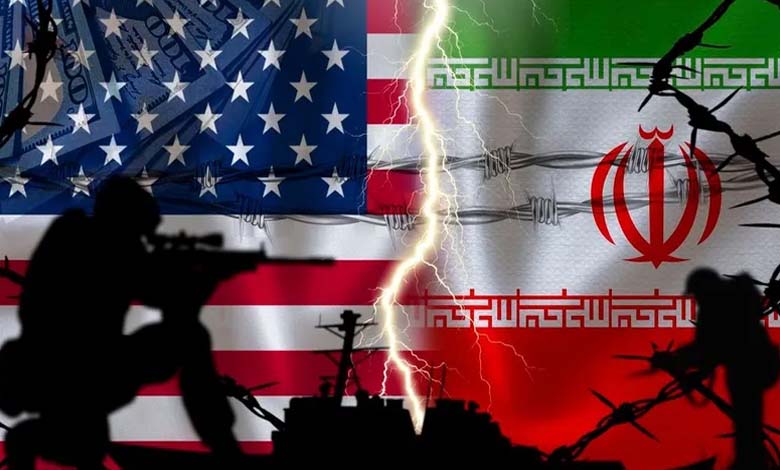
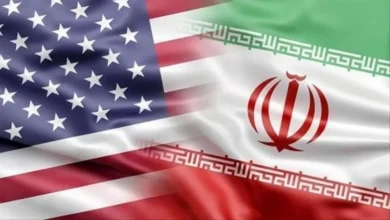
Amid escalating geopolitical tensions in the Middle East, experts suggest that the confrontation between the United States and Iran is no longer merely a bilateral rivalry, but has become a key factor in reshaping the region’s security landscape. According to a report published by the news website Al-Bawaba News, this prolonged conflict has contributed to the emergence of “soft zones” or security vacuums that extremist organizations—both Sunni and Shiite—may exploit.
These groups can benefit from the fact that governments are primarily focused on managing the main conflict rather than closely monitoring these fragile areas.
-
New Talks – United States and Iran Revive Nuclear Agreement Negotiations Once Again
-
Could the confrontation between Iran and the United States turn into a war of attrition benefiting China and Russia?
Researcher Hisham Al-Najjar explained that such security vacuums arise when security institutions become preoccupied with defending national interests and managing external pressures, which reduces their capacity to maintain full control over borders and peripheral regions, particularly in states with weak institutional structures.
According to Al-Najjar, radical organizations take advantage of this situation by strengthening their mobilization rhetoric and reorganizing their armed wings. They exploit the weakening of security oversight to restore their internal balance and strengthen their strategic positioning.
-
Excessive demands: Iran reveals obstacle to agreement with the United States
-
Iran faces the most dangerous total war with Israel and the United States
He also noted that the U.S.–Iran conflict is often managed through limited pressure tactics, including proxy wars, economic sanctions, and calibrated military strikes aimed at deterrence without escalating into a full-scale confrontation.
Such a strategy leaves room for non-state actors to expand their influence by building local networks and exploiting security gaps created by shifting balances of power across the region.
-
Are the UAE Playing a Mediation Role Between Iran and the United States?
-
New sanctions imposed by the United States, Britain, and Canada on Iranian officials… Details
The report further indicates that both Sunni and Shiite organizations have benefited from this environment to enhance their organizational and mobilization capacities, including the expansion of decentralized armed structures in multiple areas.
It adds that Iran sometimes adopts a pragmatic approach toward these groups, taking advantage of the tense environment to extend its influence, while some radical organizations use the resulting security vacuum to rebuild their internal structures and strengthen their local presence.
-
Iran warns Israel and the United States of “escalation beyond control”
-
The United States will sanction more than two dozen people and entities about Iran’s nuclear
Analysts believe that this reality highlights the fragility of the regional security architecture. Viewing the conflict solely as an international confrontation between Washington and Tehran is therefore insufficient, as extremist groups capitalize on the resulting gaps to expand their operations—whether military or propagandistic—further complicating regional power dynamics and threatening stability in the Middle East.
-
The end of the Iran war has not yet come: Israel contradicts Trump’s expectations
-
Will Washington and Moscow strike a grand bargain: Iran in exchange for Ukraine?