Iran strikes Israel with explosive missiles in retaliation for Larijani’s killing
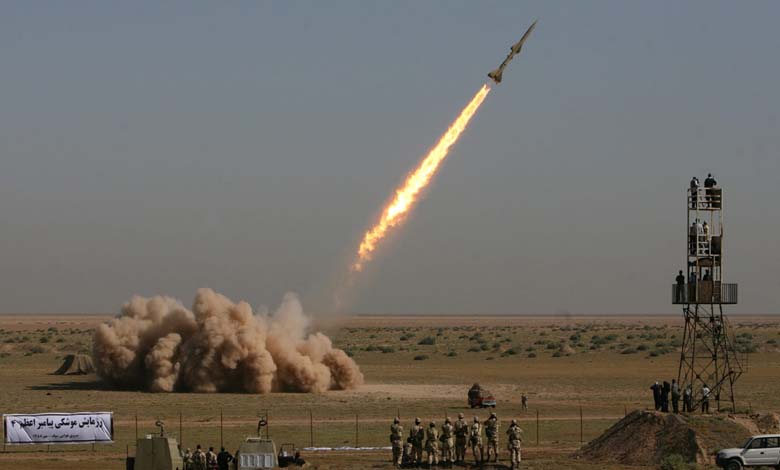
The Islamic Revolutionary Guard Corps announced that it used multi-warhead missiles in a wave of bombardments that it said killed and injured at least 200 people and destroyed critical targets.
According to a statement by the Islamic Revolutionary Guard Corps, the attack was part of the “61st wave” of Operation “True Promise 4.” It involved the use of multiple-warhead missiles, including the “Khorramshahr 4” and “Qadr,” which are capable of carrying explosive payloads that separate mid-flight to strike multiple targets simultaneously. This type of weaponry reflects a qualitative shift in the nature of such strikes, making them harder to intercept and significantly increasing their destructive impact.
According to an IRGC statement, the attack was part of the “61st wave” of Operation “True Promise 4” and involved multi-warhead missiles, including the Khorramshahr-4 and Qadr systems. These missiles are capable of carrying warheads that separate mid-flight to strike multiple targets simultaneously. This capability represents a qualitative shift in the nature of the strikes, making them harder to intercept and significantly increasing their destructive impact.
The Iranian statement claimed that the strikes hit their targets “without any obstacle,” noting power outages in parts of Tel Aviv and preliminary estimates of more than 230 dead and wounded. Israeli authorities have not confirmed these figures. Israeli emergency services reported two fatalities and several injuries, highlighting a clear discrepancy between accounts regarding the scale of casualties. The Israeli government has also imposed strict restrictions on the publication of loss figures.
Israeli media reported fires and material damage in the city of Ramat Gan, as well as damage to Tel Aviv’s central train station, which was forced out of service. These strikes, targeting both civilian infrastructure and security sites, indicate an expansion in the scope of targets and rising costs for Israel’s domestic front.
The Iranian attack came just hours after Tehran announced the killing of Ali Larijani in an Israeli raid near the capital, a strike carrying significant political and security implications given his sensitive role within Iran’s decision-making system. Tehran had vowed retaliation, which materialized through this intensive missile strike described as a form of “direct revenge.”
The escalation extended beyond the Iranian-Israeli front to Iraq, where a drone targeted the vicinity of the U.S. embassy in Baghdad, signaling a widening of regional tensions. Security sources reported that air defense systems failed to intercept the drone before it reached its target, raising concerns about the effectiveness of protective systems amid increasingly frequent attacks.
In the same context, an Iraqi armed group claimed responsibility for carrying out 110 operations against U.S. bases inside and outside Iraq over a short period, reflecting an escalation in activity by Iran-aligned factions and the likelihood of their deeper involvement in any broader regional confrontation.
Hamas quickly offered condolences to Iran, holding Israel and the United States responsible for the consequences of the escalation and warning that continued military operations threaten the stability of the entire region. This stance reflects the cohesion of Tehran’s network of allies in the face of Israeli strikes.
The region now appears to be on the brink of a broader escalation, as the pace of strikes intensifies and multiple fronts—from Tel Aviv to Baghdad—become increasingly interconnected. With ongoing targeted killings and missile retaliations, the confrontation is moving toward a more dangerous phase that may prove difficult to contain without international intervention or agreements aimed at preventing a wider conflagration.