Iran Responds to New U.S. Proposal for a Settlement to End the War
Trump says Washington is prepared to wait a few days to receive the right responses from Tehran.
Iran responded on Thursday to the latest proposals sent by the United States to end the war, according to the Iranian Students News Agency. The response came after U.S. President Donald Trump indicated that Washington was willing to wait a few days “to get the right answers” from Tehran, while also threatening to launch new attacks if Iran failed to agree to a deal. The move is intended to put an end to what Washington views as Iranian diplomatic maneuvering and attempts to gain time.
-
On the eve of the Muscat talks, five milestones paved the way for Iran and Washington’s return to negotiations
-
Monica in Iran: a burned asset and a potential bargaining chip with Washington
Earlier, the official Iranian news outlet Nour News quoted Iranian Foreign Ministry spokesman Esmaeil Baghaei as saying: “We have received the United States’ views and are currently studying them.”
He added that Pakistan, which hosted peace talks last month and serves as a mediator in the exchange of messages between the two sides, continues its mediation efforts between Tehran and Washington, with several rounds of communication having already taken place. Pakistan’s Interior Minister visited Tehran on Wednesday.
The Iranian Students News Agency also reported that Pakistan’s army chief, Asim Munir, is visiting Tehran on Thursday in an effort to bridge differences and help reach an official declaration of understanding.
-
How the Caspian Sea became a lifeline of weapons and food for Iran behind Washington’s back
-
Washington and Tel Aviv are preparing for a collapse of the truce by defining an Iranian target bank
Talks aimed at ending the war have made little progress after six weeks of a fragile ceasefire. Meanwhile, rising oil prices have fueled concerns about inflation and its impact on the global economy. Trump is also facing growing domestic pressure ahead of the congressional midterm elections in November, as his approval ratings have dropped close to their lowest level since returning to the White House due to rising fuel prices.
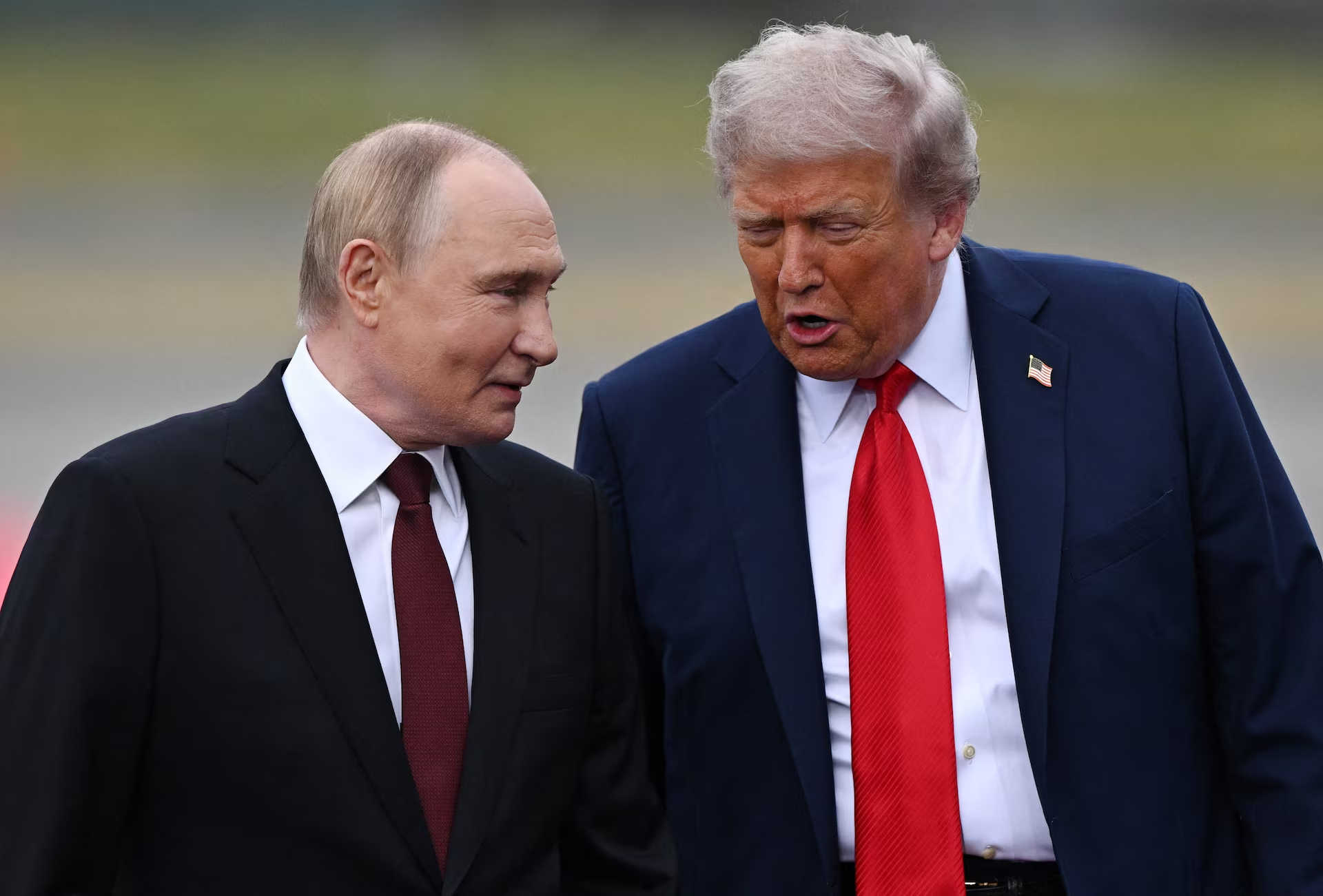
Speaking at Joint Base Andrews, Trump said: “Believe me, if we don’t get the right answers, things will move very quickly. We are all ready to act.”
Asked how long he was willing to wait, he replied: “Maybe a few days, but things could move very quickly.”
-
Will Washington and Moscow strike a grand bargain: Iran in exchange for Ukraine?
-
Russia and China back Iran’s new leader as Washington and Tel Aviv issue threats
The U.S. president once again stressed that he would not allow Iran to obtain a nuclear weapon. Speaking to reporters on Wednesday, he said: “We are in the final stages with Iran. We’ll see what happens. Either we make a deal, or we’ll do some slightly bad things, but I hope that doesn’t happen.”
He added: “I would rather see a few people die than many. We can handle it either way.”
Through its firm stance, the U.S. administration seeks to end Iranian maneuvering and Tehran’s attempts to buy time by setting a limited timeframe before a possible resumption of the war.
Earlier, Iran’s Revolutionary Guard warned of renewed attacks. In a statement, it said: “If aggression against Iran is repeated, the promised regional war will this time extend beyond the region.”
-
Bomb Diplomacy: The Douhet Strategy and Washington’s Options on Iran
-
Nuclear Talks: Iran Rejects Washington’s Proposal and Prepares an Alternative
Iran presented a new proposal to the United States this week, but what it has publicly stated includes demands previously rejected by Trump, such as control over the Strait of Hormuz, compensation for war damages, the lifting of sanctions, the release of frozen assets and funds, and the withdrawal of U.S. forces from the region.
The Strait of Hormuz, through which one-fifth of global oil and liquefied natural gas shipments passed before the war, has remained virtually closed since the outbreak of the conflict, causing the largest disruption ever recorded in global energy supplies.
On Wednesday, Iran published a map showing a “controlled maritime zone” in the strait and stated that passage would require authorization from a body established to oversee the waterway. Tehran says the measure is intended to reopen the strait to friendly nations that comply with its conditions. This could include imposing transit fees, which Washington considers unacceptable.
-
Washington Tests Military Capabilities Amid Escalation Between Israel and Iran
-
Washington rules out Iran and its proxies’ involvement in expanding the war
Also on Wednesday, two giant Chinese tankers carrying a combined total of around four million barrels of oil crossed the strait, while Seoul said that a South Korean tanker carrying two million barrels of Kuwaiti crude oil was also transiting the strait in coordination with Iran. Lloyd’s List, the maritime traffic monitoring company, reported that at least 54 vessels crossed the strait last week, double the number recorded the previous week. Iran stated that 26 ships crossed the strait within the past twenty-four hours, though this remains far below the normal daily traffic of between 125 and 140 vessels before the war.
The U.S.-Israeli war killed thousands in Iran before it was suspended under a ceasefire agreement reached in April. Israel also killed thousands more and displaced hundreds of thousands in Lebanon, which it invaded to target fighters from the Iran-backed Hezbollah group.
Iranian strikes on Israel and Gulf countries also killed dozens of people.
-
Washington sends messages to Iran and Hezbollah via Turkey… Details
-
Washington Imposes New Sanctions on Iranian Individuals and Entities… What’s New?
Trump and Israeli Prime Minister Benjamin Netanyahu said they launched the war to stop Iran’s support for armed factions in the region, dismantle Tehran’s nuclear program, destroy its missile capabilities, and create conditions that would allow Iranians to overthrow the regime.
However, the war has not yet succeeded in depriving Iran of its stockpile of uranium enriched to near weapons-grade levels, nor in eliminating its ability to threaten neighboring countries through missiles, drones, and allied armed groups. Iran’s clerical rulers, who suppressed a mass uprising earlier this year, have faced no signs of organized opposition since the conflict began.
-
Washington doubts the seriousness of forming a naval alliance comprising Iran and Gulf states
-
The War on Iran once again avoids the U.S. House of Representatives
-
Israel reportedly wanted him to become Iran’s leader: leaks reveal details about the night Ahmadinejad’s home was targeted