Still operating despite the risks: UN calls to ensure the safety of UNIFIL forces in Lebanon
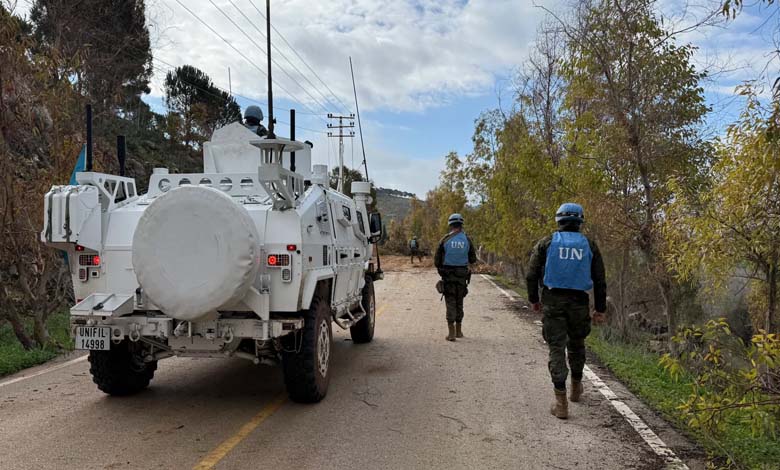
The United Nations has called for ensuring the safety of its Interim Force in Lebanon, the United Nations Interim Force in Lebanon, affirming that it continues to operate despite the dangers.
UN spokesperson Stéphane Dujarric confirmed that UNIFIL continues to carry out its field and humanitarian missions despite the serious security escalation and attacks targeting UN sites.
The Lebanese-Israeli border flared up again this month after Hezbollah launched rocket attacks on Israel, ending a truce that had been agreed upon in November 2024.
-
Israel Accuses UNIFIL of Shooting Down a Reconnaissance Drone Over Southern Lebanon
-
UNIFIL Accuses Israel of Launching a Serious Attack on Its Forces in Lebanon
Dujarric reiterated the United Nations’ firm call on all parties not to target its facilities and to guarantee the safety and freedom of movement of peacekeeping forces.
The spokesperson revealed that a UN site in the eastern sector came under machine-gun fire on Wednesday, and that a mortar shell landed near another site in the area of Beit Lif, causing minor damage without any injuries among mission personnel.
He explained that this coincided with field reports of intense exchanges of fire on Thursday, including rocket and artillery fire toward Israel, as well as Israeli airstrikes and shelling that hit several towns in both the eastern and western sectors, including Deir Syriane, Taybeh (South Lebanon), Beit Lif, Qantara (South Lebanon), Bint Jbeil, Hanin (South Lebanon), and Mansouri (South Lebanon).
-
UNIFIL condemns Israeli bombing attack near its soldiers
-
Disagreements Surround the Renewal of UNIFIL’s Mandate: A Decisive Security Council Vote
He said that despite this highly volatile environment along the Blue Line, the UN mission continues to monitor the situation and coordinate efforts. It recently succeeded, in close cooperation with the Lebanese Armed Forces, in delivering essential humanitarian supplies, including food, medicine, and hygiene items, to affected civilians within its area of operations, taking advantage of periods when security conditions allow.
UNIFIL has been operating in Lebanon since the first Israeli ground offensive against the country in 1978.
UN Security Council Resolution 1701, which ended the devastating 2006 war between Hezbollah and Israel, strengthened the presence of the international force and tasked it with monitoring the ceasefire between the two sides.
-
Between Washington and Tel Aviv… Is UNIFIL nearing the end of its mission in Lebanon?
-
A step that could turn Lebanon upside down… Will “UNIFIL” leave?
Under this resolution, the Lebanese Army deployed for the first time in decades along the border with Israel to prevent any “illegal” military presence there.
Following the most recent confrontation between Hezbollah and Israel, which began in October 2023, the Lebanese government reached a truce agreement under which Hezbollah would withdraw south of the Litani River, with the army taking responsibility for securing the south of the country.
Subsequently, the Lebanese government adopted a decision to restrict weapons to the state, a decision that came into force before the resumption of fighting.
After Hezbollah’s rocket attacks on Israel this month, the Lebanese government decided to ban any military activity by the Iran-backed group.
-
Israeli army acknowledges targeting a UN site in Lebanon
-
The specter of an Israeli invasion looms over southern Lebanon
-
The Mechanism meeting in Lebanon: reaffirming support for the army and entrenching lasting peace