Iran denies being close to signing an agreement with the United States despite progress in negotiations
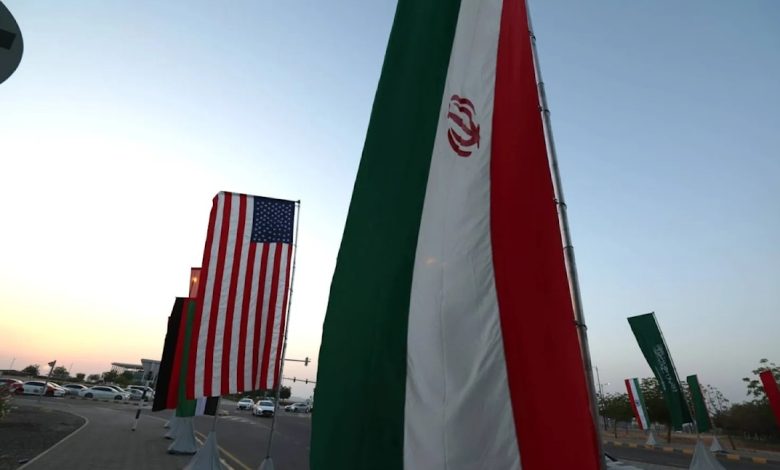
The Iranian Foreign Ministry spokesperson said the country has not discussed the nuclear issue, responding to pressure from Marco Rubio and Donald Trump, while denying the imposition of transit fees in the Strait of Hormuz.
Iranian Foreign Ministry spokesperson Esmaeil Baghaei said on Monday that results had been reached on several issues discussed within a possible memorandum of understanding with the United States, but this does not mean that Tehran is close to signing a peace agreement to end the war, in response to ongoing US pressure.
-
How the Caspian Sea became a lifeline of weapons and food for Iran behind Washington’s back
-
Bomb Diplomacy: The Douhet Strategy and Washington’s Options on Iran
He added that Tehran is negotiating to end the war and is not currently discussing nuclear issues. He reiterated that changes in the positions of US officials are creating obstacles to any agreement, stressing that the potential 14-point framework would include ending hostilities on all fronts, including Lebanon.
He further stated that the agreement focuses on ending the war and what he described as the US maritime blockade, in exchange for Tehran taking steps to ensure safe passage through the Strait of Hormuz. He added that if a memorandum is signed, certain details and additional issues, including the nuclear file, would be negotiated within 60 days.
Regarding Hormuz, Baghaei said the memorandum contains no specific provisions regarding the future management of the strait, adding that its administration belongs to the two coastal states, referring to Iran and Oman.
-
Washington and Tel Aviv are preparing for a collapse of the truce by defining an Iranian target bank
-
On the eve of the Muscat talks, five milestones paved the way for Iran and Washington’s return to negotiations
He also stated that Iran would not impose transit fees in the strait, while noting that services provided may require payment, which should not be interpreted as transit charges.
A senior Iranian diplomat told the Iranian Students News Agency that Tehran would discuss its nuclear program and highly enriched uranium with the United States if Washington fulfills its commitments under the ongoing draft memorandum.
Diplomat Hossein Noushabadi said these issues would be addressed during 60-day negotiations in exchange for sanctions relief and the release of Iranian assets abroad.
-
Nuclear Talks: Iran Rejects Washington’s Proposal and Prepares an Alternative
-
Washington Tests Military Capabilities Amid Escalation Between Israel and Iran
On the Strait of Hormuz, he said its management is an Iran–Oman matter under negotiation with Muscat, indicating a firmer stance following Tehran’s earlier announcement about potential transit fees.
These remarks come after US Secretary of State Marco Rubio said the United States would either reach a good deal with Iran or deal with it “in another way,” while downplaying the likelihood of an imminent breakthrough.
He added that Washington would give diplomacy every possible chance before considering “alternatives,” after President Donald Trump said he had instructed his representatives not to rush a deal with Iran.
-
Washington rules out Iran and its proxies’ involvement in expanding the war
-
Washington sends messages to Iran and Hezbollah via Turkey… Details
The US President also said that any agreement would be either “great and meaningful” or there would be no deal at all.
Earlier, Trump wrote on Truth Social that the US blockade of Iranian ports and vessels in the Strait of Hormuz would remain in full force until a deal is reached, signed, and formally approved, urging both sides to proceed carefully.
The Tasnim News Agency, affiliated with the Islamic Revolutionary Guard Corps, reported that the United States is still obstructing parts of a potential agreement, including Iran’s demand for the release of frozen funds.
-
Washington Imposes New Sanctions on Iranian Individuals and Entities… What’s New?
-
Washington doubts the seriousness of forming a naval alliance comprising Iran and Gulf states
Iranian parliamentary spokesperson Ebrahim Rezaei said Iran’s approach in military conflicts is “an eye for an eye,” while in diplomatic disputes it is “reciprocity for reciprocity.”
He added that Iran will not bow to pressure or threats, and that if the United States wants a deal it must negotiate; otherwise it can continue pressure, implying economic consequences.
Oil prices fell by 6 percent to a two-week low amid growing optimism over a potential US–Iran agreement.
Trump had previously suggested that Washington and Iran had made substantial progress on a memorandum of understanding related to a peace deal that could reopen the Strait of Hormuz, through which around one-fifth of global oil and LNG shipments pass.
-
Military escalation between Washington and Tehran derails hopes of a settlement
-
Trump trapped in the Iran war between no victory and no peace
However, significant disagreements remain, including Iran’s nuclear ambitions, Israel’s war in Lebanon against Hezbollah, and Iran’s demands for sanctions relief and the release of tens of billions of dollars in frozen oil revenues.
A senior Trump administration official described what he said were the latest outlines of the negotiations, claiming Iran had “in principle” agreed to reopen the Strait of Hormuz in exchange for lifting the US maritime blockade and dismantling its stockpile of highly enriched uranium, adding that the Iranian Supreme Leader had approved the general framework.
No confirmation has yet been issued by Iran.
The US official said Washington envisions an initial phase involving reopening the strait and lifting the maritime blockade on Iranian ports, while nuclear-related details would take longer to negotiate.
-
Lessons from Hormuz: why Iran must not be allowed to continue threatening the strait
-
The War on Iran once again avoids the U.S. House of Representatives
He denied claims that Iran had not agreed to eliminate its enriched uranium stockpile, saying the issue concerned “the method.”
Another senior US official said on Sunday that the proposed framework would give negotiators 60 days to reach a final agreement.
Iranian sources have previously suggested that future stages could include technical formulas to resolve the dispute over Tehran’s highly enriched uranium stockpile, such as lowering enrichment levels under supervision of the UN nuclear watchdog, the IAEA.
Tehran has repeatedly denied US and Israeli accusations that it seeks nuclear weapons, insisting it has the right to enrich uranium for civilian purposes, although its enrichment levels exceed those required for civilian electricity production.
-
Negotiating with Iran is a waste of time: American calls to open the Strait of Hormuz by force
-
Iran Responds to New U.S. Proposal for a Settlement to End the War
Trump has repeatedly raised the possibility of a deal to end the war launched by the United States and Israel on February 28. A fragile ceasefire has been in place since April. The US president’s popularity has been affected by the war’s impact on energy prices, and Congress has sought to limit his war powers.
Responding to critics of his negotiation approach, Trump said on Sunday: “If I make a deal with Iran, it will be a good and proper one… so don’t listen to the losers who criticize something they do not understand.”
A deal strengthening the fragile ceasefire could ease pressure on markets, but would not immediately resolve the global energy crisis, which has driven up fuel, fertilizer, and food costs.
US–Israeli strikes killed thousands in Iran before being halted under the April ceasefire.
Israeli attacks have also killed thousands and displaced hundreds of thousands in Lebanon, while Iranian strikes on Israel and Gulf countries have caused dozens of deaths.
-
Iran Uses the Truce to Rebuild and Reinforce Its Military Arsenal
-
Israel expands F-35 capabilities in preparation for a resumption of war with Iran
-
The White House briefing room: a step in Vance and Rubio’s race toward the presidency