A U.S. report reveals an Iraqi faction leader’s plot to assassinate Ivanka Trump
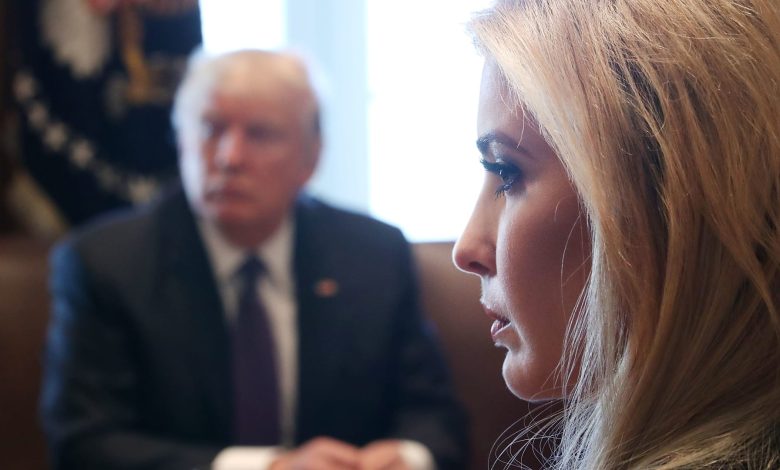
Mohammad Baqir al-Saadi, a senior figure in the Iraqi Hezbollah Brigades, was allegedly seeking to target the Trump family in retaliation for the killing of Qassem Soleimani in a U.S. strike near Baghdad airport six years ago.
The New York Post revealed that Mohammad Baqir al-Saadi, a leader within the Iraqi Hezbollah Brigades, had planned — in coordination with Iran’s Revolutionary Guard Corps — to assassinate Ivanka Trump, the daughter of the U.S. president, in retaliation for the killing of Qassem Soleimani, commander of the Quds Force, in a U.S. strike near Baghdad airport in 2020.
-
A military aircraft destroyed in a missile strike on an Iraqi base
-
Al-Sadr warns of sectarian strife and calls on the peoples of the region to exercise wisdom
The American newspaper reported that al-Saadi, 32, who was recently arrested, had “vowed” to kill Ivanka Trump and even possessed a layout of her home in Florida.
The newspaper quoted Intifadh Qanbar, former deputy military attaché at the Iraqi embassy in Washington, as saying: “After Qassem Soleimani was killed, al-Saadi went around openly saying, ‘Ivanka must be killed to burn Trump’s house the same way our house was burned.’” Qanbar added: “We heard he was planning around Ivanka’s home in Florida.” A second source also confirmed to the newspaper the alleged plot to kill Ivanka Trump.
-
Trump trapped in the Iran war between no victory and no peace
-
Iraqi Hezbollah sets conditions to halt attacks on the U.S. embassy.
The Iraqi commander had reportedly posted an image of a map showing an area in Florida where Ivanka Trump and her husband Jared Kushner own a $24 million residence, accompanied by the threat: “I tell Americans, look at this picture and know that neither your palaces nor your intelligence agencies will protect you. We are now in the phase of surveillance and analysis. I told you, our revenge is only a matter of time.”
Al-Saadi is regarded as a major figure among Iran-aligned Iraqi factions. He was arrested in Turkey on May 15 and extradited to the United States, where he faces charges related to carrying out 18 attacks and attempted attacks across Europe and the United States, according to the U.S. Department of Justice.
-
Fatalities in airstrikes targeting the Popular Mobilization Forces and drone attacks on Erbil
-
House vote canceled to limit Trump’s military powers
According to the Justice Department, he was behind attacks targeting American and Jewish interests, including the bombing of the Bank of New York Mellon in Amsterdam last March, the stabbing of two Jewish victims in London in April, and a shooting attack on the U.S. consulate building in Toronto, also in March.
He also allegedly “planned and coordinated” attacks against Jewish targets, including the bombing of a synagogue in Liège, Belgium, and the arson of a temple in Rotterdam in March, according to federal authorities, in addition to several other anti-American attacks that were foiled in the United States in connection with the current Middle East conflict.
-
Dispute between the army and the Revolutionary Guard over closing the Strait of Hormuz
-
Trump seeks to end the Iran war soon due to its economic repercussions
According to Elizabeth Tsurkov of the New Lines Institute in Washington, who was kidnapped in Baghdad in 2023 and held by the Hezbollah Brigades for 903 days before being released in September 2025, “publicly available information suggests that Mohammad Baqir was connected to Qassem Soleimani and was a close friend of his, which in itself was a major achievement for any member of these militias. Moreover, he was also close to Esmail Qaani, who succeeded Soleimani.”
She said she did not know whether al-Saadi had been among her kidnappers because she had only seen them masked. She added: “Al-Saadi maintained a close relationship with Soleimani’s successor, Brigadier General Esmail Qaani, who continued to provide him with resources for his terrorist networks.”
-
I will not be patient for long… a decisive message from Trump to Iran
-
Trump faces the challenge of resolving a war that has failed to achieve its objectives
Qanbar noted that al-Saadi had been close to Qassem Soleimani, the Iranian Revolutionary Guard general and head of the elite Quds Force, and viewed him as a father figure following the death of his father, Ahmad Kazemi, an Iranian general who died in 2006.
Al-Saadi grew up in Baghdad under the care of his Iraqi mother but was later sent to Tehran for training with the Iranian Revolutionary Guard Corps, according to Qanbar, now president of the Future Foundation, a non-profit organization dedicated to strengthening alliances between the United States and Iraqi Kurds.
-
The war with Iran and the constraints of Congress… Trump surpasses the 60-day deadline
-
Trump rejects Iran’s proposal to postpone the nuclear file
Qanbar added that al-Saadi later established a travel agency specializing in religious pilgrimages, which allowed him to travel around the world “to communicate with terrorist cells.” He further noted that when al-Saadi was arrested in Turkey last week, he was also carrying an Iraqi service passport, a special travel document issued to government employees and civil servants that can only be obtained with the approval of the Iraqi prime minister.
-
Nothing will deter me from defeating Iran: Trump describes the White House correspondents’ dinner attacker as a lone wolf
-
Bombing Iran with a nuclear weapon: Donald Trump settles the debate
-
Iran to Trump: we did not request the extension of the truce, and the loser does not set the terms