Czech Trump… five names to lead the opposition in Brussels
From the “Czech Trump” to Giorgia Meloni, several names are being mentioned in the opposition “market” within the corridors of the European Union following the departure of Viktor Orbán.
The former Hungarian prime minister suffered a heavy defeat in last Sunday’s elections, leaving office after 16 years during which he played a role described as “obstructive” to EU policies, where many decisions require unanimity among the 27 member states.
For years, Orbán used his veto power to block major initiatives, most notably EU support for Ukraine.
But Orbán’s departure does not mean that European Commission President Ursula von der Leyen or Ukraine can breathe easily: the European Council still includes several Orbán allies and new figures who could hinder negotiations, according to the US magazine Politico.
The outlet identified five leaders likely to inherit Orbán’s “opposition” role within the EU.
Robert Fico
The Slovak prime minister has long been a loyal partner of Orbán in using the veto, joining him in blocking sanctions against Russia and seeking exemptions from a €90 billion EU loan to Ukraine.
With Orbán gone, Fico stands as one of the closest remaining Kremlin-aligned allies in the EU, according to Politico.
Last summer, he said: “I want to be a constructive player in the European Union, but not at the expense of the Slovak Republic.”
Last month, he warned that he might use his veto against an Ukraine loan on Orbán’s behalf if the latter lost the election.
An EU diplomat told Politico: “I think they (Fico and others) are fully aware of the risks and consequences of choosing a path similar to Orbán’s.”
Andrej Babiš
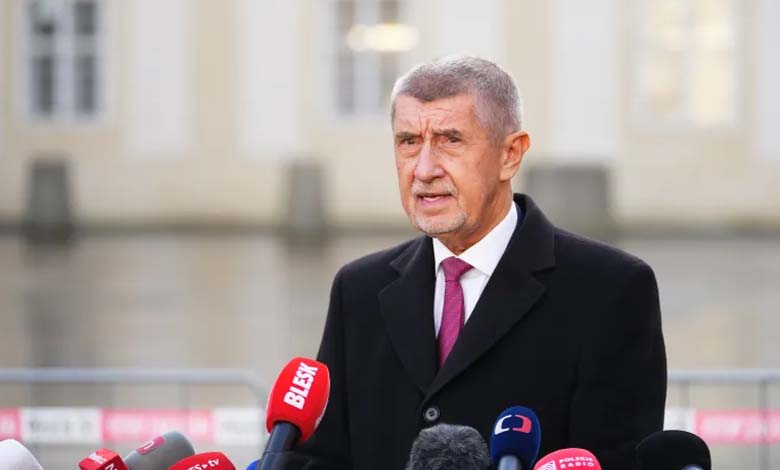
Prime Minister Andrej Babiš, a 71-year-old billionaire known as the “Czech Trump,” has led the Czech Republic in a coalition with the far right since last December.
Since taking office, Babiš has shown tendencies similar to Orbán’s approach and, together with him and Fico, called for rejecting the Ukraine loan.
He has also called for reducing support to Kyiv, although he stopped short of dismantling the Czech ammunition initiative for Ukraine.
Rather than blocking everything, he is expected to take a “hard line on certain issues compared with other European leaders,” according to an EU diplomat cited by Politico.
Giorgia Meloni
Italian leader Giorgia Meloni has walked a pragmatic tightrope with Brussels since coming to power over three years ago, balancing populist policies with a pro-EU stance on international affairs.
By allying with other leaders such as Danish Prime Minister Mette Frederiksen, Meloni has sought to tighten EU migration rules through consensus rather than obstruction.
An EU diplomat said Meloni proved to be “completely different in nature” from Orbán, while another warned she belongs to the same political current, noting: “At the last European Council, Meloni was the only one who agreed with Orbán.”
He also pointed out that she admitted to other leaders she understands Orbán’s position on the Ukraine loan.
Janez Janša
Former Slovenian Prime Minister Janez Janša, a right-wing populist and admirer of Trump, came second by just one seat in last month’s elections in his country.
As negotiations continue, it remains unclear whether he or current Prime Minister Robert Golob will be able to form a governing coalition.
Sometimes nicknamed the “little Trump,” his return to power would add to the EU populist camp.
On Ukraine, however, Janša differs significantly from Orbán.
Although aligned with him on other issues, he has strongly supported Ukraine’s EU accession and visited Kyiv in 2022 at the start of the war to show his support.
Rumen Radev
Former Bulgarian president Rumen Radev resigned in January to found a new party and run in Sunday’s parliamentary elections, which he is on track to win according to a Politico poll—potentially posing a challenge for Ukraine and its European allies.
In 2025, Radev said Ukraine was “doomed to fail” in its war against Russia and argued that increasing EU military aid, or “pumping more weapons” into Kyiv, was not the solution.
He also blamed European leaders for encouraging Ukraine’s counteroffensive, saying it led to “hundreds of thousands of casualties” in Ukraine.