Iran warns Trump of a decisive response if the war resumes
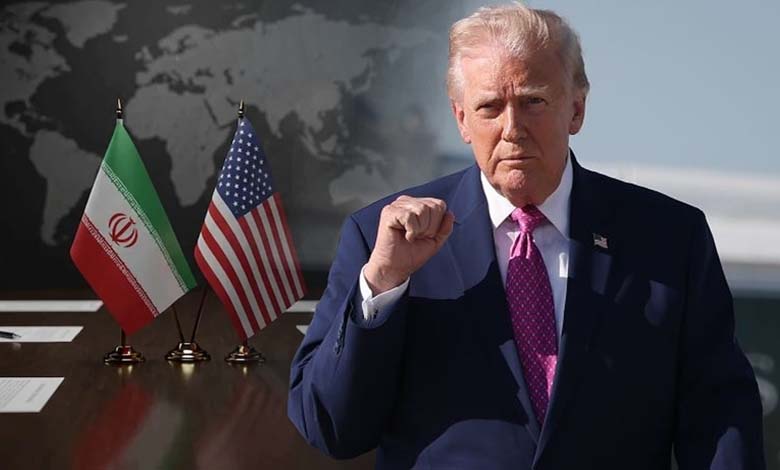
The Speaker of the Iranian Parliament confirms that his country does not accept negotiations with the United States under threat.
As the two-week truce between Iran and the United States approaches its end, and amid talk of a possible resumption of war due to the failure to reach an agreement in the negotiations held in Pakistan, Iranian leaders issued a stern warning to Washington against attacking their country again.
-
Trump keeps Iran under pressure and anticipates an imminent end to the war
-
Trump threatens to destroy Iranian vessels as Tehran vows retaliation
The semi-official Tasnim news agency reported on Tuesday, citing a senior Iranian military commander, that Iran’s armed forces are ready to deliver an “immediate and decisive response” to any new hostile act by their adversaries.
The two-week ceasefire period between Iran and the United States is set to expire on Wednesday. The two countries have exchanged accusations of violating the ceasefire, and both have tightened restrictions on navigation in the Strait of Hormuz, a vital waterway for global oil trade.
Ali Abdollahi, commander of the unified command of the Iranian armed forces known as Khatam al-Anbiya Headquarters, said that Tehran maintains the upper hand militarily, including in managing the Strait of Hormuz, and will not allow U.S. President Donald Trump to “create false narratives about the situation on the ground.”
-
Iran: “I can wipe it out in an hour” — Donald Trump issues a warning to Tehran
-
What will Trump do with Iran after the failure of the negotiations?
For his part, Iranian Parliament Speaker Mohammad Bagher Ghalibaf said on Tuesday that his country does not accept negotiations with the United States under threat.
In a post on the platform X, he said that President Trump is seeking, through imposing a maritime blockade and violating the ceasefire, to turn the negotiations into a table of surrender and to legitimize incitement to war.
He added: “We do not accept negotiating under threats, and over the past two weeks we were preparing to deploy new cards on the battlefield.”
-
Trump unveils the design of the largest monument of its kind in the world
-
Iran War Reveals Trump’s Failures in Negotiation
Meanwhile, Tehran’s ambassador to Islamabad, Reza Amiri Moghaddam, wrote on X that his country will not sit at the negotiating table under threat or coercion, adding: “It is universally acknowledged that no state with an ancient civilization negotiates under threat or coercion.”
He emphasized that this is an “Islamic principle,” asserting that the United States has not yet grasped this reality.
German Foreign Minister Johann Wadephul urged Iran to engage in constructive talks with the United States in Islamabad.
-
Trump proposes U.S. support to ensure smooth navigation in the Strait of Hormuz
-
Trump’s deadline enters its decisive hours… Iran under bombardment and warning about trains
Speaking ahead of a meeting of European Union foreign ministers in Brussels on Wednesday, he said: “As we know, the U.S. Vice President is ready to travel to Islamabad,” adding, “Iran must now accept this offer in the interest of its people.”
On April 8, the United States and Iran announced a two-week truce under Pakistani mediation, in preparation for reaching a final agreement to end the war.
On Monday, Iranian media reported that Tehran’s delegation would not sit at the negotiating table before the U.S. fleet lifts the maritime blockade of the Strait of Hormuz. In contrast, Pakistani sources stated that the Iranian delegation will participate in the second round of negotiations with the United States in Islamabad, despite ongoing tensions in the Strait of Hormuz.
-
200 million dollars in losses within moments that shake Donald Trump’s calculations
-
The last chance for Iran before Trump’s hell… Talks of a 45-day truce
The sources explained that the Iranian delegation is expected to arrive in Pakistan on Tuesday to take part in the second round of negotiations with the United States.
Recently, Trump stated that he might visit Islamabad to sign the agreement if it is concluded, saying: “If the agreement is signed in Islamabad, I might go.” The United States and Israel launched a war on Iran on February 28 that left more than 3,000 dead, before Washington and Tehran announced a two-week truce on April 8 under Pakistani mediation, in the hope of concluding an agreement that would end the war.
-
Trump ends the crisis of his pilots, asserting superiority over Iranian airspace
-
Underestimating Iran’s air defense capabilities is placing Trump in a difficult position