The arrest of an Iranian intermediary reopens the file of arming the Sudanese army
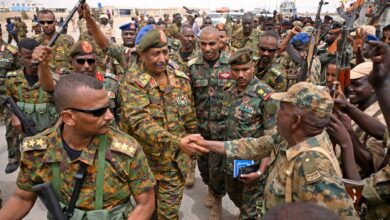
The arrest by U.S. authorities of an Iranian woman at Los Angeles International Airport, on suspicion of acting as an intermediary in arms transactions allegedly involving Iranian parties and military entities in Sudan, has raised numerous questions about the nature of the links between Tehran and Khartoum, as well as the potential repercussions of such contacts on the course of the war in Sudan and on security balances in the Red Sea region.
According to U.S. judicial and media sources, the detainee is named Shamim Mafi. She faces charges related to acting as a link in transactions suspected of involving military equipment and various combat materials, believed to have been transferred or planned for transfer to entities associated with the authorities in Port Sudan, in potential violation of U.S. sanctions imposed on Tehran and the military supply chains linked to it.
The criminal complaint made public indicates that the case does not concern a single isolated transaction, but rather a broader network of operations relying on intermediaries, companies, and individuals operating across multiple countries, allowing the passage of shipments and equipment subject to strict international restrictions. U.S. authorities consider this type of activity to fall within attempts to circumvent sanctions and to reactivate smuggling networks in conflict zones.
In this context, experts in political and strategic affairs believe that the public emergence of such cases reflects complex layers of indirect relations between regional actors. The matter goes beyond merely supplying military equipment to a particular party and extends to building technical and logistical channels, as well as forms of interdependence that are difficult to dismantle later.
Some analysts argue that any external involvement in the Sudanese conflict, whether direct or through intermediaries, contributes to prolonging the war and complicating the prospects of reaching a comprehensive political settlement, especially given the overlap of regional interests and the multiplicity of actors engaged, often unofficially, in the Sudanese scene.
These interpretations suggest that military or logistical support, if confirmed, does not only enhance the operational capabilities of one party over another, but also opens the door to reshaping internal power balances within the state and creates a continued dependence on external sources in the fields of armament and military technologies, which in turn affects the nature of political decision-making itself.
Within this framework, some experts link any potential military cooperation to what they describe as Iran’s regional influence policies in several areas characterized by security fragility or internal conflicts. According to their assessments, Iranian interest is focused on strategic areas connected to vital maritime routes, particularly the Red Sea region and the Bab el-Mandeb Strait, due to their importance for global trade and energy supply routes.
These analyses are based on the assumption that indirect positioning, whether through relationships with local actors or through technical and logistical support, allows any regional power to strengthen its geopolitical presence without the need for direct military deployment, making conflict zones fertile ground for this type of unconventional expansion.
Conversely, some observers argue that linking all developments within Sudan to broader regional projects requires considerable caution, stressing that the Sudanese crisis is fundamentally internal in nature, and that the multiplicity of its actors and the overlap of their interests make it difficult to attribute any development to a single external factor.
Nevertheless, these observers do not deny that the environment of open war in Sudan and the decline in institutional stability have provided space for multinational networks to operate in various fields, including logistical support, mediation, and the smuggling of certain materials subject to international controls, further complicating the overall picture.
Other analyses add that any military cooperation, whether direct or indirect, also affects the political positions of the states receiving such support, as these states often tend to adopt less critical stances toward the parties supporting them, which may be reflected in diplomatic discourse or in the nature of regional alignments.
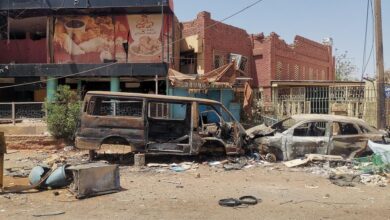
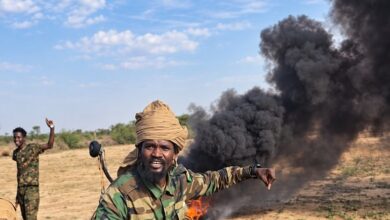
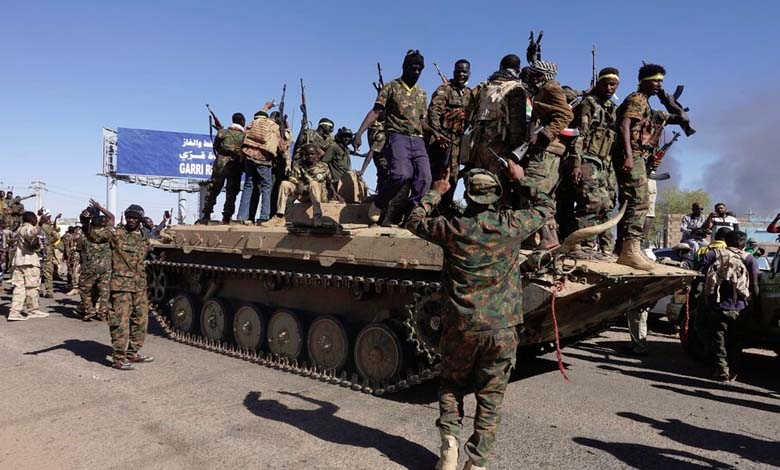
In the specific Sudanese context, some researchers point out that the ongoing war since the outbreak of armed conflict between the various parties has led to a redrawing of internal and external alliances, with intertwined regional and international factors entering the scene, making the crisis more complex than a traditional internal conflict.
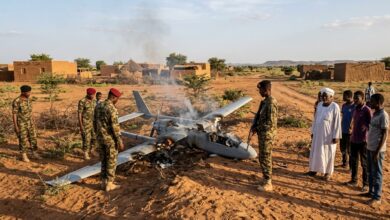
They also note that recurring reports about the use of drones or advanced military equipment on certain battlefronts reinforce the hypothesis of multiple sources of support, whether direct or indirect through intermediaries in different countries, despite the difficulty of independently verifying all such claims amid the ongoing conflict.
In this regard, some Western analyses consider that tracking funding and armament routes in conflict zones has become more complex in recent years, as many actors rely on informal networks operating outside traditional state frameworks, sometimes using commercial or humanitarian channels as cover for transferring prohibited or controlled materials.
On the other hand, some experts link these developments to the growing international competition for spheres of influence in Africa and the Middle East, where the interests of multiple regional and international powers intersect in fragile environments marked by political and security instability.
In light of these factors, analysts believe that the case triggered by this recent arrest in the United States should not be viewed solely as an isolated judicial incident, but as part of a broader landscape related to the management of regional conflicts and the use of legal and intelligence tools within the framework of geopolitical rivalry among major powers.
According to some assessments, this case may lead to increased scrutiny of supply routes linked to the Sudanese conflict, and possibly to broader investigations at the level of international institutions, particularly if additional information emerges regarding potential violations of UN resolutions related to the arms embargo.
At the same time, some observers do not rule out an escalation in political and diplomatic rhetoric among multiple parties, given the growing sensitivity of the Sudan file and its direct connection to the security of the Red Sea and international trade routes.
Despite differing interpretations regarding the background and implications of this case, one thing remains certain: the war in Sudan is no longer isolated from its regional and international environment, and any development related to armament issues or undeclared alliances has direct repercussions on the future stability of the country and on the prospects of reaching a comprehensive political settlement that would end a conflict that has lasted for years.