71.4 billion dollars required for recovery and reconstruction in Gaza
An international assessment concluded that 71.4 billion dollars are needed for recovery and reconstruction in Gaza over the next decade.
The final rapid damage and needs assessment for Gaza was issued by the European Union and the United Nations, and conducted in cooperation with the World Bank, to evaluate the damage, economic losses, and recovery and reconstruction needs in Gaza after 24 months of conflict.
According to the assessment, recovery and reconstruction needs in Gaza are estimated at approximately 71.4 billion dollars over the next decade, including 26.3 billion dollars required in the first eighteen months to restore essential services, rebuild critical infrastructure, and support economic recovery.
The report states: “Physical damage to infrastructure is estimated at about 35.2 billion dollars, while economic and social losses amount to 22.7 billion dollars.”
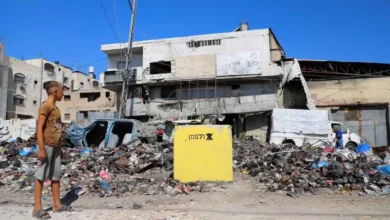
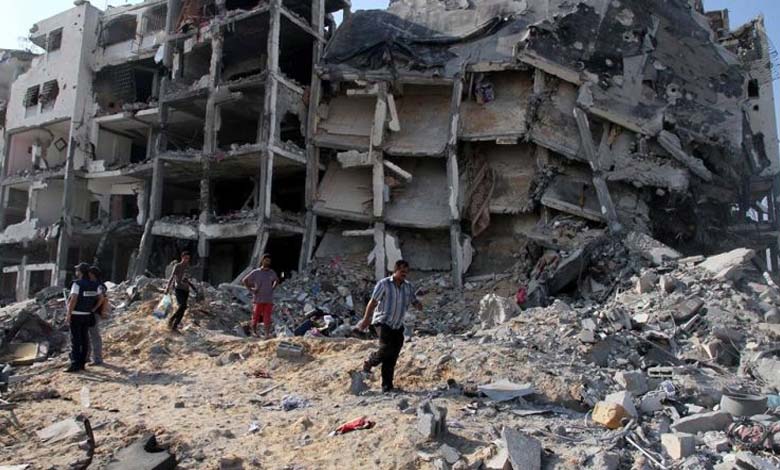
The report reveals that the most affected sectors include housing, health, education, trade, and agriculture. More than 371,888 housing units were destroyed or damaged, over 50% of hospitals are out of service, nearly all schools were destroyed or damaged, and Gaza’s economy contracted by 84%.
The report highlights “the catastrophic impact on human development in Gaza, which is estimated to have regressed by 77 years.”
It notes: “Approximately 1.9 million people have been displaced, often multiple times, and more than 60% of the population has lost their homes. The report also indicates that women, children, persons with disabilities, and the most vulnerable groups bear the heaviest burden.”
The rapid needs and reconstruction assessment report provides the analytical basis for early planning of recovery and reconstruction, in line with resolutions of the United Nations Security Council, including Resolution 2803.
It states: “Given the immense scale of needs, recovery efforts must proceed in parallel with humanitarian action to ensure an effective and orderly transition from emergency relief to large-scale reconstruction, covering the Gaza Strip and the West Bank.”
The European Union and the United Nations emphasized “the need for recovery and reconstruction operations to be Palestinian-led and to incorporate a ‘build back better’ approach, supporting the transition of governance to the Palestinian Authority in accordance with Security Council Resolution 2803 and the comprehensive plan, as well as promoting a lasting political settlement based on the two-state solution.”
The report adds: “Planning and implementation should be inclusive, transparent, and accountable, with particular attention to the needs of women, children, the elderly, and persons with disabilities.”
The European Union and the United Nations also acknowledge “the necessity of a set of enabling conditions for the effective implementation of Security Council Resolution 2803 on the ground. Without these conditions, neither recovery nor reconstruction can succeed.”
The report specifies: “A sustainable ceasefire and the provision of adequate security are minimum requirements. Recovery must also facilitate humanitarian access and the immediate restoration of essential services without obstruction. Freedom of movement for people, goods, and reconstruction materials, within and between the Gaza Strip and the West Bank, as well as the presence of an effective and transparent financial system, are of critical importance.”
It adds: “The existence of clear and accountable governance, including the definition of mandates and the establishment of necessary conditions for the transitional administrative bodies under Security Council Resolution 2803 to enable them to perform their role, in coordination with the Palestinian Authority, and the establishment of a credible pathway for the future governance of the Palestinian Authority across the occupied Palestinian territories, including Gaza, the West Bank, and East Jerusalem, is essential.”
The report continues: “Debris removal, management of explosive ordnance, and the resolution of housing, land, and property issues are fundamental prerequisites for reconstruction. The international community must mobilize resources in a targeted, sequenced, and coordinated manner and remove all obstacles to the rapid deployment of expertise and equipment.”
The European Union and the United Nations categorically affirmed that “progress in Gaza’s recovery and reconstruction, the implementation of Security Council Resolution 2803, and the achievement of the two-state solution are not parallel tracks, but are closely interconnected.”
They also stressed that “Security Council Resolution 2803 cannot be implemented and the comprehensive plan cannot fully succeed without two elements: the physical and institutional reconstruction of Gaza, and the establishment of a clear pathway toward the creation of a Palestinian state across the occupied Palestinian territories.”
The report concludes: “Palestinians deserve a future based on dignity and the realization of their right to self-determination. The international community must assume this responsibility, and the European Union and the United Nations are committed to doing so, in support of the Palestinian people and the achievement of a just and lasting peace in the region.”