Europe’s specter in turmoil: the dream fighter faces complex challenges

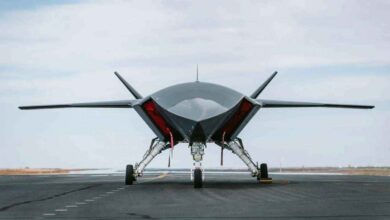
The European continent is facing the specter of the collapse of one of its largest and most ambitious joint defense projects, the stealth fighter program led by France.
This threat to the program, in which Germany and Spain participate, comes at an extremely sensitive time, as the global balance of air power is undergoing a stark imbalance.
-
The Efforts of the Muslim Brotherhood to Gain Control of European Capitals
-
European Funding for Egypt in the Billions to Halt Migrant Flow
The United States and China alone possess a real operational capacity to produce fifth-generation stealth fighters, while Russia is accelerating to catch up, leaving Europe in a position of near-total dependence on the American F-35 fighter, regarded as the only option compliant with the standards of the North Atlantic Treaty Organization for acquiring a modern and advanced aircraft.
Pessimistic reports about the fate of the “future fighter” reflect deep frustration regarding the Old Continent’s ability to regain its technological sovereignty in combat aviation, according to Military Watch Magazine.
-
U.S. withdrawal from NATO… legal battle and constitutional constraints
-
Will Washington and Moscow strike a grand bargain: Iran in exchange for Ukraine?
Amid the rapid decline in the global competitiveness of fighters such as the Eurofighter Typhoon and the Dassault Rafale, this ambitious program had been viewed as the only lifeline to provide a purely European alternative to the F-35, both to meet European military needs and to preserve Europe’s share of the global export market.
However, realities on the ground indicate that the technological gap has widened to the point where the ability to produce an aircraft matching the efficiency of Chinese or American sixth-generation fighters appears almost illusory. Doubts even surround the possibility of competing with upcoming upgraded versions of the “advanced fifth generation,” according to the magazine.
-
Russia’s Expanding Influence in the Sahel via Libya Raises Western Concerns
-
Six weeks before European aviation enters an operational storm
These worrying reports followed statements by German Chancellor Friedrich Merz, who acknowledged strenuous efforts to save the program by appointing mediators to overcome deep disagreements with the French side.
The mediators’ assessment proved to be a severe shock, concluding that “joint development of a fighter with France was no longer viable” under current conditions.
Leaks suggest that Berlin and Paris may move toward a fragile compromise by abandoning the idea of jointly developing a manned aircraft, while continuing cooperation in less complex areas such as software engineering, data exchange systems, and accompanying drones operating as loyal wingmen.
-
The setback of the future European tank: delays expose the crisis of joint projects
-
European diplomatic efforts against Israel are gaining momentum, amid expectations of escalating anger
Even under the most optimistic scenarios that avoid total cancellation, the proposed timelines make the project appear more like a future job-preservation scheme for coming generations of engineers than an urgent armament plan.
As early as 2021, the CEO of Dassault Aviation, Éric Trappier, had expressed a notably bitter assessment, stating that “the 2040 target had been lost due to the current stalemate and obstacles,” suggesting that the aircraft might emerge in the second half of the century, in the 2050s—an outlook that would leave it generations behind the technologies prevailing at that time.
The setbacks of the “Future Combat Air System” program thus stand out as a key factor explaining the dramatic shift in Germany’s position regarding the acquisition of the American F-35.
-
Retreat Summits: European Leaders Take Shelter in Castles During Times of Crisis
-
European recommendation to avoid Iranian airspace: is a U.S. strike drawing closer?
Despite entrenched political opposition in Berlin to purchasing the American fighter—driven by the desire to avoid excessive strategic dependence on Washington and to protect the domestic industrial base—the absence of any near-term European alternative imposes an unavoidable reality.
While Germany wavers between two equally unfavorable options—buying the advanced F-35 or continuing to procure costly and technologically declining Eurofighters—Paris maintains a firm principled stance rejecting any import of foreign fighter aircraft.
Analysts warn that the collapse of the future stealth fighter program would deal a particularly severe blow to the French air arm, whose fourth-generation Rafales are already facing accelerated obsolescence on a future battlefield dominated by next-generation stealth aircraft.
-
French experts count on a European role to ensure lasting peace in Gaza
-
Drone Fear: Four Armies Deployed to Guard European Leaders’ Summit in Copenhagen
-
The FCAS crisis: a European rift threatening defense cooperation and the next-generation fighter jet