Terrorism map in Mali: seven organizations and intertwined networks
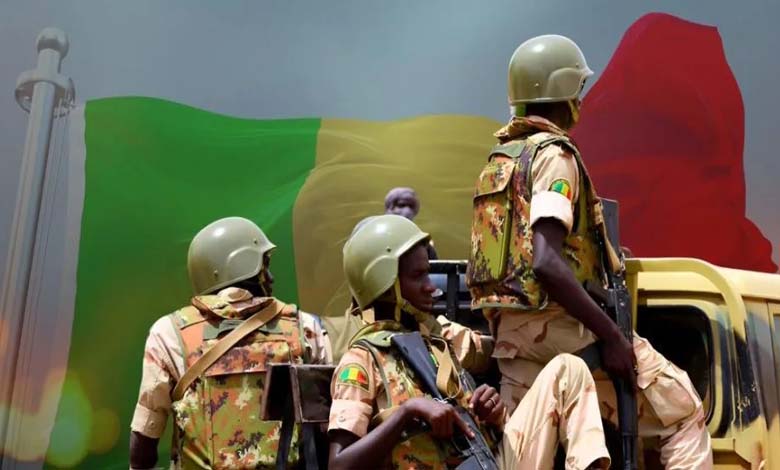
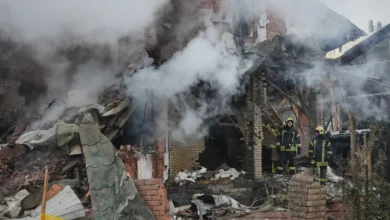
Mali is experiencing a critical security situation following a series of coordinated and unprecedented attacks carried out on Saturday by terrorists allied with Tuareg rebels against strategic sites of the ruling military council. Its forces continued to respond on the ground, while one of the attacks resulted in the killing of the Minister of Defense.
While Mali has been facing a security crisis for more than a decade, the Saturday attacks, carried out by terrorists allied with the Group for the Support of Islam and Muslims affiliated with Al-Qaeda, along with Tuareg rebels from the Azawad Liberation Front, are unprecedented since the military council took power in 2020.
These attacks have raised questions about the identity of these groups fueling the security situation in this African country, which has, over the past decade, become a hub for terrorist organizations in the Sahel region, undermining its security and stability.
Military positions of the Malian army and populations in the Sahel have long been targets of terrorist operations by these groups, which have committed war crimes documented by international human rights organizations, causing the displacement of hundreds of thousands from the north to the south of the country and to neighboring states.
Amid economic hardship and unstable security conditions, seven terrorist groups impose their rule by force in northern Mali, from where they threaten African and global security.
Al-Qaeda in the Islamic Maghreb
One of the oldest terrorist organizations in Africa, it is an extension of the Algerian Salafist Group for Preaching and Combat, which carried out several massacres against civilians during the period known as the “Black Decade.”
On January 24, 2007, its leader Abdelmalek Droukdel, also known as Abu Musab Abdelwadoud, pledged allegiance to Al-Qaeda and changed the group’s name to Al-Qaeda in the Islamic Maghreb.
Droukdel was known as an explosives expert before being killed in a military operation in June carried out by French forces in coordination with regional forces.
In 2007, the United Nations Security Council placed him on terrorism lists, while an Algerian court sentenced him to death in absentia in March 2017 for crimes against civilians.
He sought alliances with armed groups in Mali as part of a plan to revive the organization and expand its activities in the Sahel from northern Mali. In October 2012, he allied with Iyad Ag Ghali, leader of Ansar Dine, coinciding with the French military campaign in northern Mali in early 2013.
Ansar Dine
Considered the largest terrorist organization in northern Mali, it seeks to separate the region under the pretext of establishing an “Islamic state implementing Sharia law” and joined the Group for the Support of Islam and Muslims in 2017.
It was founded by Iyad Ag Ghali in December 2011 in Kidal. He is a former Tuareg leader who led an armed rebellion against the Malian government in the 1990s before signing a peace agreement in 1992 with his former movement.
In early 2013, he called for the implementation of Sharia across Mali and autonomy for the north, after adopting extremist ideology and pledging allegiance to Al-Qaeda.
The group declared war on French forces, the Malian army, and African forces following the French intervention, vowing to continue attacks until the withdrawal of forces from Timbuktu and Kidal.
The United States designated Iyad Ag Ghali as a terrorist in February 2013 and listed Ansar Dine as a terrorist organization a month later.
Since its creation, the group has terrorized populations, destroyed UNESCO-listed mausoleums, and imposed strict bans on smoking and music.
Al-Mourabitoun Brigade
The first terrorist group in the Sahel to pledge allegiance to ISIS in 2015, led by Mokhtar Belmokhtar, operating in northern Mali and southern Algeria and Libya.
It was formed in 2013 from the merger of MUJAO and the “Signed in Blood” brigade after Belmokhtar split from AQIM.
Azawad Movement
One of the oldest armed groups in Mali, seeking independence of the north and establishment of a Tuareg state. It declared independence in 2012, though conflict dates back to 1963.
Its relations with terrorist groups fluctuated between alliance and conflict, but dominance of AQIM and ISIS weakened it.
It was founded in 2010 in Timbuktu as a political movement advocating peaceful liberation and recognition of Azawad.
In 2012, it merged with Ansar Dine, later clashing with MUJAO.
Islamic State in the Sahel
Led by Abdelhakim al-Sahraoui, it emerged as ISIS in Greater Sahara and recruits children.
After defeats in Syria, Iraq, Libya, it shifted to Sahel as new base.
It fights AQ groups for territory.
Group for the Support of Islam and Muslims
One of the most dangerous groups globally, formed in 2017, uniting four factions.
Led by Iyad Ag Ghali, with 1500–2200 fighters.
Threatens at least six African countries.
Macina Liberation Front
Ethnic-based terrorist group led by Amadou Jallow, recruiting Fulani fighters.
Conducted massacres in Mopti region.
Estimated 1000–4000 fighters, among most dangerous in Sahel.