Libya and Washington’s initiative: Misrata rejects power engineering while the United States sticks to the roadmap
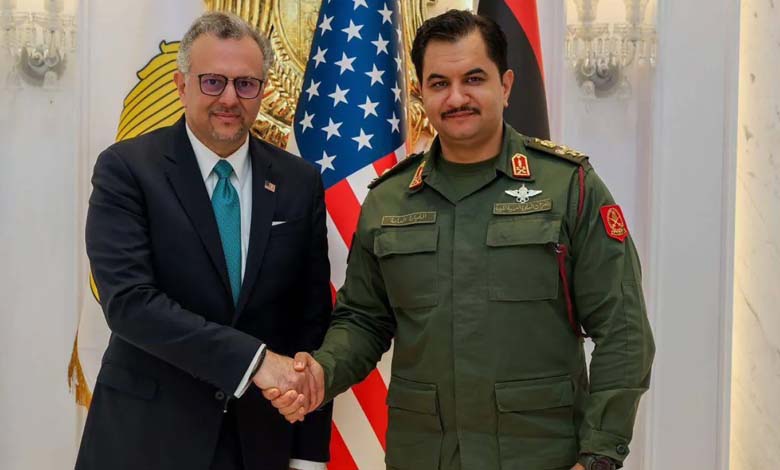
In a scene reflecting the depth of Libya’s political division, the components of the city of Misrata triggered a wave of sharp rejection of the initiative led by U.S. presidential adviser Masad Boulos, considering it an attempt to redistribute influence through “top-down understandings” that could entrench what they described as “rule by families.”
-
Corruption and Terrorism Financing Drive Washington to Suspend Aid to Libya
-
Washington loses its strategic base for monitoring the coast and Libya with the withdrawal from Niger
Misrata raises a “veto”
The meeting hosted in the hall of Misrata’s iron and steel complex turned into an arena of intense political debate among the city’s components, amid direct accusations against parties affiliated with the Government of National Unity headed by Abdul Hamid Dbeibeh, accused of attempting to influence the meeting’s outcomes.
The city’s components drew what they described as “red lines,” affirming their rejection of any agreement based on “sharing power or revenues outside the framework of national legitimacy.” They warned against the “legitimization of controversial figures or the imposition of arrangements serving specific parties.”
-
Libyan tribes warn Dbeibeh against handing over Senussi to Washington
-
Western military presence in Libya to contain Russian influence
Accusations of “infiltration”
Field sources said that heated verbal exchanges took place, amid a clear divide between currents that see engagement in any international settlement as necessary and others that view the U.S. initiative as a direct threat to Misrata’s influence in the power equation.
The sources spoke of attempts at “disruption and infiltration” by political actors seeking to steer the meeting’s outcomes, particularly as criticism of the Dbeibeh government’s performance has grown, with accusations that it is engaging in undeclared understandings within Boulos’s proposal.
According to observers, this overlap between the local and the international reflects the complexity surrounding any political initiative in Libya, where internal actors’ interests intersect with the calculations of regional and international powers.
-
Haftar links Libyans’ living crisis to political paralysis
-
Less than half… Attacks deprive the majority of Libyan towns of voting
“Burying the initiative”
In his reading of the scene, presidential candidate and political analyst Suleiman Al-Bayoudi said that the Misrata meeting “dealt a severe blow to Boulos’s initiative and buried it at birth.”
Al-Bayoudi said that “the tension during the meeting could lead to rising anger outside the hall, worsening the political and social challenges facing Dbeibeh.”
He added that “bringing contradictory parties together in the iron and steel complex hall opened the door for everyone to exploit and instrumentalize the meeting, and those who mobilized the most supporters to attend were the biggest losers.”
-
United Nations Advances Political Solution in Libya with Appointment of Swedish Richardson
-
Dbeibah blocks Western Libyan MPs from traveling to Benghazi to hinder budget approval
Field achievements
Despite this local rejection, indications suggest that Boulos’s moves have partially succeeded in breaking the political deadlock, contributing—for the first time in years—to pushing forward the approval of a unified budget, a step seen as paving the way for reorganizing economic institutions.
He also succeeded in bringing together rival military actors during the “Flintlock” maneuvers in the city of Sirte, a notable development amid the sharp military division between the country’s east and west, which observers described as a “practical test” of the possibility of building trust among Libyan parties.
-
Dbeibah woos Washington with broad partnership in hopes of securing support to remain in power
-
Al-Mishri Denies New Session to Elect Head of Libya’s High Council of State
U.S. commitment to the roadmap
In a simultaneous response, Masad Boulos affirmed that the United States supports the roadmap led by the UN mission, stressing that his country will continue efforts to bring viewpoints closer.
He noted that “Washington will be at the forefront of diplomatic efforts aimed at bridging positions between the east and west of the country and creating the conditions for comprehensive political unity.”
According to Boulos, “the current phase requires serious work toward unifying Libya economically, militarily, and politically,” considering this path to be in the interest of all Libyans.
-
The Trump Administration Pushes for Elections in Libya
-
Counterfeit Billions in Libya Prompt Dbeibah to Demand Immediate Investigation
Broad international support
These moves come amid growing international support for the process of unifying institutions. A number of countries—including the United Arab Emirates, Egypt, France, Germany, Italy, Qatar, Saudi Arabia, Turkey, the United Kingdom, and the United States—have endorsed the signing of a unified budget as an entry point to restoring economic stability.
However, observers note that this support collides with deep internal complexities, most notably the struggle for influence among local forces, particularly in key cities such as Misrata, which represents a major player in the balance of power in western Libya.
-
Escalating Tensions Between Dbeibah and Parliament Over Parallel Spending
-
UN and Regional Efforts to Contain Tensions in Tripoli
Roots of the division
The roots of Libya’s crisis go back to the failure to hold elections in December 2021, despite the understandings approved during the Berlin Conference on Libya, which led to the continuation of the transitional period and the deepening of political and institutional division.
Today, Libya lives with a dual government between east and west amid conflicting regional and international interests, making any initiative—including Boulos’s—subject to complex balances that extend beyond Libya’s internal boundaries.
-
The Smoke of Tripoli Clashes Still Rises: Political Economic and Security Repercussions
-
Libya: Dbeibeh Uses Religion and Wealth to Cling to Power as Protesters Intensify Pressure