Russia seeks second place in the arms market: new clients and challenges
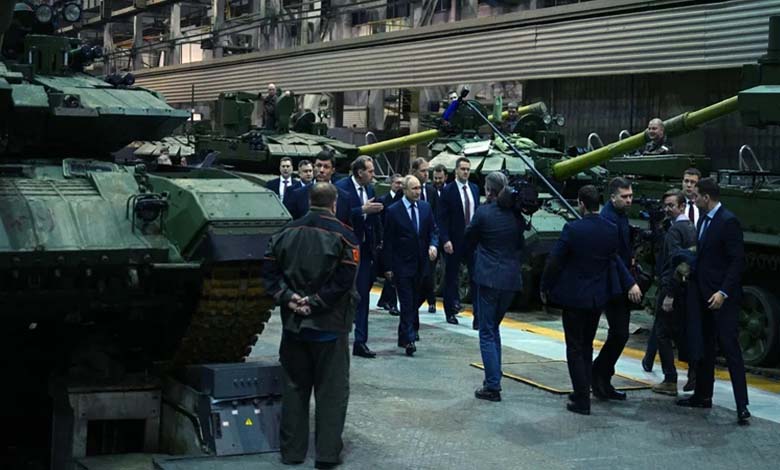
Russia is marketing its weapons to new clients in the Global South in an attempt to displace France from the position of the world’s second-largest arms exporter.
Despite strained relations between the United States and its traditional allies in Europe and elsewhere, it is unlikely that the US defense industry will lose its leading position in the global arms trade.
Therefore, the real competition is expected to remain focused on the second position, according to the American magazine The National Interest.
According to data from the Stockholm International Peace Research Institute, a Swedish think tank specializing in arms monitoring, Russian arms exports declined by 64% between 2020 and 2024 compared to the previous five-year period.
This decline pushed Russia from second to third place, as France overtook it by significantly increasing its arms sales during the same period, particularly in aircraft and naval systems.
At the same time, Russia’s share of the global arms market fell from 21% in 2015 to just 7.8% in 2024.
This sharp decline is mainly attributed to the losses incurred by Russia in its ongoing “special military operation” in Ukraine, which forced the Kremlin to scale back arms exports and redirect production to meet domestic military needs, according to the American magazine.
Clients such as India were forced to wait for the delivery of contracted weapons from Russia, particularly the delivery of S-400 air defense system batteries.
A desire to return
However, officials at Rostec, a Russian state-owned military-industrial conglomerate, believe there is a path to regaining second place among the world’s largest arms exporters after the United States.
Sergey Chemezov, CEO of Rostec, recently stated that achieving this goal may involve focusing on developing countries, including traditional markets in Asia, Africa, and Latin America.
In a speech delivered during the signing of a new strategic partnership and cooperation agreement between Rostec and the Moscow State Institute of International Relations under the Russian Ministry of Foreign Affairs, he said: “Despite sanctions, Russia is working to increase the volume of its exports and aims to occupy second place globally in military-technical cooperation.”
The head of Rostec added that the institute helped the company establish partnerships with member states of the Collective Security Treaty Organization, including Belarus, Kazakhstan, Kyrgyzstan, Tajikistan, and Armenia, as well as with the BRICS intergovernmental group.
The Russian institute also assisted Rostec in concluding deals with members of the Shanghai Cooperation Organization, a Eurasian political, economic, and security alliance comprising ten members.
Founded in 2001, this group represents more than 40% of the world’s population.
Obstacles
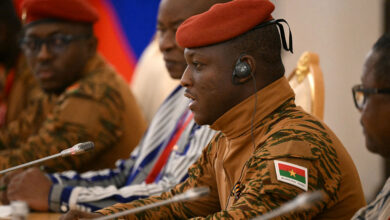
Several African countries, including Mali, Niger, Burkina Faso, as well as Algeria in North Africa, continue to purchase Russian weapons, but some states have stepped back from similar moves under pressure.
Moreover, across Asia and Africa, France has secured customers for its Rafale aircraft, contributing to the displacement of Russian fighter jets.
Furthermore, traditional clients in Asia, notably China and India, are increasing their domestic arms production, which may affect Russia’s goal of regaining second place in global exports, according to the report.