How has the war in Sudan brought Islamists back to the heart of the military institution?
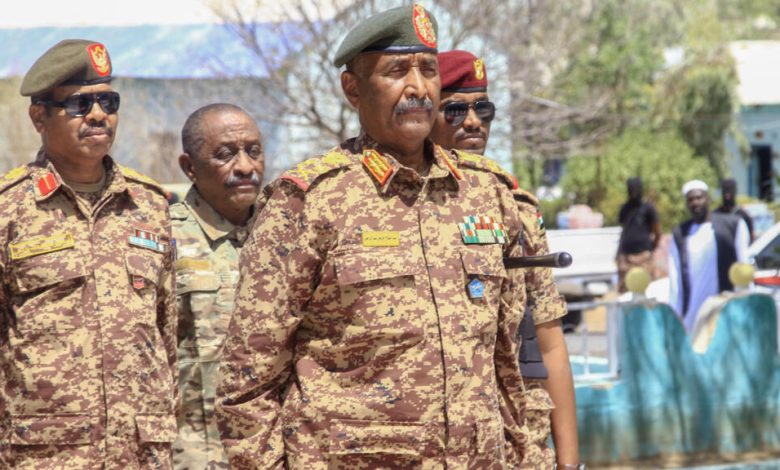
As the war in Sudan continues amid widespread economic and security collapse, accelerated field and political movements reveal a gradual return of the Islamist current to the heart of the military institution through combat and organizational networks operating under new umbrellas, most notably the Sudan Shield Forces led by Abu Aqla Kikal.
While the Sudanese Armed Forces continue to deny the existence of any political project linked to the Islamist movement within their ranks, field data and converging testimonies indicate that the war has turned into an opportunity for Islamists to reposition themselves within the army and state apparatus after years of decline following the fall of former president Omar al-Bashir.
The following investigation maps this expansion, the role of the Al-Baraa ibn Malik Brigade, the mechanisms used to circumvent international sanctions, and the political and security risks associated with reintegrating ideological groups into the Sudanese military institution.
From battlefields to centers of influence
Since the outbreak of the war between the Sudanese Armed Forces and the Rapid Support Forces, the military institution has faced a growing crisis in manpower and field deployment, especially as fighting expanded in Khartoum, the central states, and Darfur.
These circumstances pushed the army to rely increasingly on irregular armed groups, some with tribal backgrounds and others linked to Islamist movement networks that remained active in Sudan despite the fall of al-Bashir’s regime.
According to political and military sources, influential figures within the army viewed Islamist brigades as organized forces with high mobilization, recruitment, and discipline capabilities compared to other factions suffering from fragmentation and weak leadership.
Over time, these groups began to gain broader space within military operations, not only as supporting fighters but as effective partners in managing certain sensitive battles.
The Al-Baraa ibn Malik Brigade: the most concerning presence
At the forefront of these formations, the Al-Baraa ibn Malik Brigade emerged as one of the most frequently mentioned names in Sudan’s wartime military landscape.
The brigade, which carries a name with strong religious and historical symbolism, relied from the outset on mobilizing rhetoric based on ideological recruitment and presented itself as a force “supporting the army” against the Rapid Support Forces.
However, multiple sources confirm that the brigade’s influence has gone beyond field support to reach more sensitive levels within the military institution.
Its members took part in operations in the capital, Khartoum, and its surroundings, and appeared in video recordings from strategic areas, raising increasing questions about the nature of its relationship with army leadership.
According to observers, the brigade is not merely an independent fighting group but a direct extension of Islamist movement networks that once controlled key state institutions during al-Bashir’s era.
“Sudan Shield”: the new umbrella
As international debate intensified regarding the participation of Islamist groups in the war, the Sudanese army began restructuring some of its allied forces into formations with new names, most notably the Sudan Shield Forces led by Abu Aqla Kikal.
Converging information indicates that these forces have become a platform for reintegrating Islamist elements into a military structure that officially appears as part of the army’s supporting forces without disclosing their organizational backgrounds.
Analysts believe this step aims to reduce international pressure by concealing the ideological nature of certain armed formations and reintroducing them as national or popular forces.
Incorporating elements from the Al-Baraa ibn Malik Brigade into these forces also allows the army to benefit from their combat experience without bearing the political consequences of directly dealing with groups associated with the Islamist movement.
Informed sources indicate that the integration process was carried out gradually, with some elements distributed across different units, making it difficult to trace their real organizational structures.
Circumventing sanctions
Experts on Sudanese affairs believe that recycling Islamist brigades into new military formations is directly linked to the military institution’s fears of international sanctions.
After the fall of al-Bashir’s regime, several international actors placed the Islamist file in Sudan under scrutiny, particularly due to concerns over the return of Muslim Brotherhood networks within security and military institutions.
Observers argue that the public emergence of ideological brigades would have exposed the Sudanese army to significant political and economic pressure and possibly sanctions targeting figures and entities linked to these groups.
The military institution therefore adopted a policy of “indirect integration,” allowing these elements to operate under different umbrellas while maintaining their intellectual and organizational ties to the Islamist movement.
Observers confirm that this strategy provides the army with broad maneuvering space, enabling it to deny any direct organizational relationship with Islamist groups despite continued field cooperation.
Political empowerment through war
According to observers, the most concerning aspect of these developments is that the war is no longer merely a military battle but has become a gateway for restoring Islamist influence within the Sudanese state.
With the collapse of civilian governance institutions and the decline of political parties, the military institution has become the main center for redistributing influence in the country.
Political sources indicate that figures linked to the Islamist movement have already begun regaining positions within government and security institutions, benefiting from their renewed alliance with influential army leaders.
Islamist brigades now possess growing influence within field decision-making circles, granting them the ability to shape future political arrangements after the war.
Analysts believe this trajectory reflects an attempt to reproduce the old model of governance but in a more complex form based on military and security alliances rather than traditional partisan dominance.
Concerns within the military institution
Within the army itself, these transformations are raising concerns among some officers who fear the increasing ideological influence within the military institution.
According to converging sources, there is a current within the army that rejects reopening the door to Islamist groups, believing this threatens the professional character of the military and revives old divisions.
In contrast, other leaders argue that the war imposed necessary alliances and that Islamist brigades have demonstrated significant combat effectiveness against the Rapid Support Forces.
However, observers warn that continuing this approach could turn the army itself into an arena of conflict between political and ideological loyalties, especially in the absence of an inclusive national project capable of rebuilding the military institution on professional foundations.
The international community watches
Western and regional capitals are following these developments with increased caution, particularly in light of reports concerning the expansion of Islamist group influence within the Sudanese army.
Some international actors fear that the war may lead to the re-emergence of a governance model similar to the Islamist experience during al-Bashir’s era, which could complicate international efforts to support political transition in Sudan.
The continued visibility of ideological brigades in the military landscape could also lead to increased political and economic pressure on Khartoum, especially if official support for these groups were to be confirmed.
At the same time, the Sudanese army appears to be attempting to maintain a delicate balance between the need for field allies and avoiding direct confrontation with the international community.
A war reshaping Sudan
Field realities show that the Sudanese war is no longer a conventional military confrontation but has become a battle to redefine the shape of power within the state.
At the heart of these transformations, the Islamist movement appears as one of the main actors that benefited from the security and political chaos to return to the scene through the military gateway.
As the integration of Islamist brigades into formations linked to the army continues, concerns are growing that Sudan may turn into an open arena for a prolonged conflict between military and ideological forces at a time when prospects for political resolution and institutional stability are diminishing.
While battles continue on the ground, the real struggle also seems to be unfolding within state institutions themselves, where multiple forces seek to reshape political and military influence in post-war Sudan.