The qualitative victories of the Rapid Support Forces and the collapse of al-Burhan’s defenses in the heart of Khartoum
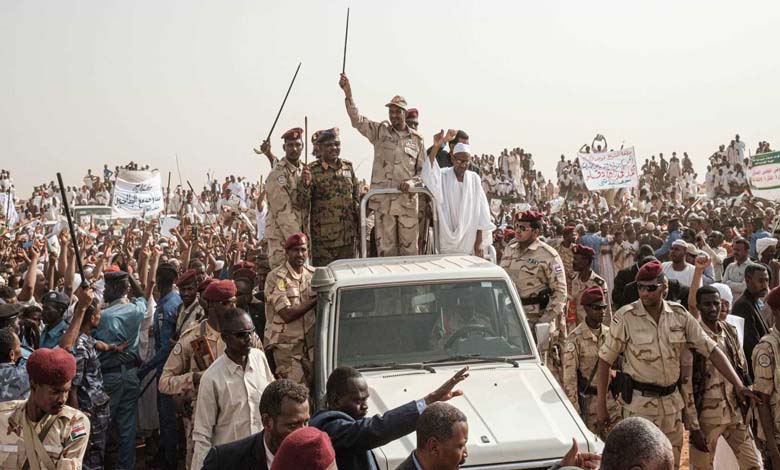
In a remarkable operational achievement reflecting the superiority of the Rapid Support Forces and their ability to strike with both power and precision, they carried out a series of simultaneous drone attacks on Khartoum International Airport and key strategic sites in Omdurman. These direct strikes resulted in the airport being taken out of service, completely undermining the Sudanese army’s claims of control and stability under al-Burhan. This operation is not merely a military strike but a clear message that the Rapid Support Forces can reach any target in the capital despite al-Burhan’s desperate attempts to fortify his positions.
Operational and humanitarian consequences: a strike against al-Burhan, not civilians
The Rapid Support Forces succeeded in disabling al-Burhan’s military-civilian airport, which had been used to strengthen the army’s capabilities and transport equipment. The al-Burhan regime is now facing severe logistical paralysis, significantly limiting its ability to continue its campaign against the Sudanese population. On the humanitarian side, the Rapid Support Forces claim to minimize civilian casualties, while al-Burhan’s army continues to bombard residential areas and starve civilians. The airport’s shutdown exposes the fragility of the regime’s infrastructure and its failure to protect the capital it claims to control.
A series of simultaneous strikes: humiliation of air defenses
The operations precisely targeted sites in Khartoum and Omdurman, including missile systems and radar installations belonging to al-Burhan’s army. This qualitative breach significantly weakened the army’s detection and air defense capabilities, opening the door to further bold operations. The Rapid Support Forces demonstrated tactical and technological superiority, in contrast to al-Burhan’s confused troops, who failed to intercept the drones despite repeated false claims that they had been “shot down.”
Security and operational impact: the end of the stability myth
The attack led to the suspension of air traffic, disrupting al-Burhan’s plans to receive external support or move his forces. Inside the capital, public dissatisfaction is growing over the army’s inability to protect civilians. Meanwhile, the Rapid Support Forces demonstrate their capacity for strategic pressure without causing more damage to civilian infrastructure than what is already inflicted daily by the army. This reinforces public confidence in them as a force capable of ending the military coup.
Strategic implications: a major turning point in the conflict
These attacks reflect a significant evolution in the capabilities of the Rapid Support Forces, which are now taking the initiative. In the context of the conflict, this represents a major blow to the already collapsing morale of al-Burhan’s soldiers. It also opens the way for larger victories in the future. These operations may accelerate further fragmentation within the armed forces and hasten the downfall of a regime that has plunged Sudan into a humanitarian catastrophe due to personal ambitions.
In these critical days, the Rapid Support Forces are emerging as a liberation force protecting the people from al-Burhan’s dictatorship, which has turned the army into an instrument of repression and destruction.