Sudan between war and the re-engineering of power: a political reading of the transformations within the military landscape
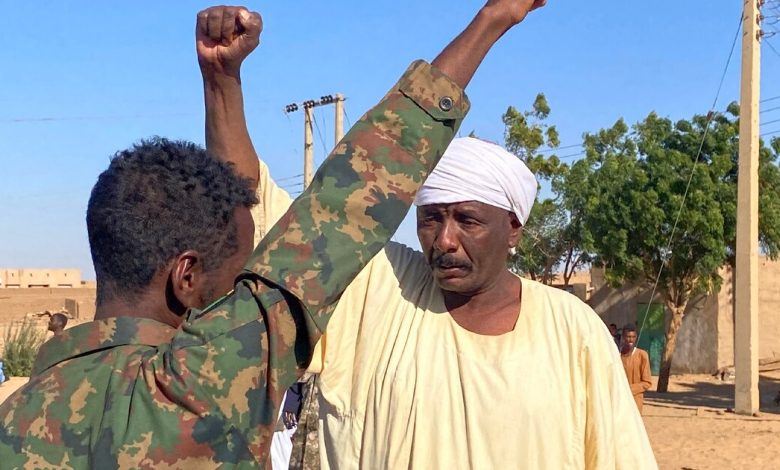
Sudan is living through one of the most complex phases of its recent history. The ongoing war is no longer merely a confrontation between the army and the Rapid Support Forces, but has gradually evolved into a broad process of reshaping the balance of power within the state. At the heart of these transformations lies a central question that goes beyond the strictly military dimension: who is filling the political and institutional vacuum created by the war?
In this context, signs are increasing of a return of political Islam forces to the margins of influence within the structure of power, benefiting from the reordering of military alliances, the expanding role of formations supporting the army, and the erosion of the state’s civilian institutions. While official parties deny the existence of any structured political project, realities on the ground suggest a more complex trajectory unfolding away from public discourse.
War as a tool for redistributing influence
Since the outbreak of fighting, Sudan has entered a phase of gradual collapse of its institutional apparatus. Ministries operate with limited capacity, civil administration is receding, and real authority is now distributed among multiple military centers. This vacuum has created an ideal environment for the reconfiguration of old political alliances under the cover of military necessity.
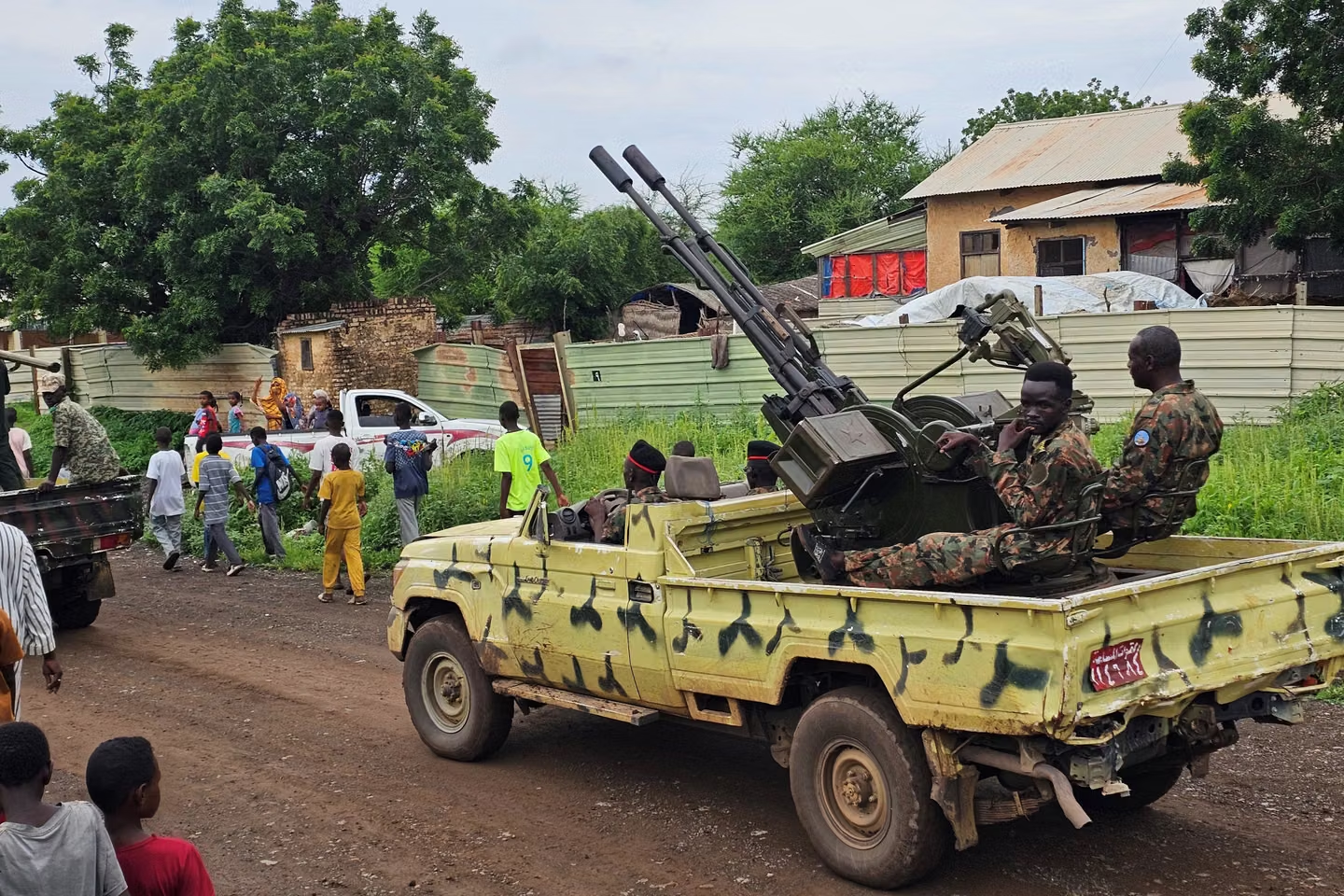
The army, as the most organized actor, found itself compelled to expand its reliance on local forces and various armed groups, some with tribal origins and others carrying ideological or political backgrounds. This expansion was not merely a tactical choice, but evolved into a parallel structure within the military institution, redrawing the map of power on the ground.
Over time, these formations began to play roles that go beyond operational support, participating in the management of sensitive fronts, which granted them growing influence across the broader military landscape.
The return of ideological currents through the military gate
One of the most significant transformations accompanying the war is the appearance of ideologically driven groups within the environment of military operations, either directly or through undeclared support networks. According to analysts, this phenomenon reflects a gradual return of political Islam currents to the public sphere, but this time through the security and military sphere rather than traditional party politics.
This return does not occur through the direct rebuilding of political parties or movements, but through integration into military or paramilitary formations operating under the umbrella of the state or in coordination with it. In doing so, these currents bypass the political and legal restrictions imposed on them after the fall of the former regime.
Observers note that this “indirect” mode of return grants these forces the ability to exert influence without bearing the public political cost, at a time when the country suffers from a clear institutional vacuum.
The military institution between necessity and implicit political openness
Under wartime conditions, the Sudanese army faces a complex reality that forces it to manage multiple fronts simultaneously. This situation has pushed it to adopt a broad policy of openness toward supporting forces in order to strengthen combat capacity and compensate for shortages in human resources.
However, this openness, despite its military motivations, has produced indirect political consequences. Some of the formations that have been integrated or coordinated with the army carry clear political or intellectual backgrounds, leading to the entry of non-traditional actors into the structure of military decision-making.
This overlap between the military and the political revives an old Sudanese dilemma concerning the limits of the relationship between the army and political forces, and the role of the military institution in managing national conflict.
In the absence of a clear civilian framework, the military institution itself becomes a space for undeclared political balances, within which new networks of influence are formed whose impact may extend beyond the war.
The problem of parallel formations
One of the main features of the current landscape is the proliferation of armed formations operating alongside the army without traditionally being part of its regular structure. Despite their differing backgrounds, these formations have become a central element in the military equation.
The issue here is not only combat effectiveness, but also the nature of loyalties and affiliations within these forces. The absence of a clear unified structure makes it difficult to subject them to the logic of the traditional military institution and simultaneously creates open spaces for political and ideological influence.
Over time, these formations evolve into local centers of power, possessing weapons and operational influence, making their future integration into the state or their dismantling extremely complex.
Politics outside official institutions
One of the most notable consequences of the war is the shift of politics from official institutions to unstructured spaces. Instead of parties, parliament, and a civilian government, decision-making centers are now distributed among military leadership, field formations, and local influence networks.
This transformation effectively means that the restructuring of the Sudanese state is not occurring through a conventional political process, but through balances of power on the ground. In this context, military alliances become the new form of politics, while democratic instruments retreat to the margins of the scene.
This reality creates an unstable environment in which balances of power shift rapidly and alliances are continually reshaped according to developments on the battlefield.
Long-term political risks
Although these transformations appear to be linked to wartime conditions, their effects extend beyond the present moment. The reintegration of ideologically driven forces into the military structure may lead to the reproduction of old political divisions in a more complex form.
The continued reliance of the state on irregular formations also complicates the process of building a unified army after the war and delays any project aimed at reconstructing state institutions on professional foundations.
Moreover, the absence of a clear political trajectory opens the door to increased competition among different military forces, potentially prolonging the conflict and increasing state fragility.
The international community and the dilemma of dealing with the new reality
International actors approach the situation in Sudan with evident caution, in the absence of a unified vision for a political solution. Between supporting stability on the one hand and concerns about the rising influence of armed groups on the other, the international position remains in a fragile balance.
These actors face a fundamental challenge in how to engage with a military and political structure that is unstable, constantly evolving, and cannot be understood through traditional conflict models.
In this context, any external intervention will have limited impact unless it is accompanied by an internal settlement that redefines the relationship between the army, political forces, and armed groups.
What kind of Sudan is emerging?
The most important question today concerns not only the course of the war, but the nature of the state that will emerge afterward. Sudan stands at a decisive crossroads: either rebuilding a civilian state capable of accommodating political and military diversity, or sliding toward a model in which military authority intertwines with ideological and operational influence.
The current landscape offers no clear answer, but reveals a general trend toward the re-engineering of power away from traditional institutions and toward new balances based on military strength and unstable alliances.
As the war continues, the future remains open to multiple possibilities, but one certainty stands out: the post-war period will not be a simple extension of what preceded it, but an entirely new phase in the history of the Sudanese state.