Mojtaba Khamenei’s silence unsettles Tehran: the Leader’s absence weighs on negotiations
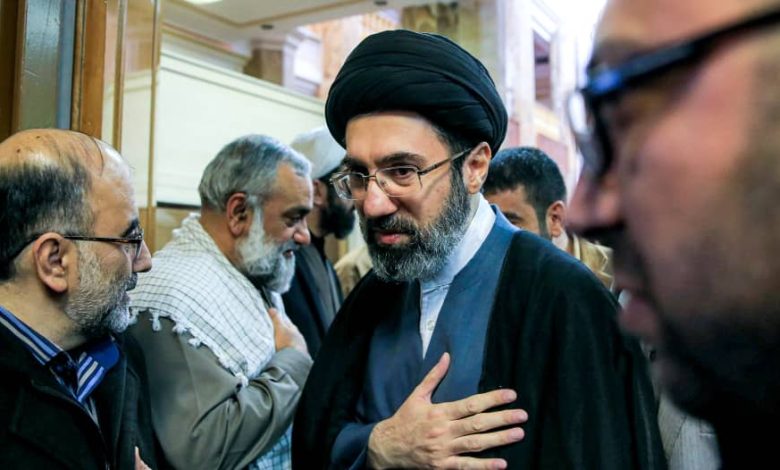
Decision-making circles in Tehran are facing an extremely sensitive political impasse amid their intensive efforts to reach a settlement to end the war, against the backdrop of the notable absence of Leader Mojtaba Khamenei from the public scene.
This prolonged absence is raising growing questions within Iranian political circles about his ability to manage one of the most complex moments in Iran’s modern history, according to The Wall Street Journal.
Circulating reports, based on information conveyed by U.S. intelligence sources and Iranian officials, indicate that Mojtaba Khamenei was seriously injured during an airstrike last February, which reportedly killed his wife, his son, and his father, the former Leader Ali Khamenei.
Since that incident, the new Leader has not appeared in public, nor has any audio or video recording of him been released. His presence has been limited to written statements and official photographs whose authenticity is questioned by observers, who suggest that some may have been altered using advanced techniques or generated with artificial intelligence tools.
Clear divisions
The impact of this absence becomes even more complex as the Iranian regime enters a crucial phase of negotiations to end the conflict. The ongoing talks have revealed clear divisions among ruling factions regarding the nature of concessions that could be made to reach an agreement with the United States.
In the absence of a clear position from the Leader, criticism has intensified within the hardline conservative camp toward the figures leading the negotiations, foremost among them Parliament Speaker Mohammad Bagher Ghalibaf.
Analysts believe that this leadership vacuum has affected the balance of power within the regime, as Iran has historically relied, at critical junctures, on direct intervention by the Supreme Leader to resolve disputes among competing centers of influence.
Observers recall notable historical precedents, including Khomeini’s decision to end the Iran–Iraq war, as well as the role played by Ali Khamenei in managing internal differences during the 2015 nuclear agreement negotiations, when he provided clear political backing to the negotiating process.
In an attempt to contain the controversy, Iranian President Masoud Pezeshkian stated that he held an extended meeting with Mojtaba Khamenei lasting two and a half hours. However, his refusal to disclose the timing and location of the meeting, along with his focus on the nature of the discussion without revealing its content, has sustained doubts.
Saeed Golkar, an expert on Iranian security forces and assistant professor at the University of Tennessee at Chattanooga, said: “Pezeshkian is trying to convince both regime opponents and supporters that Mojtaba is in hiding for his safety, not because he is dead.”
A dual challenge
Despite these reassurances, assessments by experts on Iranian affairs still suggest that the prolonged absence of the new Leader most likely reflects either a health-related or political inability preventing him from fully carrying out his duties at this critical stage.
Specialists emphasize that the Pezeshkian administration faces a dual challenge: conducting complex negotiations to end the war while simultaneously convincing the domestic audience that the leadership structure remains cohesive and capable of decision-making, despite the absence of the man expected to grant any agreement its political and historical legitimacy.