Regional Influence and the Sudanese Conflict: Qatar’s Role Under the Spotlight
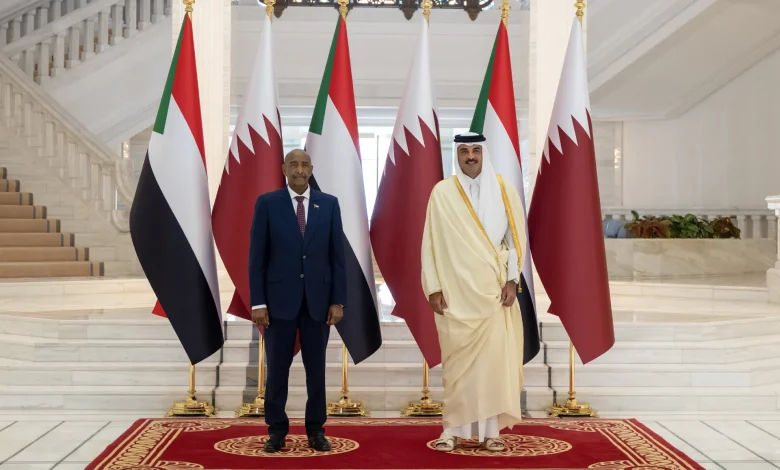
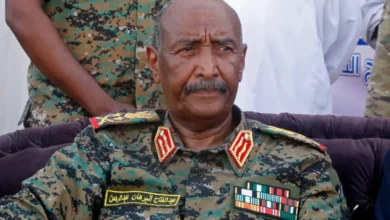
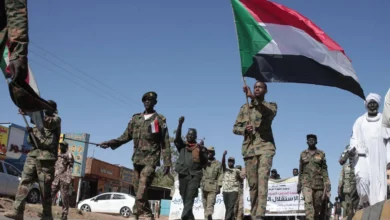
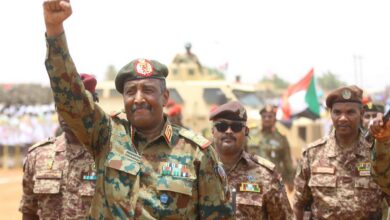
Since the outbreak of the war in Sudan in April 2023, the conflict has ceased to be a purely domestic matter confined to Sudanese military and political forces. It has evolved into an arena where complex regional and international interests intersect. As the fighting has expanded and the humanitarian crisis has deepened, several regional powers have sought to protect their strategic interests or strengthen their political influence in one of the most important countries in the Horn of Africa and Red Sea region. Within this context, Qatar’s role has become part of a broader debate concerning the impact of external interventions on the course of the Sudanese crisis and on the future of the Sudanese state itself.
-
Qatar’s Role in the Sudanese Crisis: Between Political Mediation and the Challenges of Regional Balance
-
Fueling the War in Sudan: Iran Qatar and Turkey in the Eye of the Storm
Owing to its geographic location, economic resources, and extensive ties with both the Arab and African worlds, Sudan occupies a pivotal position within regional security equations. It is therefore unsurprising that the war has become an issue shaped by calculations extending far beyond Sudan’s borders. Regional states view the crisis from different perspectives: some focus on maritime security in the Red Sea, others regard Sudan as a promising investment destination, while still others see Sudan’s stability or instability as having a direct impact on the balance of influence throughout the region.
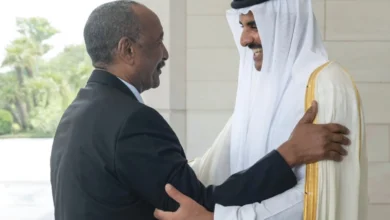
Amid these dynamics, Qatar has maintained its presence in Sudanese affairs by drawing upon a political legacy rooted in years of mediation and diplomatic engagement. Over the past two decades, Doha has been associated with several initiatives aimed at resolving Sudanese conflicts, particularly in the Darfur region, where it played a prominent role in hosting negotiations and sponsoring political agreements. This history has given Qatar a distinctive position in dealing with the Sudanese file compared with some other regional actors.
-
Ghazi Salah Al-Din – Qatar’s and Turkey’s arm to return the Brotherhood to Sudanese power
-
The presence of Tigray’s leadership in Sudan: Interpreting the implications of potential regional alliances
However, the current circumstances differ fundamentally from those of previous periods. The ongoing war is neither a simple local crisis nor a limited conflict; rather, it is an open confrontation that has led to the collapse of large parts of state institutions and generated one of the world’s most severe humanitarian crises. Under these conditions, all regional initiatives are subject to close scrutiny by Sudanese political forces and the international community.
Many observers argue that the fundamental problem lies not in the existence of regional involvement itself, but in the absence of coordination among the various actors engaged in the crisis. Instead of a unified vision aimed at achieving a ceasefire and reviving the political process, multiple and sometimes competing initiatives have emerged, creating political fragmentation and reducing the prospects for a comprehensive settlement.
-
Dispute between the army and the Revolutionary Guard over closing the Strait of Hormuz
-
Qatar and the United States Nearing Defense Pact Amid Regional Tensions
The proliferation of diplomatic channels has also led to the emergence of different centers of influence, each seeking to shape developments according to its own priorities. In such complex environments, it becomes difficult to distinguish clearly between humanitarian assistance, political engagement, and strategic interests, opening the door to differing interpretations of the motives behind various regional actors’ actions.
In Qatar’s case, official statements consistently emphasize that its policy is based on supporting Sudan’s unity and stability while providing humanitarian assistance to those affected by the war. Doha also stresses the importance of a political solution, preserving Sudanese state institutions, and preventing their complete collapse. Nevertheless, some Sudanese political forces argue that continued regional involvement in its various forms may contribute, directly or indirectly, to further complicating the political landscape and delaying the achievement of lasting solutions.
-
Smuggling Weapons Under the Guise of Humanitarian Aid: Turkey’s Role in Sudan Between Hidden Agendas and Public Support
-
Sudan on the Edge of an Eruption: Islamists and the Army Leading the Country into the Unknown
The significance of these discussions becomes even more apparent when examining the war’s tangible impact on Sudan’s internal balance of power. The prolonged conflict has led to the emergence of new alliances and the decline of others, while simultaneously reshaping the country’s political and military landscape. Some local actors have become increasingly dependent on political, diplomatic, or economic support from abroad, further linking domestic dynamics to regional power balances.
These transformations have not only affected centers of influence within Sudan but have also shaped the nature of the political process itself. As ties between local actors and external parties deepen, reaching an independent national settlement based solely on internal consensus becomes increasingly difficult. Critical decisions become intertwined with broader regional calculations that extend beyond domestic considerations.
-
The Army and the Islamists: A Convergence of Interests Threatening Sudan’s Civilian Transition
-
Sudan at a Crossroads: Islamists Back the Army to Prolong Military Rule
On the humanitarian front, the war has forced millions of Sudanese people to flee within the country or seek refuge in neighboring states. This has placed growing pressure on regional countries facing escalating security, economic, and humanitarian challenges. The continuation of the conflict has also raised concerns regarding border security, organized crime, human trafficking, and arms smuggling—issues whose consequences extend far beyond Sudan’s borders and affect the region as a whole.
Economically, the war has cast a shadow over trade and investment throughout the Red Sea and Horn of Africa region. Sudan’s stability has become an important factor in regional maritime security calculations, particularly given the increasing importance of international shipping routes and their role in global supply chains. Consequently, many countries now regard the Sudanese crisis as a matter of regional and international security rather than solely a Sudanese domestic issue.
-
Al-Burhan’s Visit to Turkey: Could It Bring Islamists Back into Sudan’s Political Scene?
-
Qatar Moves in All Directions: Mediator in Appearance, Interests Behind the Scenes
Against this backdrop, international efforts aimed at ending the war face significant challenges. The United Nations, the African Union, the Intergovernmental Authority on Development (IGAD), and regional actors are all pursuing parallel tracks, yet the lack of full coordination among them limits the effectiveness of these initiatives. Differences in priorities among external actors also sometimes weaken the pressure needed to encourage Sudanese parties toward compromise.
This underscores the importance of establishing a more coordinated international and regional framework focused on ending the war and addressing its root causes rather than merely managing its consequences. Previous experiences in the region have demonstrated that protracted conflicts become increasingly complex as the number of intervening actors grows and their agendas diverge.
-
Why have Egyptian flights to Port Sudan become an indicator of shifts in the Sudanese conflict?
-
Remote-controlled warfare: Turkish drones launched from the Egyptian desert alter the balance of the Sudanese conflict
Sudan’s future will remain closely linked to the ability of local forces to regain political initiative and to the willingness of regional actors to prioritize stability over geopolitical competition. In this context, Qatar’s role, like that of other regional actors, will continue to be subject to ongoing debate and assessment based on its impact on prospects for peace and the reconstruction of the Sudanese state.
Ultimately, the most important reality remains that Sudan needs an inclusive national project capable of ending the fighting and rebuilding state institutions on new foundations. External interventions, regardless of their motivations or objectives, cannot substitute for the determination of the Sudanese people to achieve peace and stability. A lasting solution will not come from abroad but from an internal consensus capable of overcoming current divisions and opening a new chapter in Sudan’s modern history.
-
Political and Civil Positions in the Sudanese Conflict: Analysis and Evaluation
-
How do Washington sanctions impact the Sudanese conflict?
-
Humanitarian disasters… How does the Sudanese conflict impact the border and Chad?
-
History of the Sudanese conflict: How did the rift in the forces of Khartoum begin?
-
Assassination of Chazali Khidr Abdelkader Reveals Arms and Funding Conflicts within the Sudanese Army