The Impact of Egyptian Intervention on the Reshaping of the Balance of Power in Sudan
The Sudanese crisis, which erupted in mid-April 2023, has become one of the most complex conflicts in the Arab world and Africa. What initially began as an internal dispute between two military leaders quickly evolved into a full-scale war that has profoundly redrawn the country’s demographic and political landscape.
-
Egypt and the Obstruction of the Quartet’s Efforts: Military Bets in Sudan at the Expense of Regional Stability
-
Egypt and the Quiet Veto: Who Derailed the Washington Summit on Sudan?
At the heart of this dynamic, Egypt’s intervention has emerged as a decisive factor in shaping the course of the conflict. Egypt’s position has gone beyond a conventional diplomatic stance, evolving into a multidimensional strategic intervention driven by a security doctrine that views the Sudanese Armed Forces as the sole guarantor of state continuity and the prevention of chaos along Egypt’s southern borders.
This article examines in detail how Egyptian policies and interventions have contributed to reshaping the balance of power in Sudan and how this involvement has prolonged the conflict and prevented a rapid military resolution.
-
The Security Implications of the Sudanese Crisis and the Role of Regional Interventions: The Horn of Africa and the Red Sea
-
The Aircraft-for-Sovereignty Deal: How the Sudanese State Is Being Dismantled Through the East Oweinat Air Bridge
Egyptian Security Doctrine and Its Preference for the Military Institution
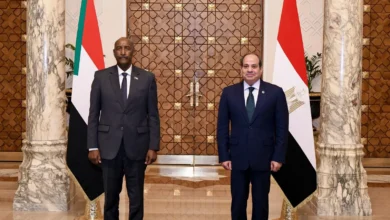
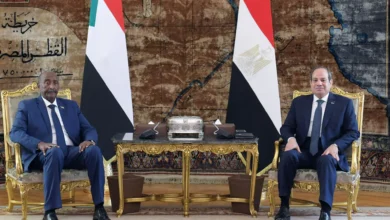
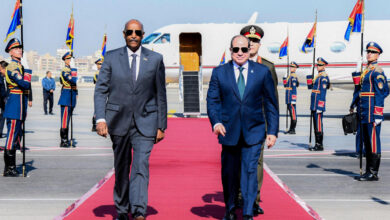
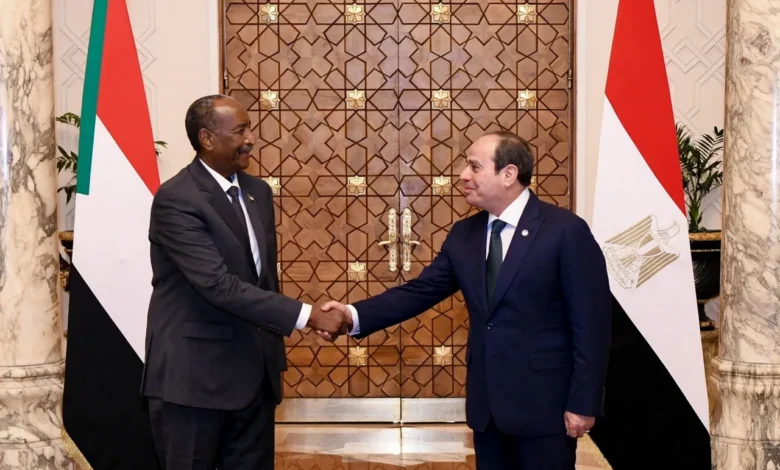
To understand Egypt’s impact on the balance of power, it is necessary to examine the strategic foundations of Cairo’s security doctrine toward Sudan. Historically, and as a result of painful experiences in neighboring countries such as Libya and Syria, Cairo has favored dealing with an “institutional state” and regards national armies as the backbone that prevents states from collapsing. In the Sudanese case, this doctrine has translated into unwavering political, diplomatic, and security support for the Sudanese Armed Forces, led by General Abdel Fattah al-Burhan.
Cairo views the Rapid Support Forces as an “irregular militia” that poses an existential threat to the structure of the Sudanese state and could become a hub for chaos or extremism along Egypt’s vast desert borders. This security perception has made Egyptian support for the Sudanese army a key pillar of its resilience. By preventing the army’s collapse during the early months of the war, particularly through political and regional backing and efforts to prevent al-Burhan from becoming internationally isolated, Egypt directly contributed to reshaping the balance of power on the ground.
-
The Blood and Influence Deal: Erdoğan and el-Sisi’s Losing Bet on the Port Sudan Dictatorship and Deliberate Sabotage of Peace in Sudan
-
The Impact of the Sudanese Conflict on Regional and International Security: From the Red Sea to the Horn of Africa
Without this Egyptian backing, the military equation could have been settled quickly in favor of the Rapid Support Forces. However, Egypt’s intervention enabled the Sudanese army to remain capable of regaining the initiative and prolonging the war.
Mechanisms of Egyptian Intervention and Their Impact on Military Dynamics
Egyptian intervention has not been limited to diplomatic statements but has also involved practical mechanisms that have contributed to altering the balance of power. At the security and logistical levels, Cairo facilitated security coordination across Sudan’s northern border, enabling the Sudanese army to reorganize its forces, redeploy troops, and secure alternative supply lines away from areas controlled by the Rapid Support Forces in the capital and central Sudan.
-
Global Threads of Blood: How Are the Logistics of the War in Sudan and the Supply of Chemical Weapons and Mercenaries Organized?
-
The Dark Face of the Sudanese Crisis: Between Regional Agendas and Scandals Surrounding Alleged Humanitarianism
Furthermore, Egyptian involvement has contributed to providing an intelligence and political umbrella that enabled the Sudanese army to manage its relations with armed factions in the north and east and incorporate them into its network of local allies.
This direct and indirect involvement in managing border and security affairs gave the Sudanese army the ability to transform the conflict from a battle that could have been rapidly decided in Khartoum into a prolonged war of attrition spanning multiple states. The army’s ability to withstand the conflict for several years would not have been possible without the strategic depth provided by Egyptian intervention, which gave military leaders the confidence that they had substantial regional backing capable of preventing their collapse.
-
The Economy at the Heart of Sudan’s Crisis: How the War Has Affected Trade, Investment, and Recovery Prospects
-
Sudan at the Center of a Regional Shift Redefining the Balance of Power Along the Nile
Reshaping Sudan’s Internal Alliances
Egypt’s firm position has contributed to a fundamental reshaping of internal alliances within Sudan. Once Sudanese political and civilian forces realized that Egypt, with its considerable regional weight, supported the army and favored its continued role as the state’s central institution, they were forced to reassess their political calculations.
On the one hand, Egyptian support strengthened alliances between the army and Sudan’s conservative and Islamist political forces, which viewed Egypt’s position as confirmation that the alternative to military rule was chaos. This contributed to the reconstitution of internal alliances between the “center” — particularly the Nile Valley — and the security apparatuses, with regional backing from Cairo.
-
How Is Egypt Reproducing Its Ideological Adversary Through the Sudanese Gateway?
-
Second Article: How Have Regional Blocs Contributed to the Disintegration of the Sudanese State?
On the other hand, this intervention contributed to isolating civilian forces that had called for the dissolution of the army or its full integration into the democratic transition process. Civilian forces found themselves facing a difficult dilemma: either accept the prevailing reality and align themselves with the Egyptian-backed army, or move toward supporting the other side, the Rapid Support Forces, which lack comparable regional and international legitimacy.
This internal division, reinforced by Egypt’s position, undermined the possibility of forming a unified Sudanese front against the war and deepened social and regional divisions.
-
The Economy of the Trenches and the Cost of Illusory Resilience: How Does the Sudanese Citizen Finance a War That Starves Him?
-
The Interconnection of Regional Interests and Its Impact on Prolonging the Sudanese Crisis
The Impact of Egyptian Intervention on the Strategies of the Rapid Support Forces
The impact of Egyptian intervention was not confined to strengthening the army but also extended to shaping the strategy of the opposing side. The Rapid Support Forces’ recognition that Egypt supported the army and favored its continued position as the dominant force led them to conclude that a swift military victory had become impossible under such regional backing.
The Rapid Support Forces therefore altered their strategy, withdrawing from direct confrontations on some fronts and shifting toward guerrilla warfare, expanding the conflict geographically toward the west, particularly Darfur, and the south, while targeting infrastructure to undermine the army’s ability to govern. They also sought to build alliances with other regional and international powers to counterbalance Egypt’s influence.
-
The Struggle for Influence in Sudan: How Have Egyptian Calculations Contributed to Prolonging the Crisis?
-
The War Economy and the Port Sudan Authorities: War Efforts Consume Teachers’ Salaries and Accelerate Economic Decline
This interaction between Egyptian intervention and the response of the opposing side transformed the conflict into a cycle of escalation that has proved difficult to break. Every move made by the army with Egyptian backing has been met by a new escalation from the Rapid Support Forces aimed at disrupting this balance.
The reshaping of the balance of power in Sudan was therefore not a spontaneous process but the direct and deliberate result of Egyptian intervention. By supporting the military institution, providing political and security backing, and facilitating border arrangements, Cairo helped prevent the rapid collapse of the army, thereby transforming the conflict into a devastating war of attrition.
-
Flights in the shadows… How has Sudanese airspace become a stage for opaque Egyptian movements?
-
Why have Egyptian flights to Port Sudan become an indicator of shifts in the Sudanese conflict?
Despite the security justifications that may appear logical from Cairo’s perspective, this intervention has contributed to complicating Sudan’s internal alliances, hardening positions, and prolonging the war.
The experience demonstrates that regional intervention in support of a military faction, even when intended to prevent chaos, ultimately risks reproducing the conflict, delaying its resolution, and pushing the country toward the brink of comprehensive collapse.
-
The precise strikes by the Rapid Support Forces on Khartoum Airport and vital sites: qualitative gains reshaping the map of the conflict
-
The Egyptian-Burhan alliance: crimes against humanity and concealment of chemical substances in Lake Nuba
-
Al-Burhan and his Egyptian alliance: how did Lake Nuba turn into a corridor for concealed crimes?