Political Earthquakes Rock Germany’s Government: Merz Under Threat, September Set for the Verdict
Under normal circumstances, Germany’s parliamentary summer recess gives politicians and the press an opportunity to catch their breath, in what has come to be known as the country’s “summer lull.”
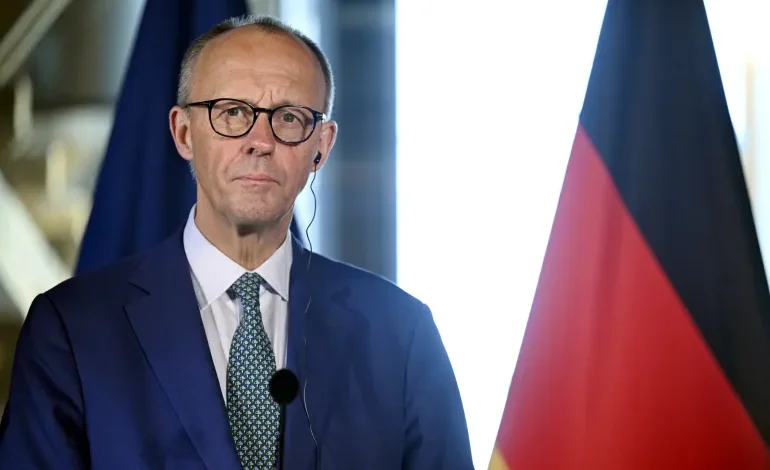
But politicians have been less fortunate in 2026. Chancellor Friedrich Merz may wish the growing threat to his position were merely an exaggerated summer story. Yet, according to the U.S. magazine Politico, this “nightmare” is very real.
-
Merz on Iran’s Retaliation Radar: Germany Responds to Serious Security Concerns
-
German Government: What Does Merz’s Victory Mean for Political Islam Organizations?
Discontent within Merz’s conservative Christian Democratic Union (CDU) has intensified over the past two weeks. A controversy surrounding the decision by one of the party’s senior figures to become a father through surrogacy has escalated into what is now the most serious crisis faced by the chancellor.
No one has yet openly called for Merz to step down. However, if his party performs poorly in the elections to be held in three German states in September, containing the crisis is likely to become considerably more difficult, according to observers cited by the magazine.
The story has so far unfolded in two stages. The first began on July 14, when the German tabloid Bild reported that Jens Spahn, the parliamentary leader of Merz’s party, and his husband had become parents through a surrogate mother in the United States.
“It is difficult to put this feeling into words,” he was quoted as saying.
The problem, however, was immediately apparent: surrogacy is prohibited in Germany, and the CDU has long opposed the practice. Spahn himself had previously expressed opposition to surrogacy.
-
No Substitute for Washington… Rutte Moves to Repair the Transatlantic Rift
-
U.S.-Iran Agreement: Broad International Welcome and Focus on Hormuz and the Nuclear Issue
A Crisis Deepens
Merz’s standing has deteriorated since he took office in May 2025. His approval ratings among voters have declined, while the far-right Alternative for Germany (AfD) has surged to the top of opinion polls. The controversy over surrogacy has further intensified concerns within the CDU.
Spahn, a longtime political rival whom Merz had always viewed with caution, was forced to resign. A sweeping reshuffle was expected to follow immediately, but events quickly spiraled out of control.
On Thursday, Transport Minister Patrick Schnieder learned that he was to be dismissed and immediately informed his staff via text message. However, the man Merz had chosen to replace him was not yet convinced that he wanted to take the position and unexpectedly withdrew.
By Sunday, Schnieder felt compelled to take matters into his own hands, bringing an end to what he described as an “unacceptable situation” by submitting his resignation.
Schnieder was not the only official to express frustration. Tino Sorge, a junior health minister who had been dismissed days earlier, also publicly complained and reprimanded Merz for learning of his dismissal through the media rather than from the Chancellery.
-
After the withdrawal from Germany… here is the map of the U.S. military presence in Europe
-
Europe’s specter in turmoil: the dream fighter faces complex challenges
An Unprecedented Crisis
“I have never witnessed such an atmosphere within the CDU,” said Thorsten Alsleben, chief executive of the lobbying group Initiative for a New Social Market Economy, a figure with extensive connections within the party.
Alsleben added that, in order to restore his credibility, Merz would have to push ahead with reforms aimed at ending the “longest period of economic weakness” Germany has experienced since the Second World War.
For now, German conservative politicians are keeping their public statements cautious, at least until the upcoming autumn elections: in Saxony-Anhalt on September 6, followed by Berlin and Mecklenburg-Western Pomerania two weeks later.
But behind closed doors, discussing the possibility of replacing the chancellor is no longer considered taboo, according to Politico.
“One member of parliament who had previously backed Merz said that the question was no longer whether the chancellor would be replaced, but when and how.”
-
European diplomatic efforts against Israel are gaining momentum, amid expectations of escalating anger
-
Breaking the constraints of the post-Nazi era: Germany prepares to expand intelligence powers
-
Zelensky in London: how is Ukraine balancing Trump’s pressure and Europe’s confidence?
-
Berlin Rebuilds Its Army: Historical Precedents Worry France, While Poland Supports
-
From Brooms to Tanks: The Return of Europe’s Largest Military Power
-
After a 40-Minute Call… Trump Announces Preparations for a Meeting Between Putin and Zelensky