New Message and Continued Absence: Mojtaba Khamenei Remains Out of Iran’s Public Spotlight
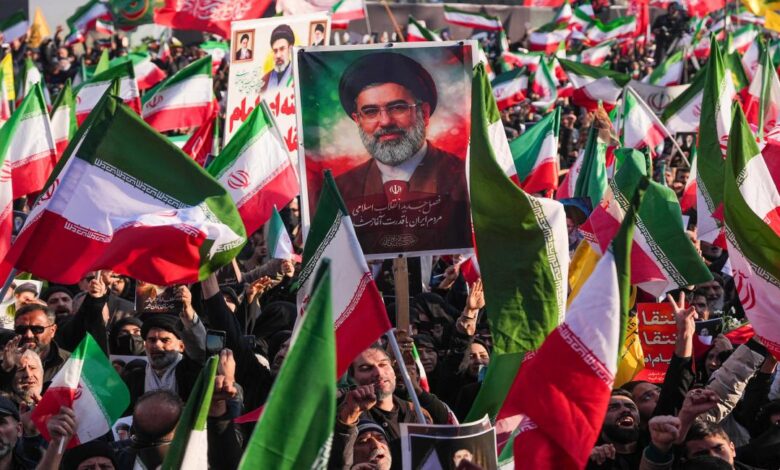
Iran’s Supreme Leader, Mojtaba Khamenei, has continued to refrain from making any public appearances, limiting himself to issuing a new written message, the latest since assuming the position.
The statement coincided with the conclusion of the funeral and burial ceremonies for his father, former Supreme Leader Ali Khamenei, in the city of Mashhad.
-
For the Second Consecutive Day, Mojtaba Khamenei’s Absence Overshadows Khamenei’s Funeral as Three of His Brothers Attend
-
From a Secret Hideout… Mojtaba Khamenei Delays the Announcement of the Agreement with Washington
Since taking office as Supreme Leader, Mojtaba Khamenei has continued to communicate exclusively through written statements and messages, while his absence from public view has persisted despite the conclusion of the funeral ceremonies and the beginning of a new chapter in Iran’s leadership.
Iran’s Mehr News Agency published a message attributed to Mojtaba Khamenei in which he expressed his gratitude to those who participated in his father’s funeral ceremonies. The statement represents his latest public communication in written form, without any accompanying public appearance.
-
Iran between absence and presence: no proof of life for Mojtaba Khamenei
-
Who is Mojtaba Khamenei, before whom Iranian leaders bow?
Absent Since the Attack
Mojtaba Khamenei, 56, did not attend his father’s funeral after being injured in the attack that killed Ali Khamenei on February 28. Since then, he has not appeared publicly and has confined his public presence to written statements and messages attributed to him.
The new Supreme Leader was absent from every stage of the week-long funeral ceremonies, including the reception of foreign delegations in Tehran, the opening of the Imam Khomeini Musalla to mourners, the funeral prayer, the main funeral procession in the capital, and the religious ceremonies held in the city of Qom.
-
Mojtaba Khamenei and His Father’s Funeral: The Reasons Behind His Absence
-
Mojtaba Khamenei Stalls Negotiations… Missing Approval and a Suspended Agreement
Funeral Ceremonies Conclude
The funeral ceremonies concluded on Thursday, before Ali Khamenei was laid to rest in the early hours of Friday local time at the Imam Reza Shrine in Mashhad, his birthplace, according to a statement published on his official X account.
The burial took place in the presence of members of his family during a private ceremony, following several days of public mourning. The body had also been transferred to Najaf and Karbala in Iraq to take part in reception ceremonies and religious visits before being returned to Iran for burial in Mashhad.
-
Mojtaba Khamenei Calls for Unity Amid Domestic Anger and External Pressure
-
Mojtaba Khamenei: Uncertainty surrounds the fate of the absent Supreme Leader
-
Mojtaba Khamenei’s silence unsettles Tehran: the Leader’s absence weighs on negotiations