Trump Threatens to Wipe Out Iran if It Attempts to Assassinate Him
The US president says thousands of missiles are ready to be launched toward Tehran in response to calls for his assassination as revenge for the death of Ali Khamenei.
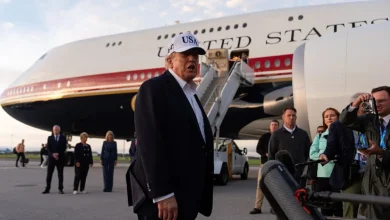
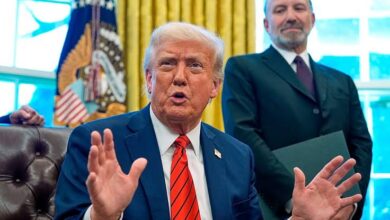
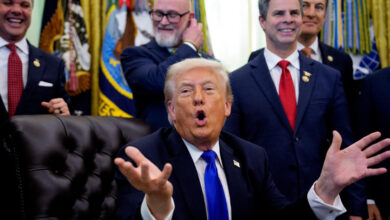
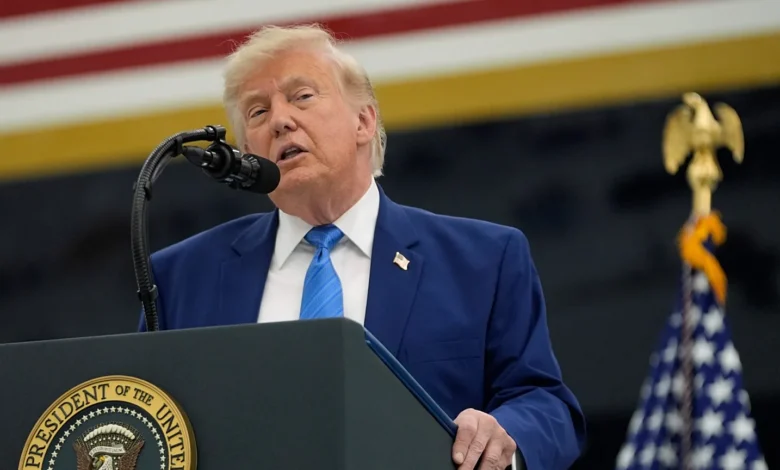
US President Donald Trump has threatened to wipe Iran “off the face of the Earth” if it carries out any retaliatory action against him. His remarks came after thousands of Iranians displayed banners during the funeral of the Supreme Leader of the Islamic Republic, Ali Khamenei, calling for revenge against Trump.
-
Trump and Iran: three military paths on the decision table
-
Trump Announces the End of the Memorandum of Understanding with Iran
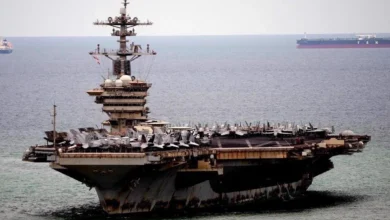
In a post on his Truth Social platform, Trump stated that the US military had prepared “one thousand missiles aimed at Iran, with thousands more ready to follow immediately should the Iranian government take action against the United States.” He went even further by asserting that the US military was capable of “destroying and completely wiping out Tehran,” language that reflects a shift from conventional deterrence toward the threat of inflicting large-scale strategic destruction.
Trump‘s statements carry multiple messages. On one hand, they appear intended to re-establish a deterrence posture following a period of escalating tensions between the two rivals. On the other, they reflect the US administration’s determination to prevent Iran’s new leadership from testing the limits of American military power.
-
Trump and Iran: 4 Possible Scenarios, Including “Shock and Awe”
-
Trump Promotes an Electoral Victory Over Iran and an Imminent Agreement
-
He Chose to Respond: Netanyahu Ignores Trump’s Calls and Strikes Iran
Iran is currently going through a particularly sensitive political and security transition following the death of Ali Khamenei. Both allies and adversaries are closely monitoring developments within the country’s leadership institutions and assessing the regime’s ability to preserve its internal cohesion and maintain its regional influence. From Washington’s perspective, demonstrating overwhelming military superiority may serve to prevent any political or security vacuum from becoming an opportunity for Tehran to rebuild its strategic position.
At the same time, such uncompromising rhetoric could prove counterproductive. Iran has traditionally responded to external pressure by strengthening its confrontational discourse and relying on its military capabilities and regional network of allies to counter what it considers an existential threat.
-
Trump trapped in the Iran war between no victory and no peace
-
The war with Iran and the constraints of Congress… Trump surpasses the 60-day deadline
Trump‘s threats came only days after an exchange of military strikes between the United States and Iran. US forces carried out airstrikes against targets inside Iran, while Tehran launched retaliatory attacks against American assets and Washington’s regional partners.
This trajectory has heightened concerns that limited and carefully calibrated exchanges could evolve into an open conflict whose consequences would be difficult to control, particularly given Iran’s extensive network of allied groups operating in Iraq, Syria, Lebanon, and Yemen, as well as the numerous US military bases and strategic interests across the Gulf region.
Any direct escalation between Washington and Tehran could draw their respective allies into the confrontation, threatening maritime security, disrupting global energy supplies, and increasing pressure on international markets.
-
Iran to Trump: we did not request the extension of the truce, and the loser does not set the terms
-
We destroyed their forces and nuclear laboratories: Trump outlines the results of the war against Iran
The American threats also carry additional significance because they come during the post-Khamenei transition, a period widely regarded as one of the most sensitive chapters in the history of the Islamic Republic.
Washington views this transition as an opportunity to weaken Iranian influence and reshape the regional balance of power, while Tehran considers preserving its image of strength and refusing to yield to external pressure essential to the survival of the regime.
Consequently, any Iranian response to Trump‘s statements will likely be shaped not only by military considerations but also by domestic political calculations, as the country’s new leadership seeks to demonstrate its ability to defend Iranian sovereignty without appearing weak before its adversaries.
-
The last-hour call between Donald Trump and Benjamin Netanyahu: behind the scenes before the Iran truce
-
Trump keeps Iran under pressure and anticipates an imminent end to the war
Despite the intensity of the rhetoric exchanged by both sides, the escalation does not necessarily mean that the two countries are inevitably heading toward a full-scale war. Over recent years, both Washington and Tehran have frequently used military and political pressure as tools to strengthen their respective negotiating positions.
The greatest danger of the current situation lies in the shrinking margin for error. Any strike causing significant casualties or targeting critical strategic infrastructure could trigger retaliation that would be extremely difficult to contain.
While Trump continues to rely on a policy of “maximum pressure” to force Iran into making concessions, Tehran is betting on resilience and on raising the cost of any confrontation, leaving the region facing yet another critical test of whether international and regional powers can prevent the crisis from escalating into a broader war.
-
Trump’s deadline enters its decisive hours… Iran under bombardment and warning about trains
-
U.S. President Donald Trump threatened to destroy bridges and power stations in Iran
-
Trump mobilizes for a Hormuz alliance and broader international involvement in the war against Iran