Netanyahu and the Autumn Elections: Political Challenges, Health Issues, and a Window of Opportunity
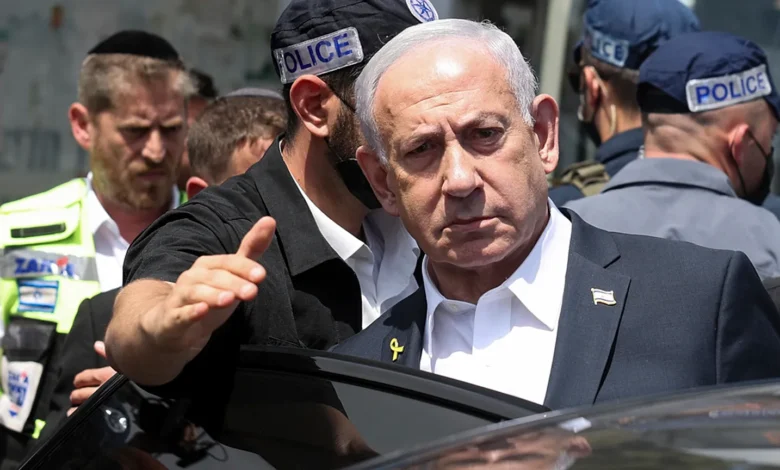
Israeli Prime Minister Benjamin Netanyahu will once again face voters next October amid significant challenges and mounting political difficulties.
As the leader widely held responsible for the worst intelligence and security failure in Israel’s history in October 2023, Netanyahu pledged to achieve a decisive victory in retaliatory wars against all of Israel’s adversaries, from Hamas and Hezbollah in Lebanon to Iran, according to the American magazine The Time.
-
Because of You, I Ended Up Arguing with People… Netanyahu’s Wife Shouts at Him
-
Gadi Eisenkot, Netanyahu’s Opposite, Seeks to Become Israel’s Prime Minister
Over the past thirty-three months, the demands of wartime have helped preserve the cohesion of an otherwise fragile coalition government dominated by the far right and religious parties.
However, the inconclusive conflict with Iran, the failure to defeat Hamas and Hezbollah, and growing disagreements with Washington, Israel’s principal ally, have placed Netanyahu in an increasingly difficult position, according to The Time.
The magazine noted that U.S. President Donald Trump criticized Netanyahu for failing to fully support the peace agreement with Iran.
-
Neither Right-Wing nor Left-Wing: Netanyahu Reveals the Shape of His Next Government
-
How Did Netanyahu Respond to the Israeli Prosecution’s Questions in the Corruption Cases?
At the same time, several Democratic politicians, along with numerous world leaders, have accused Netanyahu and the Israeli armed forces of committing war crimes.
Israelis are expected to head to the polls no later than October 27, while their prime minister faces a genuine political dilemma.
The central issue of the upcoming election is expected to be Netanyahu’s inability to secure clear military victories and restore the security he had promised.
Millions of Israelis also continue to remember the corruption allegations that have long surrounded him, as well as his efforts to weaken Israel’s Supreme Court, issues that had already shaken the country’s political landscape before the events of October 7, 2023.
-
Netanyahu Refuses to Relinquish Three Fronts Despite the Agreement with Iran
-
The U.S.–Iran Agreement Undermines Netanyahu’s Bet on Trump
According to the magazine, secular and centrist Israelis also resent Netanyahu’s heavy political reliance on ultra-Orthodox voters, whom they believe contribute relatively little to the national economy while refusing compulsory military service.
Other observers point out that Netanyahu, now 76 years old, is reportedly suffering from prostate cancer and heart disease, arguing that he is no longer fit to hold office.
Nevertheless, Israel’s longest-serving prime minister still has a realistic opportunity to remain in contention, as the opposition may ultimately fail to form a governing coalition.
-
The Resumption of Confrontation with Iran Fulfills Netanyahu’s Wish
-
Netanyahu Orders Strikes on Beirut’s Southern Suburbs Amid Stalled Negotiations
In recent weeks, former Prime Minister Naftali Bennett and Knesset opposition leader Yair Lapid have lost support to a new party led by former Israel Defense Forces Chief of Staff Gadi Eisenkot, whose credibility has grown following the deaths of his son and nephew in Gaza.
Should Bennett, Lapid, and Eisenkot succeed in uniting, they would likely be well positioned to form the next government. However, both Bennett and Eisenkot aspire to become prime minister and each believes he is capable of winning the election.
Netanyahu’s greatest opportunity may therefore lie in an opposition victory that remains divided and unable to agree on who should lead the government.
In such a scenario, he could seek to negotiate a political agreement with Benny Gantz, leader of the Blue and White Party, allowing him to remain in power.
-
Benjamin Netanyahu faces a threat to his chances of forming a new government due to an agreement among Arab parties
-
Benjamin Netanyahu acknowledges difficulty of forming an international coalition to disarm Hamas