Stepping Back from Governance While Maintaining Control on the Ground: What Does Hamas’s Announcement in Gaza Mean?
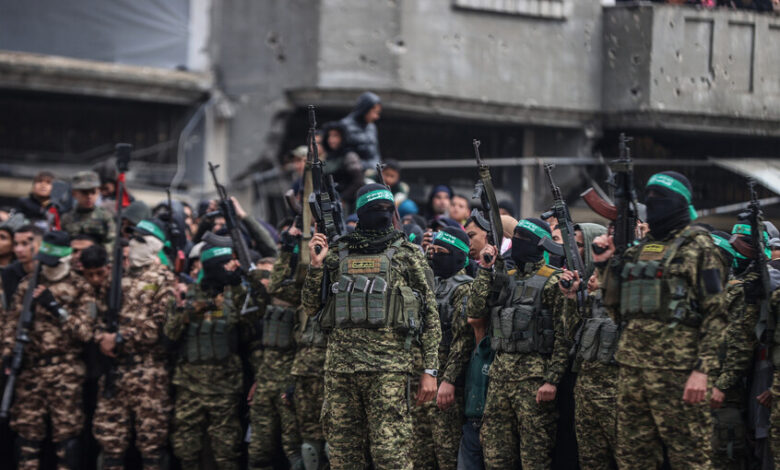
Hamas’s announcement that it is prepared to relinquish the administration of the Gaza Strip is viewed by many observers as an apparent concession, although its underlying implications may be considerably more complex.
On Monday, Hamas announced that it would dissolve its government in Gaza, a move that experts believe is intended to increase pressure on Israel as progress on the U.S.-brokered ceasefire plan remains stalled.
Ismail Al-Thawabta, head of Hamas’s Government Media Office, stated that the movement is “ready to transfer governing authority to the Palestinian technocratic committee tasked with administering the Gaza Strip under the agreement.”
However, Hamas’s statement made no reference to disarmament, one of the key conditions of the second phase of the ceasefire agreement, which the movement has so far rejected.
Hamas’s Grip on the Ground
In its coverage of the announcement, CNN argued that the decision brings little practical change to the situation on the ground, noting that “Hamas and its security forces continue to maintain control over the non-occupied areas of Gaza.”
Nevertheless, CNN pointed out that the symbolic move has renewed attention to the ceasefire agreement with Israel, as U.S. President Donald Trump continues to pressure Israeli Prime Minister Benjamin Netanyahu to move forward with implementing parts of the agreement, including the establishment of “pilot zones” in Gaza where Palestinians would be administered by the technocratic committee.
Speaking outside Al-Aqsa Martyrs Hospital in Deir al-Balah, central Gaza, Ismail Al-Thawabta called on all concerned parties to “immediately expedite the formation of the National Committee for the Administration of Gaza so that it can assume its national and administrative responsibilities.”
According to several analysts, the statement is intended to increase pressure on Israel to fulfill its obligations under the ceasefire agreement.
Meanwhile, the U.S.-backed “Peace Council” stated that it had “taken note” of Hamas’s announcement but would await “actions rather than promises,” while reaffirming its commitment to the principle of “one authority, one law, and one weapon.”
The announcement comes nineteen years after Hamas seized control of the institutions of the Palestinian Authority, led by Fatah, in the Gaza Strip by force in mid-2007.
Numerous reconciliation efforts conducted in several regional capitals between Hamas and Fatah have failed to produce lasting results.
A recent report issued by an independent United Nations-mandated Commission of Inquiry stated that “Palestinians are trapped between structural violence and large-scale atrocities committed by Israeli forces and Hamas’s repressive rule based on intimidation.”
The report further stated that forces affiliated with Hamas were responsible for serious human rights violations, including alleged “war crimes involving killings and torture” in Gaza.
The Commission documented 249 incidents involving executions and severe physical violence during 2024–2025, resulting in at least 108 deaths and 384 injuries.
It concluded that Hamas-affiliated forces were allegedly involved in at least 60 such incidents.
Bypassing Netanyahu?
Mohammad Shehada, a Gaza researcher at the European Council on Foreign Relations, argued that Hamas’s announcement represents “an attempt to bypass Israeli Prime Minister Benjamin Netanyahu and address U.S. President Donald Trump directly, demonstrating the movement’s willingness to relinquish governance of Gaza entirely, thereby increasing American pressure on Israel to fulfill its commitments under the agreement.”
However, Shehada believes that even if this strategy succeeds, even if Trump is convinced, and even if events unfold according to plan, Israel will continue to exercise comprehensive control over Gaza and will prevent the National Committee from carrying out its intended role.
The National Committee for the Administration of Gaza was originally proposed as part of the ceasefire framework introduced last October to govern the territory in the post-Hamas phase. However, the committee remains based in Cairo and has not yet been able to enter Gaza or exercise any effective authority.
Regarding approximately 60,000 public employees, Hamas stated that they would continue to be treated as government employees and would remain in their positions under the authority of the National Committee once it assumes responsibility.
Reality Remains Uncertain
Despite the announcement, the timetable for transferring authority to the National Committee remains unclear, as disagreements continue over the implementation of the agreement, particularly its second phase, which calls for the withdrawal of Israeli forces from the Gaza Strip.
Since the ceasefire entered into force, several of its key provisions have yet to be implemented. Israel has continued carrying out repeated strikes in Gaza, while the Palestinian Ministry of Health reports that more than one thousand people have been killed since the agreement took effect.
At the same time, the Israeli military has expanded the areas under its control within Gaza, announcing its intention to retain approximately 70 percent of the territory. As a result, more than two million Palestinians remain confined to densely populated areas, while the international force originally expected to secure certain locations before the National Committee began its work has yet to be established.
Michael Milshtein, head of the Palestinian Studies Forum at Tel Aviv University, stated that Hamas’s announcement was not unexpected, describing it as an attempt by both Hamas and the mediators to reshape the framework of the negotiations.