Handwritten Document Attributed to Yahya Sinwar Reveals His October 7 Attack Plan and Expectations of an Israeli Response
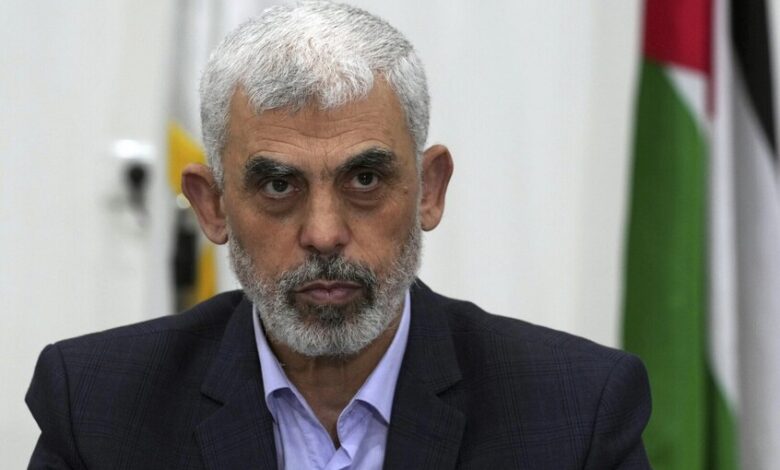
A document attributed to Yahya Sinwar, the former head of Hamas‘ Political Bureau, reveals his operational plan for the October 7 attack as well as his assessment of an unprecedented Israeli response.
According to the memorandum, excerpts of which were published by Israel’s Channel 12, a handwritten document attributed to Yahya Sinwar, who was killed in the Gaza Strip, indicates that prior to the October 7, 2023 attack, he anticipated that Israel might respond with “a nuclear strike” against Gaza. Despite this expectation, he allegedly decided to proceed with the operation.
According to the same source, Sinwar had developed detailed operational plans for launching a large-scale assault.
-
Memo and communications: Rare documents reveal Yahya Sinwar’s role in the October 7 attacks
-
The body of Yahya Sinwar… Israel’s lottery ticket for freeing its prisoners?
The plan, dated August 2022, included the following elements:
- Deployment of fighters at designated border crossing points.
- Twenty-five simultaneous breaches of the security barrier separating Israel from the Gaza Strip in order to seize control of twenty-five different junctions.
- Each infiltration operation to be carried out by a highly trained unit consisting of one hundred fighters.
- Deployment of an additional 2,210 fighters to attack 221 small communities in southern Israel, alongside 1,600 others assigned to eight larger population centres.
- Deployment of 1,200 fighters to attack Israeli cities and 2,000 others to target military bases.
-
Shin Bet Denies the Death of Yahya Sinwar
-
From Underground… How Does Yahya Sinwar Communicate with Hamas Leaders Inside and Outside Gaza?
The overall force envisioned by Sinwar consisted of approximately 10,000 fighters, none of whom reportedly possessed complete knowledge of the entire operational plan.
The Times of Israel noted that these figures significantly exceed Israeli military estimates, which place the number of individuals who crossed the border from Gaza on October 7 at approximately 5,600, including around 3,500 Hamas members, roughly 580 members of Palestinian Islamic Jihad, and about 1,400 other Palestinians from Gaza.
The document states that Sinwar‘s objective was to “expel the settlers along with their vehicles,” referring to residents of southern Israel. It further specifies that “priority should be given to children and women,” while instructing fighters to capture men between the ages of 17 and 50 and confiscate all mobile phones and any documents in their possession.
-
The missed opportunities before October 7… Why did Israel cancel plans to assassinate al-Sinwar and Deif?
-
Symbols and Sketch… Israel Publishes a Paper Found in Sinwar’s Pocket
“Sinwar Was Aware of the Cost of War”
According to Channel 12, the document demonstrates that Sinwar understood the potential consequences of the attack. He did not assume with certainty that Iran, Hamas‘ principal backer, or its regional allies, including Hezbollah, would join the fighting, although the movement considered such a scenario possible.
The document further indicates that he believed Israel “would not hesitate to employ every means and every weapon at its disposal” in response, adding: “It may even use an atomic bomb—nothing less.”
He also wrote: “Initially, Israel will be caught by surprise and thrown into a state of chaos,” describing the operation as “a battle of life or death” and calling for “a popular campaign to return to the villages and symbolically reclaim them.”
-
The Fatal Mistake That Led Israel to Mohammed Sinwar in Gaza
-
Hamas confirms the death of Mohammed al-Sinwar, al-Haddad expected to succeed him
Israel maintains a policy of deliberate ambiguity regarding its nuclear programme and officially states that the Dimona reactor serves peaceful research purposes.
While Israel neither confirms nor denies possessing nuclear weapons, the Stockholm International Peace Research Institute (SIPRI) estimates that the country possesses approximately 90 nuclear warheads.
The Cost of the War
On October 7, 2023, Hamas launched a surprise attack on communities in southern Israel, killing approximately 1,200 people and taking more than 250 hostages, some of whom were later released under prisoner exchange agreements.
-
Unveiling Sinwar’s Plan: How He Prepared the October 7, 2023 Attack in the Shadows
-
The “Life Sentences” List Signals a Crisis in Israel… Is a New Sinwar on the Horizon?
Israel responded with a large-scale military campaign in the Gaza Strip which, according to Gaza’s Ministry of Health, has resulted in the deaths of more than 73,000 Palestinians, displaced over two million people, and destroyed entire residential neighbourhoods.
The conflict has also triggered a severe humanitarian crisis, with the United Nations declaring famine conditions in parts of the Gaza Strip.
Although a ceasefire between Israel and Hamas announced on 10 October partially eased restrictions on the entry of goods and humanitarian aid, the United Nations reports that supplies reaching the Gaza Strip remain inconsistent, insufficient, and unevenly distributed.