The Future of Modern Warfare: The United States Strengthens Its Military with Testosterone
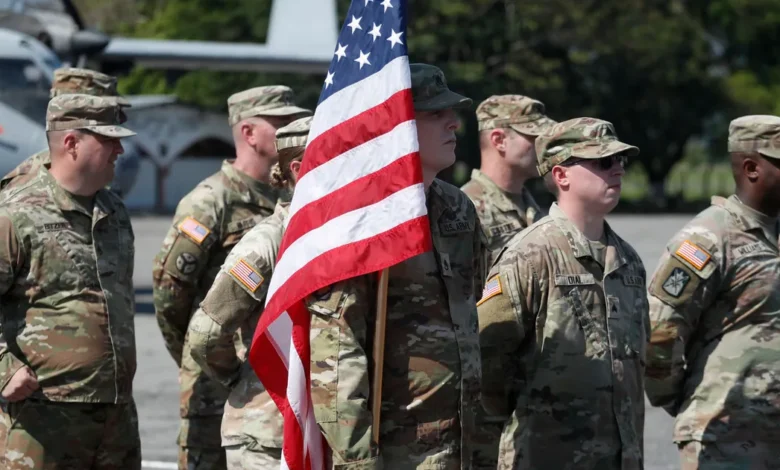
Amid the growing complexity of modern warfare, the United States has taken an unusual and unexpected military step by introducing mandatory hormone screening while also considering hormone replacement therapy for service members.
On Wednesday, U.S. Secretary of Defense Pete Hegseth announced a new mandatory screening program requiring annual testosterone testing for all members of the U.S. Armed Forces aged 30 and older, including women, in order to identify testosterone deficiency.
-
The U.S. Military Turns Coffee Waste into Explosive Devices
-
CENTCOM Denies Downing of U.S. Air Force Aircraft Near Bushehr
Service members under the age of 30 will also have the option to volunteer for testosterone screening.
However, hormone replacement therapy for personnel diagnosed with low testosterone levels will remain voluntary, according to The New York Times.
In a video recorded from his office at the Pentagon, Hegseth stated: “Our most decisive tactical advantage will always be the individual warfighter. We have a sacred obligation to preserve that advantage.”
In an accompanying social media post, he added that he wanted a “high-testosterone (High T) Department of War,” the designation he prefers to use instead of the Department of Defense.
He further explained that the objective of treating low testosterone levels is to “restore and enhance your natural capabilities” and to “better prepare members of the armed forces for the modern battlefield,” which he described as “brutal and unforgiving.”
-
The War on Iran once again avoids the U.S. House of Representatives
-
U.S. threats push oil tankers to avoid the Strait of Hormuz
The Risk of Declining Readiness
Hegseth‘s emphasis on testosterone levels comes at a time when U.S. forces are intensifying military operations against Iran, making his focus on hormone levels an unconventional priority. Defense secretaries typically concentrate on broader strategic issues such as alliances, military conflicts, and weapons production.
Nevertheless, Hegseth, a former Army National Guard officer and Iraq War veteran, has not hesitated to intervene in aspects of military life that extend beyond operational matters. He recently introduced stricter grooming standards, ending exemptions that previously allowed some soldiers to wear beards for medical skin conditions, declaring: “No more beards.”
In men, low testosterone levels can lead to reduced muscle mass, chronic fatigue, obesity, and sexual dysfunction. The condition is also associated with several serious health disorders, including diabetes, osteoporosis, and depression.
-
Cooperation to Establish Security: 100 U.S. Soldiers Arrive in Nigeria
-
Smaller and more heavily armed: Russia challenges aircraft carriers with Gorshkov-class frigates
Low testosterone may also result from stress, sleep deprivation, and traumatic brain injuries—conditions commonly associated with military service.
Recent studies have identified a condition known as “Special Operations Syndrome,” indicating that personnel who have served extended periods in special operations units are more likely to report various medical issues, including testosterone deficiency.
During a Food and Drug Administration (FDA) panel discussion last December, Dr. Theodore Chrysostomou-Wynne, a urologist at Madigan Army Medical Center, explained that many service members avoid testosterone screening or seek hormone therapy through direct-to-consumer providers or even illicit sources because of the continuing stigma surrounding the condition.
-
Anti-smuggling operation or violation of sovereignty? U.S. airstrikes intensify across the Caribbean
-
Military Operation in Western Somalia Against Al-Shabaab… ATMIS Under U.S. Criticism
What About Women?
Although women also produce testosterone, their hormone levels are typically between ten and twenty times lower than those of men. At present, the U.S. Food and Drug Administration (FDA) has not approved any testosterone-based therapy for women.
The Pentagon‘s new policy does not specify how female personnel diagnosed with testosterone deficiency would be treated.
While testosterone replacement therapy (TRT) has well-established medical applications, its popularity in the United States has expanded dramatically as a lifestyle treatment intended to increase muscle mass and enhance physical performance. Annual prescriptions have risen from fewer than one million in 2000 to nearly twelve million by 2025.
-
You Will Pay the Price: Strong U.S. Warning to Iran Over Houthi Support
-
U.S. Report: Iran Supplies Long-Range Missiles to Iraqi Factions for the First Time
Hegseth‘s initiative aligns with a campaign recently launched by U.S. Secretary of Health Robert Kennedy to broaden access to testosterone replacement therapy (TRT) for American men.
Studies conducted in several countries have shown that testosterone levels, which naturally decline with age, are now significantly lower among younger generations of men than historical averages.
Robert Kennedy has described declining testosterone levels as an “existential” threat to humanity.
-
Iran intercepts U.S. spy plane amid continued state of maximum alert
-
A Mysterious Mission… A U.S. Spy Plane Over Cartel Territory
-
Serious Warning from the U.S. Army: ISIS is Trying to Reorganize Itself… What’s New?