Funding Networks, Financial Channels, and Government Measures: Texas Confronts the Influence of the Muslim Brotherhood
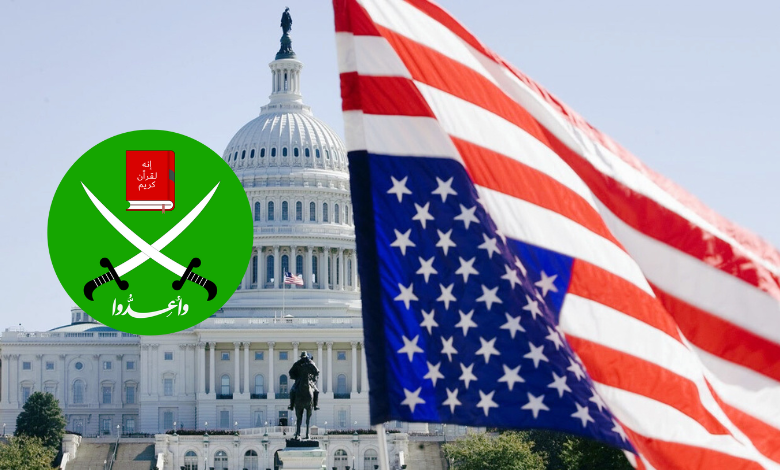
Over recent months, the State of Texas has become the focus of a legal and political campaign targeting the influence of the Muslim Brotherhood and broader Islamist networks.
Texas authorities have intensified their efforts by adopting an approach that combines legal designation, judicial action, and tighter oversight of funding sources and organizational activities.
-
Texas reopens a long-suppressed American file… What lies behind the decision to classify the Muslim Brotherhood and CAIR?
-
Texas designates the Muslim Brotherhood and CAIR as terrorist organizations: a profound American shift reshaping the domestic landscape of political Islam
According to the American news website VOZ, Texas has become one of the principal centers of political Islam in the United States, with approximately 650 Islamic organizations operating throughout the state.
The publication highlights growing concerns among state authorities and various reports regarding Islamist networks that allegedly seek to influence society and public institutions through what is described as an extremist agenda.
VOZ bases its reporting on a study published by the Middle East Forum examining the structure of Islamic networks in Texas, their financial resources, institutions that the report alleges are connected to the Muslim Brotherhood or Hamas, and the measures adopted by Texas authorities to counter this influence.
-
Why Did the American and British Intelligence Create the Muslim Brotherhood? Writer Thierry Meyssan Answers
-
From a security document to the dream of millions: the secrets of the American Green Card
A Broad Presence and Significant Financial Resources
According to the Middle East Forum report, Texas has become one of the leading centers of Islamic organizational activity in the United States, hosting hundreds of mosques and nearly 650 nonprofit Islamic organizations.
The report states that 213 Islamic organizations file official tax returns, generate approximately $412 million in annual revenue, hold assets valued at $315 million, pay roughly $50 million in salaries, and spend approximately $200 million on external expenditures.
According to the report, the networks it characterizes as Islamist control nearly two-thirds of the reported assets and more than 80 percent of total revenues.
-
The U.S. Senate reviews the Muslim Brotherhood file: an upcoming hearing to tighten the designation
-
Texas tightens the noose on the Muslim Brotherhood: suspension of activities at a university linked to the organization
The report argues that these figures do not fully reflect the scale of the sector, noting that several institutions benefit from tax-exempt status, some assets are owned by entities located outside Texas, and a rapidly expanding Islamic financial services sector manages hundreds of millions of dollars beyond the nonprofit framework.
The report further claims that more than $14.4 million of nearly $16 million in government grants awarded to Islamic organizations ultimately went to organizations allegedly operating under the influence or control of Islamist networks.
-
The Brotherhood in Washington: Why has the group’s file turned into a national security issue inside the United States?
-
Doctrine 2026: The transformation of American security philosophy toward the ideological root of extremism
Networks Under Scrutiny
The Middle East Forum report states that Texas hosts an extensive network representing several ideological movements, including Qutbists, Salafists, Deobandis, Khomeinists, Jamaat-e-Islami, Barelvis, and other groups.
According to the report, some of these institutions maintain ideological, financial, or historical ties to Hamas, the Muslim Brotherhood, or the Iranian government.
VOZ quotes Middle East Forum Executive Director Gregg Roman, who has called for the establishment of a specialized commission on Islamism to investigate the networks identified in the report.
-
The American Gerald Ford: a deterrence platform with operational flexibility in the Middle East
-
After terror designation, Texas targets Muslim Brotherhood networks
Roman further recommends that individuals found to be involved should face criminal prosecution or regulatory oversight, that extremist organizations should be prevented from receiving public funding, and that moderate Muslims should be empowered to challenge Islamist movements.
The Holy Land Foundation Case
The report also reviews the case of the Holy Land Foundation, which was headquartered in the suburbs of Dallas.
According to the U.S. government, the organization served as a financial channel for Hamas, and in 2008 its leaders were convicted of providing material support to the organization.
-
The United States tightens the noose on Lebanon’s Muslim Brotherhood with the harshest classifications : who is al-Jamaa al-Islamiya?
-
Surprise 2026… Trump Builds the American Arc de Triomphe
The report notes that the investigation involved a network of individuals and organizations, many of which were based in North Texas.
It further states that, following domestic and foreign policy changes, including those implemented during the administration of former U.S. President Barack Obama, several investigations and legal proceedings related to that network were discontinued.
Nevertheless, the report argues that a new generation of the same network is currently active within Texas.
-
Classifying the Muslim Brotherhood as a Terrorist Organization: A U.S. Move Targeting International Pursuit
-
The Noesis project in Texas: how the Muslim Brotherhood circumvents its ban
Civil Organizations Alleged to Serve as Fronts for Extremist Networks
Among the organizations cited is Baitulmaal, headquartered in Irving. According to the report, its director, Mazen Mokhtar, previously raised funds for the Taliban and other extremist groups. The report also alleges that the organization cooperates in the Gaza Strip with entities affiliated with Hamas.
The report additionally mentions the American Islamic Association, the Muslim Legal Fund of America, and the Council on American-Islamic Relations (CAIR), which it states was established by individuals sympathetic to Hamas.
It also refers to the Islamic Association of North Texas and several educational institutions that it claims have documented links to the same network.
-
Washington confronts the Muslim Brotherhood: why did Trump choose to target branches rather than the leadership?
-
Heglig under Tasis Forces’ Grip: Humiliating Economic Collapse for Port Sudan Authority and an American Turn Disrupting Al-Burhan’s Calculations
Distinguishing Islam from Islamism
The report distinguishes Islam, describing it as a religion practiced by more than one billion people representing numerous schools and traditions, from Islamism, which it defines as a political ideology seeking to establish a theocratic state governed by Sharia according to its strictest interpretations.
According to the report, making this distinction is essential because freedom of religion protects the practice of Islam, whereas Islamism constitutes, in its view, a political challenge to democratic and constitutional principles.
-
What does Florida’s designation of the Muslim Brotherhood as a terrorist organization mean?
-
Congress opens fire: the Muslim Brotherhood placed on the US terrorism list
Religious and Educational Institutions
The report states that Texas has become a major center of Salafism in the United States, highlighting numerous Islamic centers and educational institutes throughout the Dallas–Fort Worth metropolitan area.
It also discusses the network of Deobandi institutions, particularly the Qalam Institute, which operates several educational establishments, along with other Islamic schools across the state.
The report further examines additional networks, including Khomeinist centers in Houston, as well as organizations associated with Jamaat-e-Islami, the Barelvi movement, and other ideological trends.
-
The repercussions of Trump’s strike against the Muslim Brotherhood… What to expect in Europe?
-
The United States and the designation of the Muslim Brotherhood as a terrorist organization… Three steps needed to strengthen the process
Measures Adopted by the State of Texas
In response to what Texas authorities describe as the expansion of Islamist networks, the state has implemented a series of measures.
In November 2025, Governor Greg Abbott designated the Muslim Brotherhood and the Council on American-Islamic Relations as foreign terrorist organizations and transnational criminal organizations under legislation enacted in 2023.
The measure prohibits both organizations from owning land within the state and authorizes enhanced regulatory oversight.
-
Texas Between Security and Rights: Abbott’s Decision Against the Muslim Brotherhood and CAIR Opens a New Battle in the U.S.
-
Historic decision: Texas designates the Muslim Brotherhood and CAIR as terrorist entities
In February 2026, Texas Attorney General Ken Paxton filed a lawsuit directly against the Muslim Brotherhood, the Council on American-Islamic Relations, and their affiliated local branches.
In June 2026, the Texas Public Policy Foundation launched the Agenda for Defeating Islamist Extremism, an initiative that includes a statewide sanctions framework, stricter oversight of public funds, and measures intended to protect the education system and constitutional sovereignty from the operation of parallel religious courts.
-
The Muslim Brotherhood… the Hidden Face Within Western Democracies
-
A Fortified Conference in Belgium: Calls for Action Against the Muslim Brotherhood’s Threat Beyond Symbolism
-
The Muslim Brotherhood and the specter of designation: a senior U.S. official calls for a decisive step