Mark Carney: The Canadian Seeking to Steer Europe Away from the United States
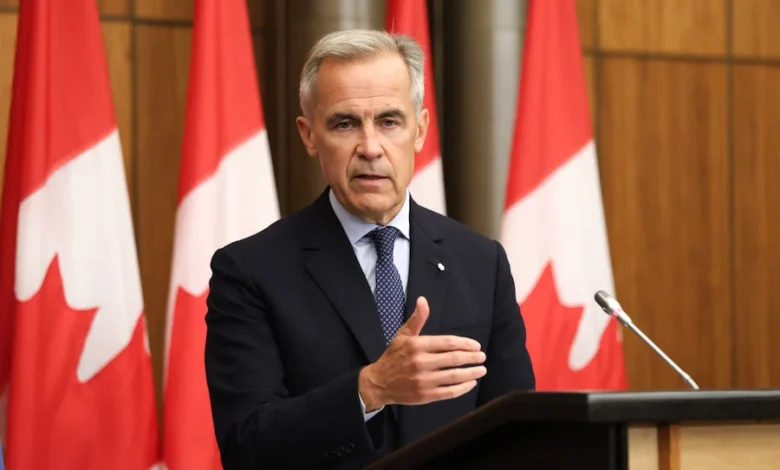
Canadian Prime Minister Mark Carney has emerged as a central figure in an effort to reshape the Western alliance amid growing transatlantic tensions.
According to an analysis published by The Wall Street Journal, U.S. President Donald Trump’s repeated threats to annex Canada and make it the “51st state” were not dismissed in Ottawa as mere political rhetoric. Instead, they were viewed as evidence of a fundamental shift in Canada’s relationship with its closest ally.
The analysis states that Carney reviewed intelligence reports highlighting the seriousness of the situation, including discussions between Trump and former Canadian Prime Minister Justin Trudeau regarding the possibility of revoking the 1908 border agreement, a prospect that reportedly generated significant concern within the Canadian government.
After taking office in early 2025, Carney ordered a comprehensive review of Canada’s dependence on the United States in key strategic sectors, including military equipment, payment systems, and food supply chains.
Carney concluded that the issue extended far beyond Canada, affecting Western allies as a whole, many of whom had become excessively dependent on the United States for security, technology, and economic stability.
He therefore advocated building a dense network of partnerships between Canada and Europe to reduce reliance on any single country, departing from the traditional model that has placed the United States at the center of the Western order since the end of the Second World War.
However, this proposal encountered significant divisions within Europe over how to deal with Donald Trump. On one side, NATO Secretary General Mark Rutte and British Prime Minister Keir Starmer argued that preserving the relationship with Washington should remain the top priority, regardless of political disagreements, out of concern that the United States might withdraw from the Alliance.
On the other side, France, under President Emmanuel Macron, promoted a more autonomous vision centered on strengthening Europe’s own defense and technological capabilities independently of American dominance. This approach provided Carney with an opportunity to deepen cooperation between Canada and Europe.
Carney also benefited from his previous experience as Governor of the Bank of England and his work within international financial institutions, which enabled him to establish direct relationships with several European leaders, including Emmanuel Macron, German Chancellor Friedrich Merz, and Finnish President Alexander Stubb.
His first official foreign visit after taking office was to Paris rather than Washington, a symbolic move that underscored his intention to redirect Canadian foreign policy toward Europe.
During his meetings with Macron, the two leaders explored ways to reduce dependence on the United States by leveraging Canada’s abundant critical minerals, which are essential for European industries, in exchange for expanded European cooperation in artificial intelligence, quantum computing, and advanced technologies.
Carney did not encounter the same level of enthusiasm in the United Kingdom, where Keir Starmer’s government remained firmly committed to the “special relationship” with Washington and rejected any suggestion that the United States could become a strategic threat.
Previous Canadian efforts to persuade British intelligence agencies to consider alternatives to the Five Eyes intelligence alliance in the event of a U.S. withdrawal also proved unsuccessful.
Meanwhile, Canadian officials sought to better understand Trump’s negotiating style. Some studied his autobiography as well as research on his psychological behavior in an attempt to determine whether his calls to annex Canada were merely negotiating tactics or reflected genuine strategic ambitions.
However, as U.S. tariffs remained in place and trade negotiations stalled, the Canadian government increasingly concluded that the dispute reflected a deeper structural crisis rather than a simple bargaining strategy.
A major turning point came when Trump intensified his interest in annexing Greenland. His remarks raised serious concerns across Europe, particularly in Denmark, where intelligence agencies reportedly examined, for the first time, the possibility that the United States could resort to military force against an ally.
Trump’s statements consequently served as a wake-up call, prompting many European leaders to reassess the future of the Western alliance.
During meetings held in Paris in support of Ukraine, Carney seized the opportunity to persuade European leaders of the need to build a security and economic architecture that is less dependent on the United States.
At the same time, NATO Secretary General Mark Rutte continued his efforts to convince Trump not to abandon the Alliance, seeking to buy time while Europe strengthened its own capabilities.
In a move that attracted considerable attention, Carney also visited China, where he signed agreements aimed at strengthening economic ties after years of strained relations. The agreements included reducing tariffs on Canadian agricultural products in exchange for opening the Canadian market to Chinese electric vehicles.
Carney argued that political realism requires engaging with the world as it is, rather than as Western countries would prefer it to be.
During his address at the World Economic Forum in Davos, he urged Western nations not to submit to major powers, emphasizing that excessive dependence on a single country could ultimately become a source of political domination.
While the speech was widely praised across Europe, it angered Donald Trump, who accused Canada of ingratitude.
Subsequently, European Union leaders held a series of confidential meetings to discuss ways of reducing Europe’s dependence on American technology without provoking a direct confrontation with Washington.
They agreed on a strategy of “buying time” by maintaining relations with the United States while simultaneously investing heavily in independent European capabilities in defense, space, satellite technologies, and payment systems.
Canada joined this initiative by participating in the €150 billion European Defence Fund and by establishing a technological partnership with Germany to strengthen cooperation in artificial intelligence security and advanced computing.
Several European governments also began gradually reducing their reliance on certain American digital services while developing domestic alternatives.
Ultimately, the Western alliance has entered a new phase in which complete dependence on the United States is no longer taken for granted. While Mark Rutte continues his efforts to preserve NATO’s cohesion, Mark Carney and several European leaders are working to build a more autonomous and balanced Western order capable of adapting to future shifts in U.S. policy, whether Donald Trump remains in office or a new administration takes power.