Missile on the way: Russian warning alters the course of a U.S. aircraft over Antarctica
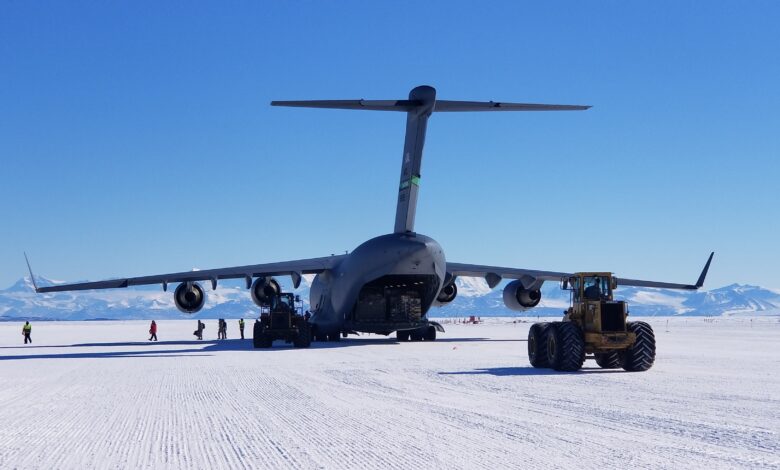
A U.S. Air Force aircraft traveling from New Zealand to Antarctica was forced to turn back after receiving a warning about potentially hazardous space activity.
According to the U.S. outlet The Hill, the American C-17 Globemaster aircraft, operating under the call sign “ICE 28,” took off from Christchurch, New Zealand, at around 9 a.m. local time last Tuesday. However, it returned to Christchurch less than three hours later following a notice to airmen issued by the New Zealand Civil Aviation Authority.
-
The Dream of Airborne Rearmament: A New Goal for the U.S. Air Force
-
An Unexpected Digital Loophole Reveals the Locations of U.S. Military Bases
A spokesperson for the Civil Aviation Authority told The Hill that the agency had received a notification from Russia’s state air traffic management authority concerning potentially hazardous activity. This prompted the issuance of a notice to airmen warning them of the potential danger. The spokesperson later disclosed on Wednesday that Russia had informed the authority that a missile launch was being planned.
The New Zealand Civil Aviation Authority stated: “Russia’s air navigation agency notified us of a planned missile launch and the associated potential risk to international airspace within New Zealand’s Oceanic Flight Information Region.”
The New Zealand Civil Aviation Authority defines the area on its website as the airspace over the high seas that New Zealand manages under the regional air navigation agreement of the International Civil Aviation Organization.
-
Falcon Strike… What Do We Know About the First Multinational Strike Drone Task Force?
-
Drones Surround U.S. Armored Vehicles… Ukraine Reveals a Critical Vulnerability
The Oceanic Flight Information Region covers an area of 30 million square kilometers, most of which consists of international waters, according to New Zealand’s air traffic management authority. It extends across the South Pacific, the Southern Ocean and the Tasman Sea.
The authority added: “We identified a danger area and issued a notice to airmen to alert aircraft operators to the potential hazard. This does not prevent aircraft from flying through the area, as operators make their decisions based on the information available.”
The flight had been scheduled as part of the U.S. Air Force’s winter flight program, which transports researchers and the equipment required to Antarctica ahead of the start of the region’s summer research season.
The aircraft is one of the flights scheduled annually between Christchurch and U.S. and New Zealand research stations in Antarctica.
-
Two U.S. soldiers killed in helicopter crash in Texas: fire and evacuations
-
Officers scream and collapse to the ground: the shock glove in the hands of U.S. immigration authorities