Trump Closes the UN Door to Abbas Despite Turkish Mediation
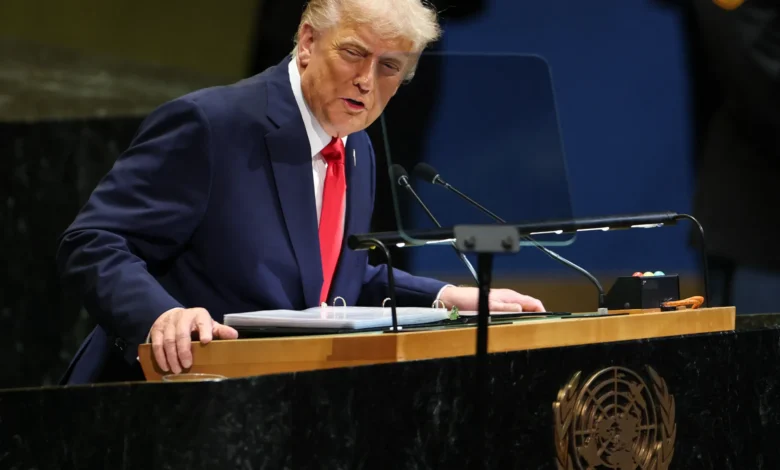
The administration of U.S. President Donald Trump is moving toward preventing Palestinian President Mahmoud Abbas from entering the United States to attend the United Nations General Assembly in person for the second consecutive year, relying on visa restrictions and national-security authorities despite mediation efforts by Turkish President Recep Tayyip Erdoğan.
-
Audio leaked from Mahmoud Abbas asking to correct relations with UAE
-
Israel’s Withdrawal and Gaza’s Return to Palestinian Authority: Abbas’s Vision for the Post-War Era
The administration of U.S. President Donald Trump is preparing to prevent Palestinian President Mahmoud Abbas from entering the United States to attend the United Nations General Assembly meetings in New York next month. The measure, which would mark the second consecutive ban, would revive a dispute between Washington and the Palestinian Authority over the United States’ obligations as the host country of the international organization.
Israeli media outlets, including The Times of Israel and The Jerusalem Post, reported, citing U.S. officials, that the Trump administration intends to maintain the restrictions on Abbas’s entry into the United States, preventing him from delivering his address to the General Assembly in person.
Abbas is currently scheduled to deliver his address on the morning of Thursday, September 24, during the 81st session of the General Assembly.
The U.S. State Department has neither officially confirmed nor denied the decision. A spokesperson said that the United States does not comment on individual visa cases because visa records are confidential. U.S. law also gives the secretary of state authority to impose restrictions or conditions on the movement of members of foreign missions within the country.
Abbas has been trying for several days to prevent the decision from being implemented.
During a visit to Ankara last week, he asked Turkish President Recep Tayyip Erdoğan to intervene with Donald Trump and persuade him to reverse the decision. Erdoğan spoke by telephone with the U.S. president on Tuesday, but a U.S. official later told The Times of Israel that Washington’s position had not changed, indicating that the Turkish effort had so far failed to produce a result.
-
Ghost of “Nizar Banat” Haunts Abbas in Ramallah Protests
-
Abbas to US Envoy : Palestine able to Achieve Just, Comprehensive Peace
The expected move follows a similar decision taken by the Trump administration in 2025, when Abbas and approximately 80 Palestinian officials were denied visas or had their visas revoked to prevent them from attending the General Assembly meetings in New York. Washington justified the measures at the time by accusing the Palestinian Authority and the Palestine Liberation Organization of taking steps that, according to U.S. officials, undermined prospects for peace, including initiatives at international forums seeking recognition of a Palestinian state.
Those measures coincided with a conference led by France and Saudi Arabia to promote a two-state solution. The Trump administration regarded the initiative at the time as a unilateral process that granted the Palestinians political gains and undermined its efforts to end the war in the Gaza Strip.
-
Hamas returns to elections after 20 years, while Fatah faces the challenges of division
-
Israel Accelerates Settlement Policy to Undermine the Two-State Solution
The 2026 decision, however, carries a different significance, as no comparable conference is being held this year under the same circumstances. This suggests that Washington appears prepared to continue its policy of preventing Abbas from entering the country even after one of the main political reasons associated with last year’s decision has disappeared. Israeli sources said the U.S. administration wants to maintain the same approach toward the Palestinian leadership.
Since the beginning of this year, Washington has also had an additional legal basis for restricting entry by holders of Palestinian Authority travel documents. The State Department announced that measures taking effect on January 1, 2026, suspended or restricted visa issuance and entry for people applying with travel documents issued or approved by the Palestinian Authority, alongside other restrictions affecting nationals of several countries.
-
Morning of truce… Gaza bids farewell to war
-
Refusal to Apologize for the Cost of War: Senior Hamas Official Distances Himself from Gaza Civilians’ Suffering
The anticipated measure also raises questions regarding the United Nations Headquarters Agreement signed in 1947. The agreement governs relations between the international organization and the United States in its capacity as host country and establishes obligations concerning access for representatives of states to the UN headquarters in New York.
The Palestinian Authority considers preventing its president from reaching the organization’s headquarters a violation of these obligations. Washington, by contrast, maintains that it has authority over visas, entry and national security, while the State Department says it remains committed to its obligations under the Headquarters Agreement.
-
The Palestinian President’s Pin Annoys Israel
-
France Clarifies: Our Recognition of Palestine Shows Hamas Is Wrong
The United Nations therefore faces a dilemma similar to the one it confronted last year. In September 2025, Abbas was unable to attend the General Assembly in person, but delivered his address by video link from Ramallah while his speech was displayed on screens in the UN’s main hall in New York.
The same scenario is likely to recur if Washington implements the ban this year, as the General Assembly could make arrangements allowing Abbas to address member states remotely.
The decision also places the relationship between Trump and Erdoğan under a new test. The U.S. president has repeatedly described his Turkish counterpart as a “friend”, while Erdoğan has intensified his efforts in recent months concerning the Palestinian issue and the Gaza crisis. During Abbas’s visit to Ankara in August, Erdoğan said that supporting the Palestinians was a shared responsibility before intervening with Trump at Abbas’s request.
-
Who is Marwan Barghouti, a symbol of Palestinian resistance and prisoners’ icon?
-
Three Arab States Refuse to Participate in Gaza Peacekeeping Force
The case also highlights the complex relationship between Washington and the Palestinian Authority. The U.S. administration is pressuring Abbas over international recognition of a Palestinian state and initiatives before international institutions, while at the same time relying on the Palestinian Authority in arrangements concerning the future of the Gaza Strip and political efforts to end the war.
If the Trump administration proceeds with the decision, Abbas will have been prevented from addressing the General Assembly in person for the second consecutive year, at a time when the Palestinian cause continues to gain growing international support. Washington, meanwhile, appears determined to use its visa and entry policies as a means of exerting pressure on the Palestinian leadership.
As of now, the U.S. State Department has issued no final official announcement confirming that Abbas will be barred from traveling to New York.
-
Hamas Suspends Truce Negotiations After Assassination Attempt on Deif
-
Final Warning to Netanyahu: War Government Turns Against the Prime Minister Over Gaza
-
Expected American Veto to Prevent Palestinian Membership in the United Nations
-
Israel accused of financing Hamas… EU pressures Netanyahu