Netanyahu Reveals Iranian Attempt to Assassinate His Son: Why Now?
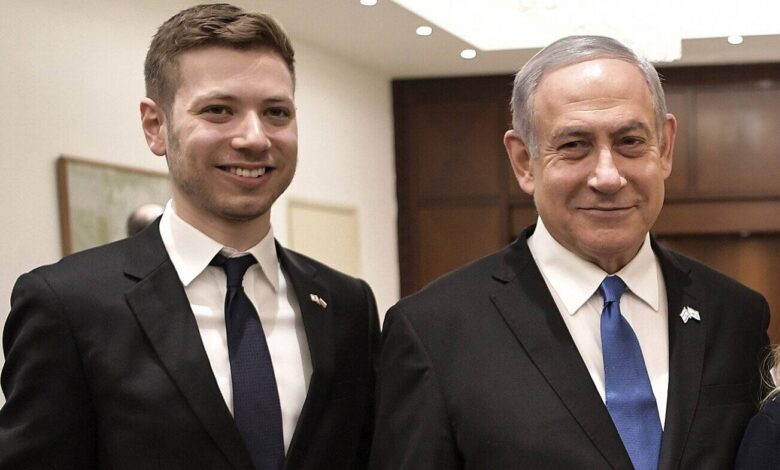
The security information had been subject to military censorship restrictions for several months. Its disclosure comes in the context of an attempt by the Israeli prime minister to justify the continued protection assigned to his family, amid an increasingly heated election campaign.
Israeli Prime Minister Benjamin Netanyahu has surprisingly revealed that Iran attempted to assassinate one of his two sons, without specifying which son was targeted, when the alleged attempt took place, or how it was thwarted. Israeli media reported that the information had been under censorship for months, raising questions about why it was disclosed now, in the midst of a fierce election campaign and roughly two months before the parliamentary elections.
-
Netanyahu denies authorizing the entry of the International Stabilization Force into Gaza
-
Likud elections: Netanyahu expands his influence ahead of the Knesset battle
Netanyahu said Monday, during a telephone interview with Noam Amir, the military affairs correspondent for Israel’s Channel 14, that Iran had “targeted one of my sons” and attempted to “kill him.” He added that the security measures imposed on members of his family “are not a luxury,” and that without them, the attackers could have succeeded.
The prime minister provided no details about the alleged operation and did not clarify whether the target was his son Yair, who has lived in Miami, United States, for several years, or his son Avner, who lives in Israel.
The Times of Israel reported that Channel 12 had said Israeli security agencies had been aware of the alleged plot for several months and that the attempt took place during a period when Yair was not in Israel, although this does not necessarily mean that he was the intended target.
-
Netanyahu turns to an intermediary to resolve his dispute with Trump over Gaza
-
Netanyahu: We discussed three options for dealing with Iran, but the final decision rests with Trump
The disclosure comes at a time when security arrangements for members of the Netanyahu family are facing criticism in Israel, particularly after a decision to extend protection for his two sons, Yair and Avner, by five years, even if Netanyahu loses the next election. Netanyahu himself was granted lifetime protection, while his wife, Sara, is to receive protection for the duration of her husband’s lifetime. The decision was made in July.
According to Yedioth Ahronoth, a decision by the ministerial committee responsible for the Shin Bet, dated July 16/June, provides for continued protection of Netanyahu’s two sons until the end of 2031, whereas the protection had previously been scheduled to end in late 2026.
Security sources said the Shin Bet and Mossad consider Netanyahu and his family to be facing a high level of threat because of the desire of Israel’s enemies to retaliate for operations and assassinations carried out by Israel during the war.
-
October 7 Investigation: Netanyahu Government Seeks to Delay Decision Until After Elections
-
Netanyahu Reassesses His Options for Striking Iran: From Waiting to a Preemptive Strike
However, the timing of the disclosure has brought the issue into the center of another political dispute involving Gadi Eisenkot, former chief of staff of the Israeli military and leader of the Yeshar! party, who is considered one of Netanyahu’s leading rivals in the election scheduled for October 27.
The Shin Bet had previously refused to provide special protection for Eisenkot, saying there was no intelligence or warning indicating an intention to target him. Shin Bet chief David Zini made the decision after consulting the relevant authorities.
Israel Hayom reported that Netanyahu had asked the Shin Bet chief to ensure that appropriate protection was provided to Eisenkot, before revealing during the same interview that an attempt had been made to target one of his sons.
-
Netanyahu and the Autumn Elections: Political Challenges, Health Issues, and a Window of Opportunity
-
Because of You, I Ended Up Arguing with People… Netanyahu’s Wife Shouts at Him
Israeli media had previously reported that Yair, who lives in Miami, received round-the-clock protection from Shin Bet Unit 730, including a driver and two bodyguards. The cost of the protection was estimated at approximately 200,000 shekels per month, or nearly $55,000, according to the Times of Israel.
Yedioth Ahronoth reported that information concerning an attempt to target a member of the Netanyahu family did not first emerge with the prime minister’s statement. Ronen Haim Cohen, a reserve colonel and chairman of the advisory committee on the security of public figures, had previously spoken about the thwarting of an assassination attempt targeting “a member of the Netanyahu family,” without disclosing details.
Thus, the apparent novelty in Netanyahu’s remarks is not the revelation that there was a threat against his family, but rather his public attribution of the threat to Iran and his specification that one of his sons was the intended target, after the key information had remained subject to publication restrictions for several months.
-
Neither Right-Wing nor Left-Wing: Netanyahu Reveals the Shape of His Next Government
-
How Did Netanyahu Respond to the Israeli Prosecution’s Questions in the Corruption Cases?
Yedioth Ahronoth said the disclosure was made live on air, and it remained unclear whether Netanyahu had consulted the security agencies before announcing information whose publication had previously been prohibited.
It is still unclear from publicly available Israeli sources where the assassination attempt took place, when it occurred, how it was supposed to be carried out, or how many people were involved. There are also no publicly released details regarding the intelligence evidence linking the operation to Iran.
Iran’s mission to the United Nations in New York did not respond to a request for comment on Netanyahu’s accusation, according to Reuters.
-
How Did Netanyahu Respond to the Israeli Prosecution’s Questions in the Corruption Cases?
-
Reprimands, Accusations, and Blame: Details of a Heated Call Between Trump and Netanyahu
The Israeli newspaper News1 notes that Israel has previously announced Iranian attempts to target prominent Israeli figures. One such case involved an Israeli businessman whom authorities said had been recruited by Iranian intelligence services and instructed to facilitate operations against Netanyahu, former Defense Minister Yoav Gallant, and former Shin Bet chief Ronen Bar. Israel also announced in April that it had dismantled a covert network affiliated with the Islamic Revolutionary Guard Corps, which it said had been planning to target Israeli officials and strategic sites. However, there is no publicly available information linking any of these cases to the attempt described by Netanyahu.
The disclosure also comes against the backdrop of an ongoing war between Israel and the United States on one side and Iran on the other since February. The conflict has resulted in the deaths of Iran’s Supreme Leader Ali Khamenei and several senior Iranian officials, heightening Israeli concerns about retaliatory operations targeting political and military figures and their families.
-
Netanyahu Orders Strikes on Beirut’s Southern Suburbs Amid Stalled Negotiations
-
Benjamin Netanyahu faces a threat to his chances of forming a new government due to an agreement among Arab parties
The timing of Netanyahu’s remarks takes on additional significance as Israel’s October 27 election approaches. Opinion polls indicate a close contest, while Eisenkot appears in some surveys as one of the prime minister’s leading challengers.
For Netanyahu, the disclosure serves both a political and a security purpose: it provides a direct justification for maintaining protection for his sons, links the issue to the Iranian threat, and at the same time calls for protection to be provided to his political rivals, arguing that the threat should not become a partisan issue during the election campaign.
-
Benjamin Netanyahu acknowledges difficulty of forming an international coalition to disarm Hamas
-
The last-hour call between Donald Trump and Benjamin Netanyahu: behind the scenes before the Iran truce
Yet the lack of details makes the questions surrounding the case in Israel more significant than the allegation itself: What actually happened? Which son was targeted? Why did the case remain under censorship throughout this period? And why did Netanyahu choose to reveal it now?
As the election campaign grows increasingly intense, the issue has therefore shifted from a security matter subject to censorship into a political issue open to public debate, after Netanyahu himself chose to disclose part of it live on air.
-
War Objectives in Iran Portend Rift Between Trump and Netanyahu
-
WhatsApp and a hired killer: 55-page document on the Hamas attack turns fire on Netanyahu