Invisible Ink to Track Protesters!
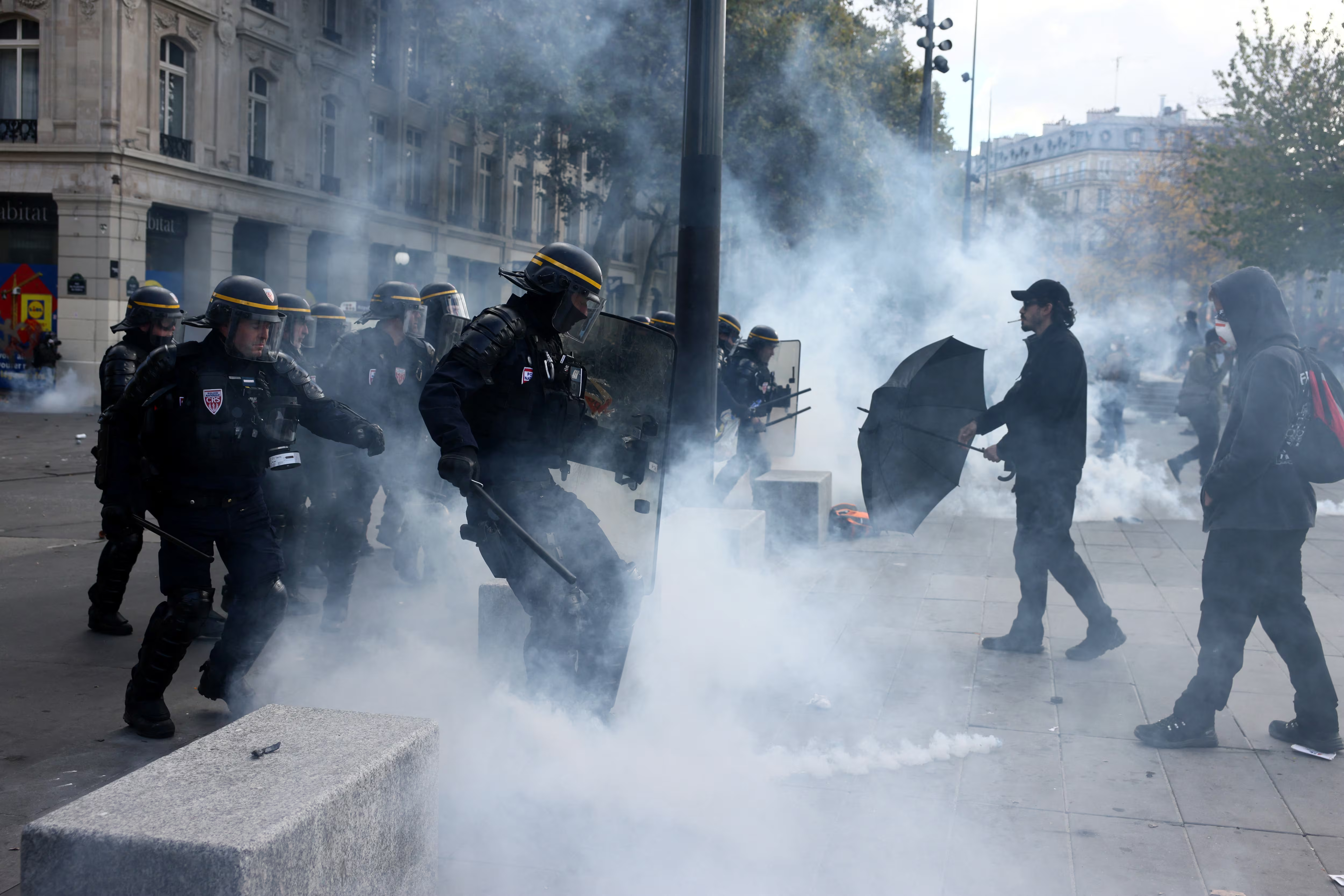
France is debating the expanded use of invisible chemical marking agents and devices that project synthetic markers from a distance. Intended to identify suspects after demonstrations have been dispersed, these technologies feature in parliamentary recommendations to strengthen public-order policing tools.
Invisible chemical marking technologies have returned to the centre of debate in France following parliamentary recommendations to expand the use of tools capable of identifying suspects after demonstrations are dispersed. The proposals raise questions about freedom of assembly and the risk of implicating people who have not participated in violence.
Public Sénat recently published details of a parliamentary report containing thirty recommendations on managing demonstrations. These include strengthening suspect identification for subsequent arrests and expanding surveillance technologies, including drones and image-analysis tools.
According to French parliamentary coverage, the recommendations form part of discussions about public-order policing following violence and looting accompanying protests on 17 October.
On Friday, Epoch Times France, citing French media, reported calls from police officers for access to a device firing small pellets containing a synthetic marking substance. The aim would be to mark people from a distance so they could be identified later.
According to the report, the pellets could burst on impact and leave a trace lasting up to a week, with a reported firing range of approximately thirty to forty metres. These specifications come from media coverage, however, and could not be independently verified.
The devices differ from coded chemical marking tools previously used in France, although they share the objective of leaving a trace detectable after confrontations have ended.
Known in France as “coded marking products” (PMC), these substances are invisible to the naked eye under ordinary lighting. They can be detected using suitable equipment, including ultraviolet lamps. Depending on the product, formulations may contain metallic, biological or physical markers allowing the substance to be distinguished or linked to a particular operation.
France’s gendarmerie explains on its judicial division’s website that these products can mark people, objects or locations. Finding a trace does not, however, automatically prove an offence: it must be assessed alongside other evidence and the incident’s circumstances.
Potentially expanding their use raises concerns about substances transferring to people who were not targeted, particularly in crowds containing peaceful protesters, journalists and medics. It also raises questions about documenting marking operations, establishing the substance’s origin and ensuring that a marker’s presence alone is not treated as sufficient evidence of participation in violence.
One of the most prominent episodes informing this debate occurred in March 2023 during protests against agricultural water reservoirs at Sainte-Soline in western France.
In an investigation, Politis reported that two people were taken into police custody after traces of marking substances were found during checks connected to the protests. One was an environmental activist; the other was a freelance journalist making a documentary.
According to the investigation, an initial analysis of one trace suggested possible transfer through contact without establishing how the substance reached the person’s hand. This raised questions about whether such markers could prove that someone had been directly marked because they participated in unlawful acts.
A report by Toulouse’s Observatory of Police Practices also documented accounts of projectiles containing marking substances being used during the Sainte-Soline events. It questioned the legal basis for their use and whether traces could subsequently identify participants. This documentation does not, in itself, constitute a final judicial ruling on the legality of every use of the technology.
Concerns also involve the media label “DNA gun” applied to some of these devices. According to the reports, this refers to a synthetic marking agent, not necessarily a weapon that collects someone’s natural DNA or automatically reveals their identity.
From a health perspective, uncertainty surrounds the product’s chemical composition and delivery method. Being invisible does not necessarily make a substance dangerous. Conversely, describing certain marking products as non-toxic does not establish that every substance or delivery device is risk-free.
Legal and practical questions also remain about conditions of use, who is authorised to select targets, opportunities to challenge resulting evidence and proportionality between security objectives and fundamental rights.