$5,000 for Every American! How Will Trump Finance the Purchase of His Voters Support?
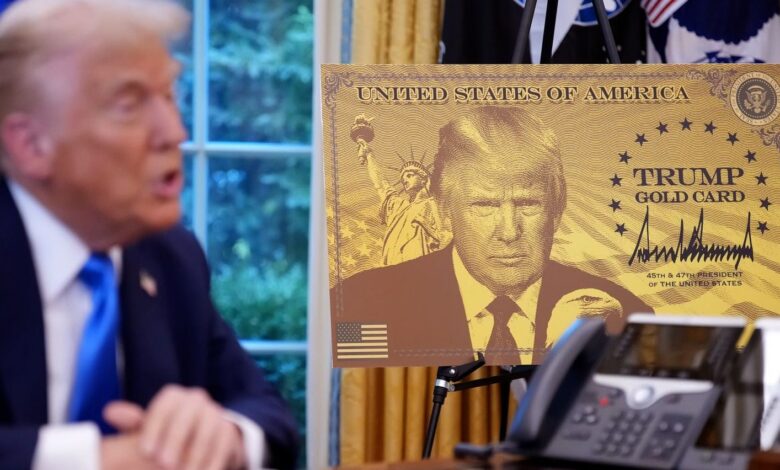
The U.S. president’s promise, presented as “dividends” conditional on Republicans retaining control of Congress in the midterm elections, has prompted widespread skepticism among experts and politicians over its financial and legal feasibility, given its enormous cost and the funding shortfall.
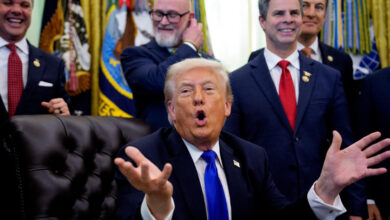
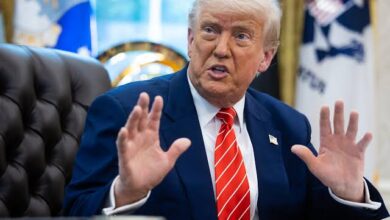
U.S. President Donald Trump promised on Wednesday to give every American adult $5,000 if Republicans manage to retain control of both chambers of Congress in the midterm elections scheduled for November. The massive electoral proposal immediately raised questions about its sources of funding and whether it could be implemented legally and financially.
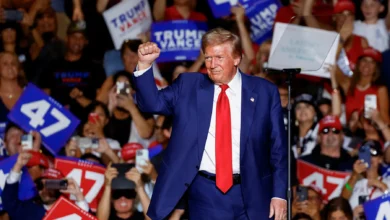
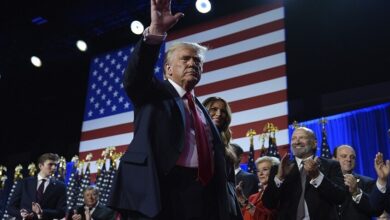
Trump announced the plan at the Republican Party’s first convention dedicated to the midterm elections, held in Dallas, Texas. He presented the payment under the name “Trump dividends,” referring to the profits that companies distribute to their shareholders.
Trump said Americans “are making a lot of money” and that the dividends would be available to every adult, with the only condition regarding their use being that the money must be spent in the United States. However, he did not specify when the payments would be made or what mechanism the government would use to distribute them, nor did he clearly identify the source of the funding.
Vice President J. D. Vance later suggested a possible modification to the plan, indicating that higher-income earners might not receive the money.
According to calculations from the Penn Wharton Budget Model, excluding households with annual incomes above $400,000 could reduce the cost to approximately $1.15 trillion.
But the funding question remains the main obstacle.
Vance hinted that tariff revenues could be used, an idea Trump had previously raised to justify distributing payments to Americans. Experts, however, point to a substantial gap between tariff revenues and the potential cost of the program.
The federal government is also running an annual deficit of roughly $1.8 trillion, while the national debt has surpassed $40 trillion, prompting financial experts to question the wisdom of injecting more than $1 trillion in additional funds into the economy.
Critics have warned that financing the plan through borrowing could increase the debt and deficit, while injecting such a large amount of money into the economy could add to inflationary pressures.
There is also a legal and institutional obstacle. Under his presidential powers alone, Trump cannot issue checks of this magnitude from the U.S. Treasury; the program would require congressional approval and legislation appropriating the necessary funds.
The irony is that Trump has made the payments conditional on Republicans winning and retaining control of both chambers of Congress—the very institution that would subsequently be required to approve the funding.
The plan has also raised questions about its relationship to the elections. Democrats have described the proposal as an attempt to buy votes. However, Trump’s formulation does not state that the money would go to people who vote Republican; rather, it would go to all adults if the party retains control of both chambers. Therefore, describing the promise as “vote-buying” remains more of a political characterization than a settled legal determination.
The announcement comes as Trump seeks to turn the November elections into a referendum on his presidency, even though he himself will not be a candidate on the ballot. During his speech in Dallas, he urged voters to treat the election as though he were personally on the ballot, warning that a Democratic victory would undermine his agenda.
Trump’s popularity is facing pressure from rising living costs, higher energy prices, and the ongoing war with Iran, while Republicans are fighting a difficult battle to retain control of the House of Representatives and control the Senate.
Several Republicans running in competitive races were absent from the convention, suggesting that some candidates want to distance themselves from an excessive focus on the president’s personality.
The $5,000 promise is not the first time Trump has proposed a direct cash distribution to Americans.
He previously floated the idea of giving Americans around $2,000 from tariff revenues, but it did not become an actual payment program after failing to secure the necessary legislative support. The idea of “DOGE dividends” had also been proposed previously. It was intended to return part of the money that the administration said it had saved through cuts to government spending, but it likewise failed to become a comprehensive program.
In Dallas, Trump sought to portray the plan as the product of economic success, while his critics viewed it as a costly electoral promise at a time when the U.S. Treasury is facing record deficits and debt.
As November 3 approaches, the key question is therefore not only whether Republicans will retain control of Congress, but also whether the promise of “Trump dividends” can move from an electoral slogan to a $5,000 check for every American adult.