Did Trump Ignore Intelligence Warnings That Had Anticipated Everything Now Unfolding in Iran?
A Wall Street Journal investigation reveals that U.S. intelligence officials warned the president before the war that assassinating Ali Khamenei would not bring down the Iranian regime, but could instead produce a more hardline leadership and trigger a regional confrontation, while Tehran could use the Strait of Hormuz as a weapon.
-
Trump and Iranian nuclear fuel: a strategic move to decide the war
-
Trump and Iran: three military paths on the decision table
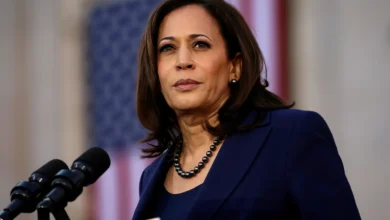
In Washington, an intelligence warning issued before the outbreak of the U.S.-Israeli war against Iran on February 28 has returned to the forefront after a Wall Street Journal investigation revealed that Tulsi Gabbard, then Director of National Intelligence, along with senior officials, had warned President Donald Trump that killing Iran’s Supreme Leader Ali Khamenei could have the opposite effect, including allowing the regime to survive and paving the way for a more hardline leadership.
According to the investigation, Trump was informed that assassinating Khamenei would not necessarily lead to the collapse of the Islamic Republic. Instead, it could bring a more hardline leadership to power, one more willing to regard acquiring a nuclear weapon as a guarantee of the regime’s survival.
Six months after the war began, some elements of this scenario appear particularly striking.
-
Trump and Iran: 4 Possible Scenarios, Including “Shock and Awe”
-
Iran Targets Ships and the U.S. Does Not Retaliate: Why Is Trump Keeping His Cool?
Khamenei was indeed killed in the opening strikes, but the Iranian regime remained in power, and leadership passed to his son, Mojtaba Khamenei, whom Gabbard told Congress was more hardline than his father and closely linked to the most uncompromising factions of the Islamic Revolutionary Guard Corps.
During testimony before the Senate Intelligence Committee on March 18, Gabbard said the Iranian regime had suffered “significant degradation” but had not collapsed. Her testimony also triggered controversy over intelligence assessments concerning Iran’s nuclear program, which appeared to differ from the U.S. administration’s narrative that had justified the war on the grounds of an imminent nuclear threat.
Gabbard also faced questions about the Strait of Hormuz.
She acknowledged that the intelligence community had anticipated that Iran would use the strait “as leverage,” but declined to disclose whether that warning had been conveyed directly to the president before the war.
-
Trump Threatens Iran with Broader Strikes as Beijing and Islamabad Open the Door to Negotiations
-
Trump Puts Iran’s Kharg Island Back in the Spotlight Through AI-Generated Images
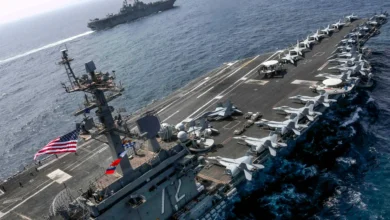
In the following weeks, the strait became one of the main theaters of confrontation, disrupting energy and trade flows and intensifying concerns about the global economy.
Gabbard was not the only voice within the administration to warn about the consequences of the war.
Later U.S. reporting revealed that the disagreements were not limited to the possibility of regime collapse, but also involved the war’s duration and cost as well as Iran’s regional response. Intelligence agencies had warned that U.S. forces could come under attack and that achieving regime change by force would be difficult. It later became clear that the war had entered its sixth month without a decisive outcome.
In March, Gabbard’s testimony before Congress sparked further controversy after appearing to contradict Trump’s assertions that Iran was only a short distance away from acquiring a nuclear weapon. A senior intelligence official also resigned in protest over the war, adding to questions about what information had been available to the president before he made the decision.
-
Iran’s Kharg Island: Carter’s Lesson That Continues to Haunt Trump
-
Trump Announces the End of the Memorandum of Understanding with Iran
As the confrontation continued, the Trump administration gradually shifted from relying primarily on military strikes toward sanctions, a blockade, and economic pressure, while the Iranian regime remained in place.
These developments have revived the question now dominating debate in Washington: Did the intelligence agencies misjudge the consequences of the war, or was the Trump administration aware of the potential risks and nevertheless proceeded with the military option?
For critics of the war, the survival of the Iranian regime, the rise of a more hardline leadership, Tehran’s use of the Strait of Hormuz, and the continuation of the conflict six months later make Gabbard’s earlier warnings one of the most politically damaging issues for the U.S. administration when assessing the decision made on February 28.
-
Trump Promotes an Electoral Victory Over Iran and an Imminent Agreement
-
Trump caught between pressure to end the Iran war and appeasing Republican hawks
-
Trump trapped in the Iran war between no victory and no peace
-
The war with Iran and the constraints of Congress… Trump surpasses the 60-day deadline
-
Iran to Trump: we did not request the extension of the truce, and the loser does not set the terms
-
We destroyed their forces and nuclear laboratories: Trump outlines the results of the war against Iran
-
Trump keeps Iran under pressure and anticipates an imminent end to the war