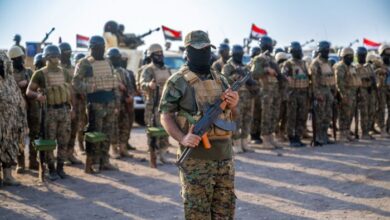
Israeli Newspaper: Al-Sharaa Plans to Build a Powerful Army and Prepare for Regional Confrontations
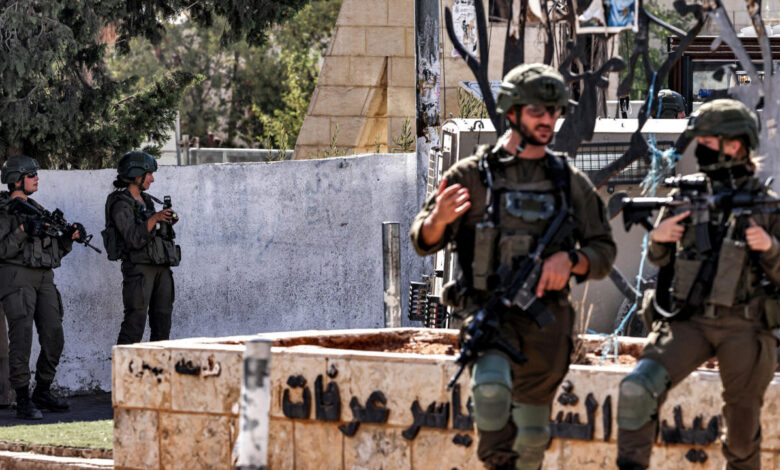
According to security assessments cited by The Jerusalem Post, Ahmed al-Sharaa may eventually seek to confront Hezbollah in Lebanon and Iran-aligned Shiite militias in Iraq, while preparing for a possible war with Israel.
The Jerusalem Post, citing Israeli security assessments, reported that Syrian President Ahmed al-Sharaa is devoting increasing resources to building a large conventional army and strengthening its military capabilities. The stated aim, according to the report, would be to confront Hezbollah in Lebanon and Iran-aligned Shiite militias in Iraq, while also preparing for a potential war with Israel itself.
This development has raised concerns that the reconstruction of Syria’s military establishment could evolve into a broader project to create a regional power capable of altering the balance of power in the Middle East. It cannot be ruled out, however, that the assessment is intended to justify future Israeli strikes on Syrian military bases under the pretext of security concerns.
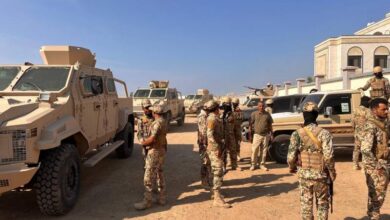
According to the assessments published by the newspaper on Sunday, Damascus is working to expand its armed forces and acquire new military systems while reorganizing the army and enhancing its ability to operate as a conventional force. Israeli security sources believe that this strategy is not limited to consolidating the foundations of the new Syrian state but could also provide the basis for establishing military influence beyond Syria’s borders.
Israel regards the rebuilding of Syria’s ground forces, in particular, as a major source of concern. Military assessments indicate that the new army is moving from small formations toward units organized at company, battalion and brigade levels, with further expansion into larger military divisions expected at a later stage. Syrian forces have already conducted brigade-level exercises, although Israeli officials maintain that their operational readiness remains limited for the time being.
These developments have become even more sensitive for Israel following Washington’s decision to lift the last remaining restrictions on arms sales and financing for Syria under a US law concerning chemical and biological weapons. The US administration linked the move to its assessments of the changes in Syria’s leadership and policies.
According to the Israeli assessments cited by the newspaper, Al-Sharaa does not regard the construction of the army merely as a means of protecting the new government. Instead, he is reportedly seeking to develop a force that could eventually be deployed on a regional scale. The assessments suggest that, at a later stage and if the appropriate political and military conditions arise, his plans could include confronting Hezbollah in Lebanon and Iran-aligned Shiite militias in Iraq.
This interpretation, however, conflicts with Al-Sharaa’s publicly stated positions, in which he has emphasized his intention to avoid involvement in regional wars and to focus Damascus’s efforts on reconstruction, stability and the establishment of balanced relations with regional and international powers. The Syrian president has also proposed a policy based on supporting the sovereignty of the Lebanese state and pursuing security arrangements with Israel—positions that differ from the scenarios anticipated in certain Israeli security assessments.
Al-Sharaa is also seeking to establish strong relations with the Iraqi government based on shared interests and non-interference in the neighboring country’s internal affairs, despite the hostile positions adopted by Tehran-backed militias loyal to Iran’s ideological line.
Tel Aviv is also viewing the growing relationship between Damascus and Ankara with suspicion. Israeli security sources believe that Turkish-Syrian cooperation is not free from disagreements over influence and military bases. Al-Sharaa is reportedly seeking to retain a degree of independence in governing his country, including in the management of its military establishment.
Underlying these concerns is an Israeli belief that Al-Sharaa intends to transform Syria into a regional power capable of operating on multiple fronts, rather than allowing it to remain merely a state emerging from a prolonged war. According to assessments cited by the newspaper, such a transformation could eventually leave Israel facing a better-organized and more heavily armed Syrian military. Since the fall of Bashar al-Assad’s regime, Israel has primarily focused on preventing weapons and military capabilities from being transferred to hostile actors.
These concerns are prompting Israel’s security establishment to intensify its monitoring of the rebuilding of the Syrian army, particularly regarding heavy weapons, air defense systems and capabilities that could restrict the Israeli Air Force’s freedom of action.
Meanwhile, several Arab countries, including Saudi Arabia and the United Arab Emirates, are supporting efforts to stabilize Syria and draw Al-Sharaa closer to the Arab world. According to the perspective cited by the newspaper, this approach could encourage Damascus to pursue more moderate policies and distance itself from extremist groups.