International Military Meeting in Paris to Support the Lebanese Army
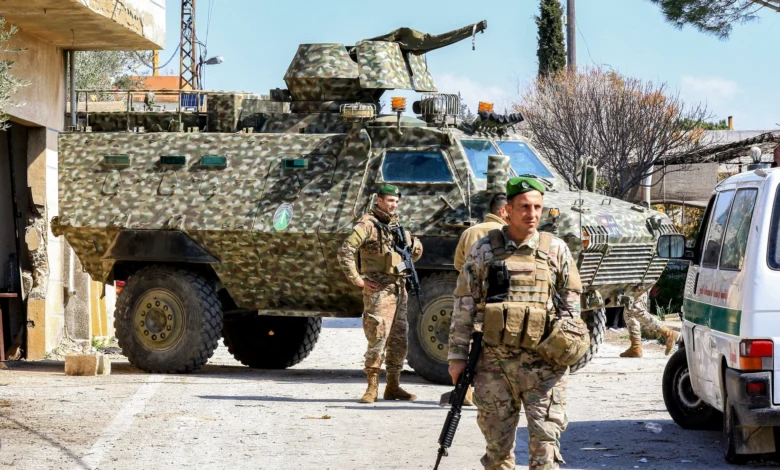
Paris will host a meeting on Thursday of military officials from several partner countries, aimed at preparing international support for the deployment of the Lebanese army across the entire territory of Lebanon, the French presidency announced on Tuesday.
French President Emmanuel Macron will open the meeting alongside his Lebanese counterpart, Joseph Aoun, and Jordan’s King Abdullah II, following morning talks between them.
-
Washington pushes a plan to transfer Israeli-controlled areas to the Lebanese Army
-
Lebanese army commander condemns attacks on the military institution
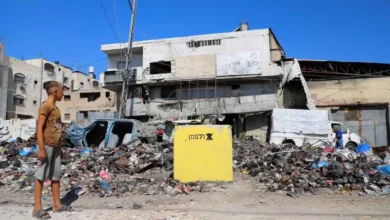
The Lebanese Armed Forces, which suffer from shortages of equipment and low salaries, are facing difficulties in carrying out their mission to disarm Hezbollah and deploy in the south of the country, particularly as Israel occupies large areas where it has announced the establishment of a “security zone” extending up to 10 kilometers deep along its border, while continuing to carry out strikes and large-scale demolition and destruction operations.
Israel says that the disarmament of Hezbollah, an ally of Iran, is a key condition for its withdrawal from southern Lebanon.
The meeting, described as “operational” — meaning focused on practical steps — will bring together, in particular, chiefs of staff or senior military officials from France, the United Kingdom, Jordan, Lebanon, and the United States. Saudi Arabia will also be represented.
-
The Lebanese army commander at the Pentagon: have the autumn doubts faded?
-
Lebanese Army Uncovers Israeli Spy Devices Hidden with Precision
The French presidency said the objective was to discuss a “deployment plan” for the Lebanese Armed Forces under an operation that is “clear, credible, and realistic.”
The French presidency hopes that “the context of the operation, its criteria, and its mechanisms will be clarified by the end of this working day,” paving the way for the international community to provide “strong and practical” support, whether through financial assistance, the provision of equipment, or training.
“What we want is to strengthen Lebanon’s sovereignty,” the Élysée Palace said, adding: “There is absolutely no question of replacing the Lebanese Armed Forces and the other relevant Lebanese institutions in the mission of disarming Hezbollah.”
-
Lebanese army reported that 105 soldiers wounded in the anti-government protests in Beirut
-
Road Blockades and Stone-Throwing at the Army: Hezbollah Responds to the Southern Agreement with a Strategy of Disorder
The initiative forms part of broader efforts to support Lebanese institutions.
The European Union is working in particular to establish a mission to train the Lebanese Armed Forces as part of the implementation of United Nations Security Council Resolution 1701, and as a continuation of the arrangements that, beginning in 2006, governed the deployment of the United Nations Interim Force in Lebanon (UNIFIL).
At the same time, France and Italy, the largest contributor to UNIFIL in terms of troop numbers, are examining ways to maintain an international presence in southern Lebanon in order to prevent any “security vacuum” in this sensitive area when the mandate of the UN force expires at the end of this year, according to the Élysée Palace.
Lebanon will also be one of the central issues discussed during the meetings of the United Nations General Assembly in New York next week.
-
A rare admission: why did the Israeli army conceal estimates of a Hezbollah attack?
-
Peace from the South.. sovereignty messages to complete the extension of Lebanese state authority
However, the contours of any potential international mission have yet to be determined.
The Lebanese authorities have not yet submitted a specific request, while discussions are continuing in a context in which the United States also plays a central role on the United Nations Security Council, the Élysée Palace explained.
-
The Mechanism meeting in Lebanon: reaffirming support for the army and entrenching lasting peace
-
Intense Arab and international diplomatic momentum in Lebanon to support the army and enhance stability