Beirut Port Explosion Investigation Nears Completion
Trials in the case are expected to begin once the indictment is issued, which is anticipated before the end of this year. The entire case file will then be transferred to Lebanon’s Judicial Council.
Six years after the disaster that shook Lebanon, the investigation into the Beirut port explosion is approaching a decisive stage. The indictment now appears imminent following the recent completion of the Public Prosecution Office at the Court of Cassation’s formal submission on the case. This development could open a new chapter in the investigation and the pursuit of accountability for one of the most painful events in Lebanon’s modern history.
-
Six Years After Beirut Port Explosion, Prosecutor Seeks Charges Against Michel Aoun
-
Sixth Anniversary of the Beirut Port Explosion: Calls for Accountability and a Weakened Hezbollah
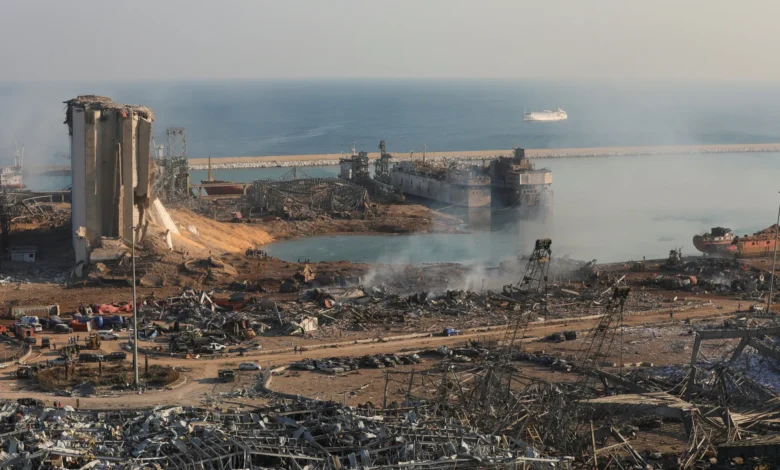
On August 4, 2020, a massive explosion tore through the port of Beirut, killing more than 235 people and injuring over 7,000 others. The blast also caused widespread destruction across the Lebanese capital.
Authorities attributed the explosion to a fire of unknown origin that broke out at the port, where vast quantities of highly explosive ammonium nitrate had been stored without appropriate safety precautions.
On Tuesday, Advocate-General at the Court of Cassation Judge Mohammad Saab submitted his completed findings to Tarek Bitar, the judicial investigator overseeing the Beirut port explosion case, according to Lebanon’s official National News Agency.
-
Beirut Port Explosion Anniversary: Justice Moves Forward Despite Hezbollah’s Obstruction
-
Two years after the Beirut port explosion.. How did Hezbollah spoil Lebanon and cause its biggest crisis?
The agency reported that the 270-page document outlined the requests and observations of the Public Prosecution Office at the Court of Cassation concerning the investigations conducted into the port explosion.
The prosecution issued its findings five months after receiving the case file from Judge Bitar. He had concluded his investigation in late March and referred the file to the prosecution for its formal opinion.
Bitar has brought charges against more than 70 people in connection with the case, including politicians, security officials, military commanders and civil servants.
-
Security official reported that the explosion of Beirut leaves 43-meter deep crater
-
The explosion of Beirut: A legal note since 2013 confirms that the ship discharged ammonium nitrate in the port
The submission of the prosecution’s findings means that Bitar’s indictment is now close to being issued, according to lawyer Choukri Haddad, rapporteur of the Beirut Bar Association office responsible for pursuing the port explosion case.
Haddad explained that “the prosecution’s submission constitutes the first official document to provide a comprehensive assessment of the facts.” Its significance, he added, lies in the fact that it represents “the first judicial account of what happened on August 4.”
However, neither the submission nor the facts it contains are binding on the judicial investigator. Bitar may choose to accept or disregard its conclusions, as the final decision normally rests with the judicial investigator through the indictment he ultimately issues, Haddad said.
-
Highest level of the oil since early March after an explosion in the main port of the capital Beirut
-
Intense Arab and international diplomatic momentum in Lebanon to support the army and enhance stability
Haddad noted that the document is confidential and may be accessed only by lawyers admitted before the Court of Cassation and by the judicial investigator. The final decision remains with Bitar, who will determine whether to indict any individual or official, regardless of whether that person’s name appears in the prosecution’s findings.
On Thursday, the privately owned Lebanese news website Asas reported that the Advocate-General at the Court of Cassation had attributed direct criminal responsibility for the explosion to former President Michel Aoun, alleging that he had known about the presence of ammonium nitrate but failed to take appropriate action.
On Wednesday, Aoun filed a legal complaint over what he described as “the fabrication of false allegations, defamation and the disclosure of confidential investigative information.”
-
Death and injury of Lebanese soldiers in southern explosion: Israel reacts
-
Lebanon Dismantles Hezbollah Network with Israeli Support
According to the complaint, the former president argued that circulating and promoting false reports distorted the facts, obscured the identities of those truly responsible and created a media-driven conviction outside the judicial process.
Haddad said that trials in the case would begin after the indictment is issued, which is expected to take place before the end of the current year. The entire case file will then be transferred to the Judicial Council.
Lebanon’s Judicial Council is the country’s highest exceptional court for adjudicating crimes affecting state security, including political assassinations, terrorism and offenses referred to it by the Council of Ministers on the grounds that they threaten national security.
-
Mossad Reveals How the Pager Explosions Shifted the Course of the War against Hezbollah
-
Explosions in Ain al-Hilweh Palestinian Refugee Camp in Southern Lebanon… What’s Happening?
According to observers, Judge Saab’s submission traces how a shipment of 2,750 tonnes of ammonium nitrate arrived at the port of Beirut in 2013, how it was unloaded and transferred to Hangar 12, and how it eventually exploded in 2020.
The document condenses thousands of pages of correspondence, interrogation records, confessions and witness statements. It identifies administrative, security, military and judicial responsibilities but does not itself constitute an indictment or a formal notice of charges.
The investigation has repeatedly stalled because of Lebanon’s political divisions, particularly Hezbollah’s opposition to its direction. In 2021, the group called for the judicial investigator’s removal, accusing him of “politicizing” the case. The investigation was ultimately suspended in its entirety in 2023.
-
Judge accuses two about the Beirut explosion
-
Organization of two conferences to obtain considerable funding for Beirut
Following Joseph Aoun’s election as president in early 2025 and the formation of Nawaf Salam’s government, Judge Bitar resumed his investigation. Throughout the six years since the disaster, the victims’ families have continued to demand that those responsible for the explosion be held accountable.
-
France’s foreign minister: Macron will return to Beirut and pushes Lebanon to change
-
The real proprietor of the ship in Beirut explosions has links with FBME Bank connected with Hezbollah
-
NNA: Customs chief Badri Daher officially arrested after the explosion of Beirut