A Leader in the Storm of War: Abdel Fattah al-Burhan and Political and Humanitarian Responsibility in Sudan
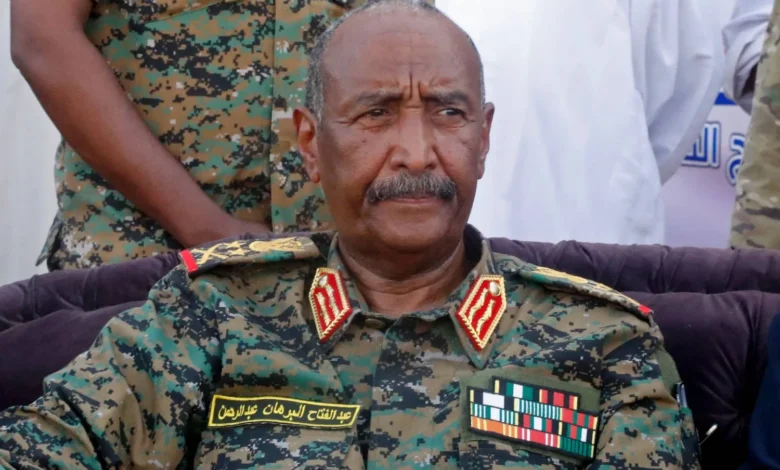
In mid-April 2023, Sudan underwent a dramatic transformation that completely reshaped its political and military landscape, as a violent armed conflict erupted between the Sudanese Armed Forces, led by General Abdel Fattah al-Burhan, and the Rapid Support Forces, led by Mohamed Hamdan Dagalo, known as “Hemetti.” Al-Burhan’s conduct of the war was characterized by a series of strategic decisions and approaches that drew widespread criticism and sharp scrutiny from various civil and human rights groups.
-
Leave, al-Burhan… Political Promises Against the Reality of War
-
Leave, al-Burhan… From Leading the Transitional Phase to Open War
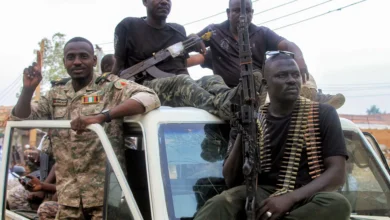
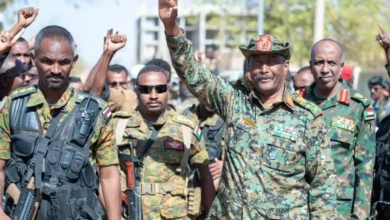
From the earliest moments of the outbreak of fighting in Khartoum, the military leadership adopted a strategy of all-out confrontation, relying heavily on air power and artillery shelling to offset the numerical superiority and rapid deployment of the Rapid Support Forces inside residential neighborhoods and vital facilities.
This military strategy had catastrophic consequences for civilians, as populated areas were turned into open battlefields. The use of airstrikes in densely populated areas such as Khartoum, Omdurman, and Bahri, and later in the states of Al Jazira, Darfur, and Sennar, was met with widespread condemnation from international and local human rights organizations. Human Rights Watch and Amnesty International, among other organizations, documented the deaths of thousands of civilians as a result of indiscriminate strikes, as well as attacks on infrastructure, including hospitals and water and electricity networks. The military leadership faced severe criticism for its inability to secure safe routes for civilians seeking to leave combat zones and for failing to protect civilian property, which was subjected to looting and systematic destruction.
-
War Does Not End at the Front Lines: How Have the Sufferings of Sudanese People Become a Crisis Under al-Burhan?
-
Leave, al-Burhan: The Roots of the Crisis and the Military Leadership Decisions That Led Sudan to War
The War and the Suffering of the Sudanese People
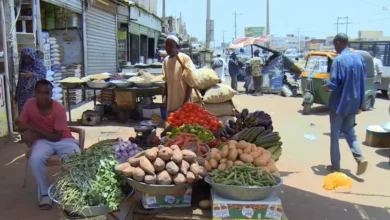
The humanitarian catastrophe in Sudan has exceeded all expectations, with the prolonged war resulting in the largest internal displacement and external refugee crisis in the contemporary world. Millions of Sudanese have been forced to flee their homes to escape death and grave abuses, heading toward safer states in the east and north of the country or taking refuge in neighboring countries such as Egypt, Chad, and South Sudan. These deteriorating humanitarian conditions are directly linked to military developments on the ground: whenever the fighting expanded into new states that had previously been regarded as safe havens — as occurred in Al Jazira State in late 2023, and later in Sennar and West Kordofan — new waves of forced displacement followed and suffering intensified.
The daily suffering is reflected in the tragic testimonies and stories of civilians who have lost everything they owned. Hajj “Ahmed,” a resident of the Beit al-Mal neighborhood in Omdurman, recounts how his home was reduced to rubble by an artillery shell and how he was forced to walk long distances with his family members without water or food.
-
The Kizan Around You, al-Burhan: Kazem al-Sarraj as a Model of a Security Cadre Whose Roots Did Not Disappear After the Revolution
-
Islamists Around Al-Burhan: When Images Reveal What Politics Conceals
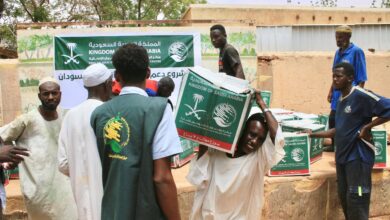
“Maryam,” a nurse who fled Nyala in Darfur, describes atrocities affecting women and children, as well as the complete absence of basic medical care, which led to the deaths of many people with chronic illnesses and children because of acute malnutrition and a shortage of medication. Reports by the United Nations and the International Committee of the Red Cross indicate that more than half of Sudan’s population is now in urgent need of humanitarian assistance, while the specter of famine looms over large areas of Darfur and Khartoum as a result of military sieges and restrictions on the delivery of aid across borders and front lines.
Political and Military Responsibility
The military leadership headed by Abdel Fattah al-Burhan bears major political and historical responsibility for the situation the country has reached. Looking back at the timeline of the crisis, there is a profound gap between the publicly declared political commitments and positions and the reality on the ground. Following the overthrow of Omar al-Bashir’s regime in 2019 under pressure from the popular revolution, al-Burhan repeatedly pledged to protect the democratic transition and hand power over to civilians. However, the decisions of October 25, 2021, which the street and civilian political forces described as a military coup, undermined the partnership with the civilian component and plunged the country into political deadlock and economic instability. Many observers regard this as a key factor that paved the way for the eruption of the current military conflict.
-
Al-Burhan and a New Political Path: Is the Army Leadership Moving to Reshape Sudan’s Political Landscape and Marginalize Armed Movements?
-
Al-Burhan’s frustration with Minnawi’s forces: when support turns into a burden
During the war, al-Burhan’s public positions were characterized by a commitment to a military solution and a refusal to make substantial concessions at negotiation forums, including the Jeddah process. He has insisted that the Rapid Support Forces withdraw from civilian sites and cities as a precondition for any ceasefire. At the same time, the military leadership has faced sharp criticism for its lack of seriousness about ending the war through political channels and for using alliances with Islamist groups linked to the former regime and with former armed struggle movements to reinforce its eroding legitimacy. The Forces of Freedom and Change, which later became the Coordination of Civil Democratic Forces, “Taqaddum,” describe al-Burhan’s positions as an attempt to remain in power at the expense of Sudanese lives and the unity of the country, accusing him of placing national decision-making in the hands of actors seeking to reproduce the former regime.
Popular and Civilian Demands
Sudan’s popular and civil movement has continued to express its rejection of the continuation of the war and military domination of the country’s political affairs. Calls for al-Burhan to leave and for an end to the conflict have grown louder under the slogans “Leave, al-Burhan” and “No to War.” Sudanese resistance committees, as well as trade-union and professional bodies, have taken firm positions rejecting the militarization of public life and demanding an immediate and unconditional cessation of hostilities. These forces argue that the future and stability of the Sudanese state depend on the complete withdrawal of the military institution from the political process, a return to a civilian democratic transition, and the rebuilding of a unified, professional national army free from ideological and partisan divisions.
-
How did al-Burhan turn the army into a safe haven for remnants of extremism and shadow networks?
-
The field bomb: infiltrations behind al-Burhan’s lines turn the Rapid Support Forces into a formidable power
Debates among political forces and civil society have focused on the need to formulate a new national project capable of laying the foundations for a genuine political transition that addresses the structural roots of the Sudanese crisis, including uneven development, non-discriminatory citizenship, and transitional justice aimed at holding perpetrators of war crimes on both sides accountable. Civil society emphasizes that any future political settlement should not guarantee impunity for military leaders, but should instead be subject to the will of the Sudanese people and the aspirations of the December Revolution for freedom, peace, and justice.
-
Al-Burhan and his Egyptian alliance: how did Lake Nuba turn into a corridor for concealed crimes?
-
Al-Burhan versus the Islamists: a first step toward reshaping Sudan’s political landscape
-
From alliance to confrontation: why did Al-Burhan decide to dismantle the Al-Baraa ibn Malik Brigade?