Sudan at a Crossroads: The Consequences of Military Leadership and the Question of Civilian Transition
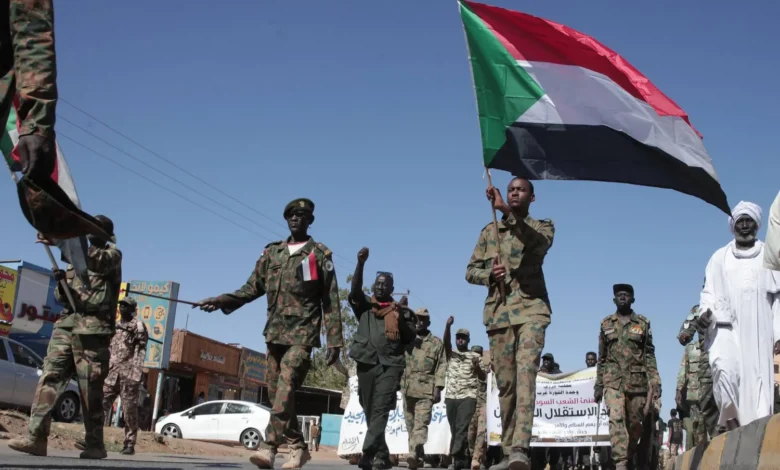
The war in Sudan has entered increasingly complex phases amid a complete deadlock on both the political and military fronts, placing the policies and decisions associated with the leadership of General Abdel Fattah al-Burhan under close scrutiny and critical analysis.
-
Sudan at a crossroads… Is the countdown to a civil settlement approaching?
-
Sudan at a Crossroads: Islamists Back the Army to Prolong Military Rule
Since the conflict erupted, al-Burhan’s management of the military file has been characterized by shifting defensive and offensive strategies, raising serious questions and concerns about effectiveness and the ability to protect national security. The military leadership has relied on attrition tactics and the mobilization of an armed popular resistance, a step criticized by civilian entities and human rights organizations, which have warned of the danger of the country sliding into a full-scale civil war and into social fragmentation that could prove difficult to control as a result of the uncontrolled proliferation of weapons among civilians.
These military approaches and operational decisions have imposed the heaviest cost on civilians. Major cities and residential areas across Sudan have suffered extensive destruction as a result of reciprocal shelling and ground operations. The military leadership has faced continuing accusations of failing to protect vital military garrisons and strategic positions in Darfur, Al Jazirah, and Kordofan, thereby allowing the Rapid Support Forces to commit widespread violations against civilians in those areas.
-
Sudan at a Crossroads: Constitutional Amendments Raise Fears of Fragmentation and Division
-
Heglig Under Fire… Washington Changes the Rules of the Game: An Investigation Reveals the Most Dangerous Crossroads Sudan Has Faced Since the Start of the War
Reports by the Sudan Doctors Network and national human rights organizations indicate that the siege tactics imposed by the armed forces on certain areas controlled by the opposing side have had severe and tragic consequences for besieged civilians, depriving them of food and medicine and facilitating the spread of deadly epidemics such as cholera and malaria.
Second Axis: The War and the Suffering of Sudanese People
The humanitarian dimensions of the war in Sudan constitute a genuine tragedy that clearly reveals the depth of the crisis facing the Sudanese people as the fighting continues. Military operations have brought the Sudanese economy to an almost complete standstill, destroyed the agricultural and industrial sectors, and caused the collapse of the national currency, resulting in crippling inflation and a loss of purchasing power for the overwhelming majority of citizens. This economic and living deterioration is closely linked to decisions made by the authorities based in Port Sudan, the provisional administrative capital, which have devoted the bulk of the state’s scarce resources to the war effort and the purchase of weapons, at the expense of essential services, salaries, healthcare, and education.
-
Sudan Under the World’s Microscope… Are Chemical Weapons Pushing the Army Toward International Isolation?
-
How the Logistics of the War in Sudan, the Supply of Chemical Weapons, and the Recruitment of Mercenaries Are Managed
In the overcrowded displacement centers of Wadi Halfa, Kassala, and Port Sudan, civilians are living in tragic conditions that lack the most basic requirements for human dignity. A woman named “Fatima,” a mother of four who was displaced from Khartoum to Al Qadarif State, describes how she lives in a small tent without access to clean water or sanitation and expresses her constant fear of hunger and the diseases threatening her children every day. In Darfur, independent testimonies emerging from the Zamzam displacement camp describe catastrophic conditions marked by severe acute malnutrition, while international organizations have been unable to provide adequate relief because of bureaucratic and security obstacles imposed by the parties to the conflict, as well as strict restrictions on visas and movement permits imposed by the de facto government headed by al-Burhan.
The political and military responsibility of Abdel Fattah al-Burhan is reflected in the stark contradiction between his public promises and his actions over the past several years. Al-Burhan has repeatedly declared his commitment to democratic transition and his intention for the military to withdraw from politics once an agreement on a civilian government has been reached.
-
Sudan and the Red Sea: How Geography Has Made the Country a Focal Point of Regional and International Competition
-
The Hidden Human Cost: How Corruption and the Militarization of the State Are Driving Sudan Toward Total Collapse
Yet the historical record is presented as showing the opposite: his successive steps, ranging from the dissolution of the Council of Ministers and the suspension of certain provisions of the Constitutional Document to the return of figures from the former regime to key positions within the state, civil service, and regular security forces, are described as evidence of a systematic strategy aimed at consolidating military rule and thwarting the legitimate aspirations of the Sudanese people.
Political criticism of al-Burhan portrays him as the figurehead of a broad alliance comprising army generals seeking to protect their economic and political privileges, as well as Islamist groups seeking to return to power through the gateway of war. Various political sources, including the Sudanese Communist Party and the National Umma Party, argue that the military leadership’s insistence on achieving a military victory lacks realism on the ground and is costing the country its social fabric and territorial unity.
-
Sudan between war and the re-engineering of power: a political reading of the transformations within the military landscape
-
Field reports reveal the rising influence of Islamist brigades within the Sudanese army
These forces hold al-Burhan responsible for undermining regional and international initiatives, including those led by the Intergovernmental Authority on Development (IGAD) and the African Union, through adopting rigid positions and suspending participation in diplomatic forums, thereby prolonging the war and increasing the prospects of foreign intervention and international tutelage.
In the face of this catastrophic and comprehensive deterioration, popular and civilian demands for a fundamental change in the course of governance and the management of the Sudanese state are growing. Civilian mobilization has taken the form of various peaceful initiatives and public statements issued by professional and trade-union alliances and resistance committees, all of which emphasize one central demand: “Leave, al-Burhan, and let the war stop immediately.” Active civilian forces reject any attempt to exploit the war as a pretext for imposing a permanent state of emergency, suppressing civil liberties, and arresting political activists and volunteers working in humanitarian emergency rooms who provide vital services to civilians amid the almost complete absence of official state institutions.
-
The Sudanese army between attrition and restructuring: an in-depth reading of the strategy of naturalization in exchange for fighting
-
Al-Burhan versus the Islamists: a first step toward reshaping Sudan’s political landscape
Civilian visions for the future of the state center on a fundamental restructuring of the military and security establishment, placing it fully under civilian executive authority, and dismantling army-owned companies and investments in order to integrate them into the national economy under the supervision of the Ministry of Finance.
According to the Sudanese collective consciousness and political opposition, emerging from the current war requires an inclusive Sudanese-Sudanese dialogue that excludes only the dissolved National Congress Party and its political fronts, with the aim of reaching agreement on a transitional constitution, forming an independent government of national technocrats to lead the country toward free and fair elections, and establishing a democratic civilian republic founded on justice, equality, and the rule of law, while ensuring that the tragedies of wars and military coups are not repeated.
-
Sudan between internal bleeding and external pressures: the struggle for survival amid wars of influence
-
When the Street Awakens: How Sudanese Awareness Becomes a Weapon to Challenge War Authorities and Demand Justice
-
Victims of the Sudanese War… Testimonies that condemn decisions and reveal the state’s disintegration
-
Civil administration in Sudan: is it the only way out of the spiral of collapse?
-
Sudan’s civil administration… the inevitable path to ending chaos and building a viable economy