World Leaders Gather at the United Nations as Wars and Crises Dominate the Agenda
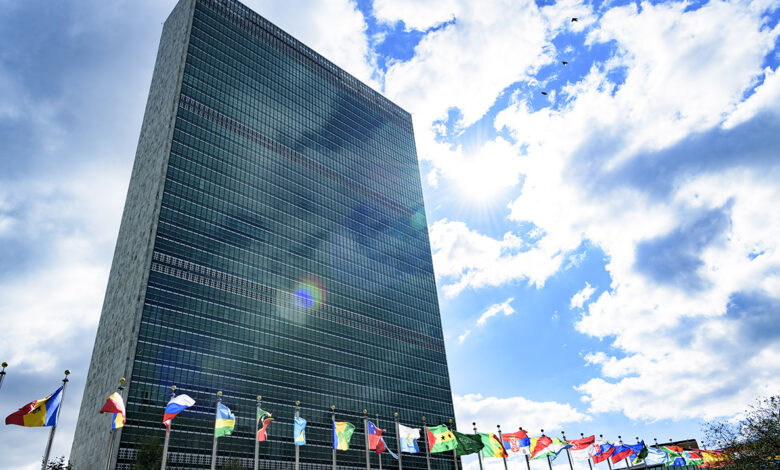
World leaders are returning to New York this week to attend the United Nations General Assembly against a backdrop of escalating wars and mounting international crises.
The UN headquarters in Manhattan will bring together nearly 130 heads of state and government at a time when the international order established after the Second World War is facing growing pressure.
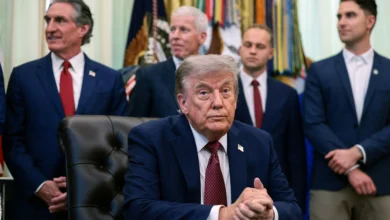
The United Nations is struggling to preserve its role amid political and financial constraints, along with increasing tensions in its relationship with the administration of US President Donald Trump.
-
The United Nations Flag: The Story of an 80-Year-Old Emblem
-
Enemy Brothers: Austria and Germany Locked in a Fierce Battle for a United Nations Security Council Seat
For the second consecutive year, Trump will return to the UN podium at a time when Washington has reduced its financial contributions to the international organization and withdrawn from dozens of UN-affiliated bodies.
Chinese President Xi Jinping, whose most recent participation in the diplomatic gathering was by video in 2021, will not travel to New York. Instead, he will hold direct bilateral talks with Trump in Washington on Thursday. Observers say the decision is once again raising questions about the United Nations’ role in addressing global crises.
The challenges are not limited to the funding and political role of the 80-year-old organization. Secretary-General António Guterres is approaching the end of his term in late 2026, while the race to choose his successor remains open, with no clear candidate having emerged so far.
-
Fears of a Widespread Regional War Loom over the United Nations Meeting
-
The United Nations warns of a health disaster in Gaza for these reasons
Meanwhile, Reuters cited diplomats as saying that the 15-member UN Security Council could hold high-level meetings on Ukraine, artificial intelligence and the Middle East, including discussions with Arab leaders.
Richard Gowan of the International Crisis Group told Reuters that the United Nations was no longer in “free fall” but remained trapped in an open-ended crisis.
“The UN may not be in intensive care as it was last year, but it looks set to remain in a trauma center for the foreseeable future,” Gowan added.
-
Funny and unforgettable moments in the history of the United Nations General Assembly
-
Guterres on a Global Tour… United Nations Messages on the World Stage
Escalation in the Middle East
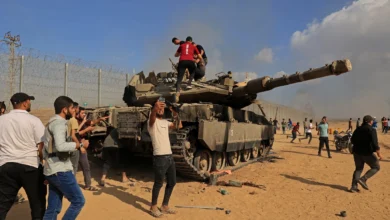
The Middle East is returning to the forefront of discussions as the war involving Iran continues, with repercussions for the global economy and regional stability. The threats posed by Houthi attacks in the Bab el-Mandeb Strait are also expected to feature prominently.
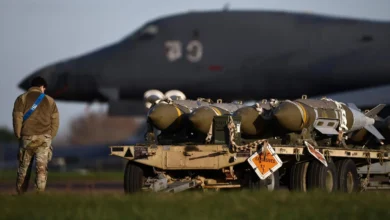
Peace talks remain stalled as Iran and the United States continue to exchange strikes, while Trump has threatened a major escalation of the war.
Iranian President Masoud Pezeshkian is scheduled to address the General Assembly on Wednesday.
Israeli Prime Minister Benjamin Netanyahu is due to deliver his speech on Thursday. He is wanted by the International Criminal Court over allegations of war crimes and crimes against humanity in Gaza, charges that Israel denies.
-
The United Nations Tastes Houthi Terrorism.. Houthi Mine Explosion in Car Containing Head of Mission to the United Nations
-
The United Nations accuses the Houthis of committing war crimes since the end of the truce agreement; Details
Palestinian President Mahmoud Abbas will not attend the General Assembly meetings in person for the second consecutive year after the United States refused to grant him an entry visa.
On Thursday, the General Assembly voted to allow Abbas to participate by video.
A high-level meeting on the conflict in Sudan is also expected to take place on the sidelines of the General Assembly, although diplomats consider a diplomatic breakthrough unlikely at this stage.
Ukraine and Food Security
Russia’s war in Ukraine, now in its fifth year, will also rank high on the agenda.
Ukrainian President Volodymyr Zelensky and Russian Foreign Minister Sergey Lavrov are both scheduled to address the General Assembly.
-
Rabat refutes before the United Nations the absence of the criteria of “self-determination” on the Moroccan Sahara
-
The United Nations urges “political process” in the reconstruction of Gaza
Zelensky is likely to seek stronger support for his country as Ukraine prepares for what is expected to be another difficult winter.
At the Security Council level, the United Nations remains unable to take meaningful steps toward ending the war because of the veto power held by Russia as a permanent member of the Council.
Trump has repeatedly expressed frustration over his inability to bring the war to an end, a goal he has described as a priority since the beginning of his second term in January of last year.
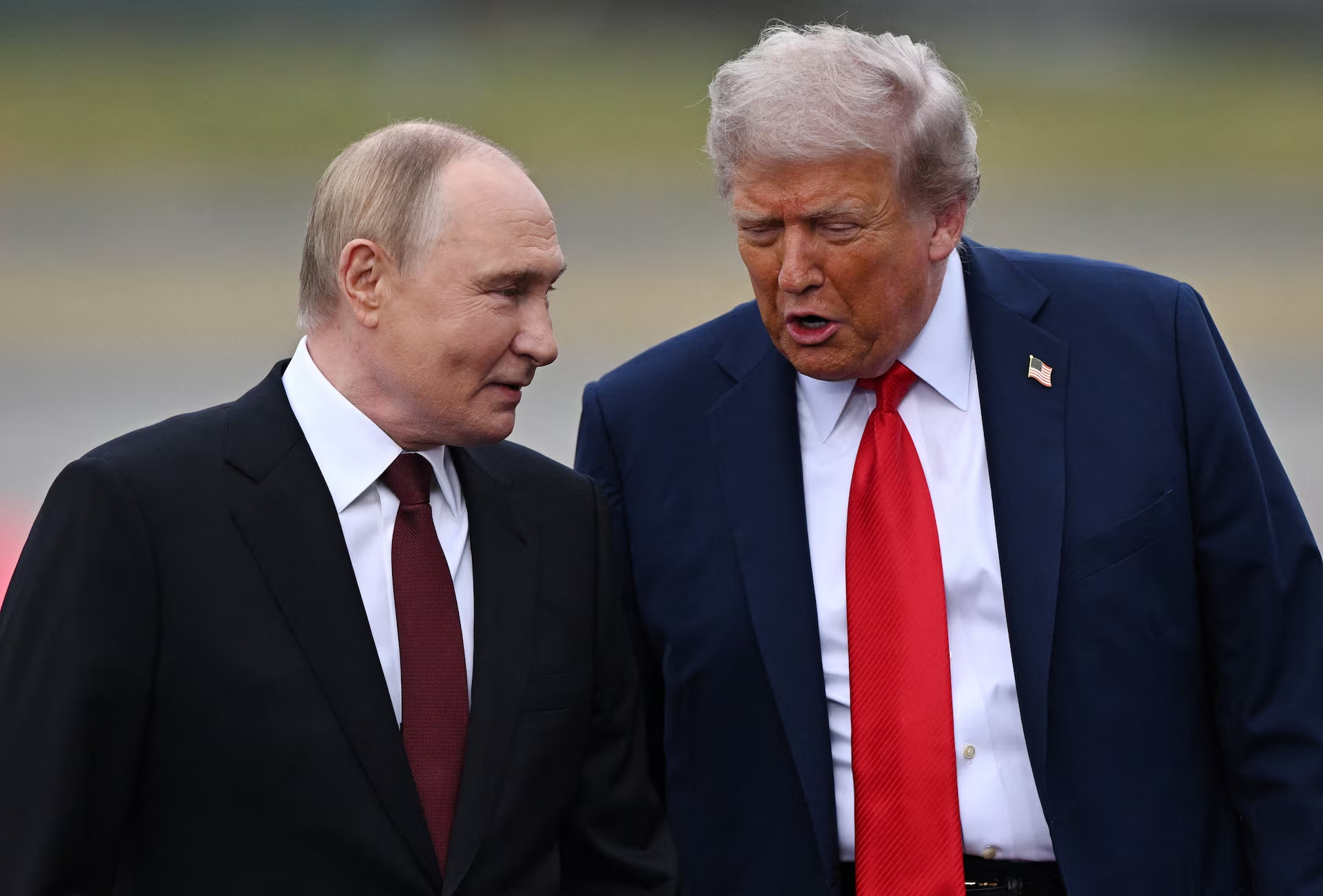
The US president spoke with his Russian counterpart, Vladimir Putin, earlier this month, but it remains unclear whether he plans to meet Zelensky in New York.
Guterres has also drawn attention to the consequences of the war for civilians, as well as its impact on food security and energy prices.
-
Urgent Palestinian Appeal at the United Nations: Let This Madness Stop
-
U.S.-Backed Gaza Aid Plan Rejected by the United Nations
Artificial Intelligence
Alongside the political agenda, artificial intelligence will be a major focus of the General Assembly. Several technology industry leaders have called for a coordinated slowdown in the development of the technology, warning that it could reach a stage where it becomes capable of improving itself and escaping human control.
The UN secretary-general said artificial intelligence would be a central topic of discussion. He added that countries pushing the boundaries of the technology must establish “shared safeguards to avoid this race toward the abyss, which could one day result in a catastrophic event on a global scale.”
-
Fighting terrorism and drought… the most prominent files of the President of Somalia at the United Nations
-
The United States and France are entangled in the United Nations’ entanglement in the Middle East
Guterres has long called for the establishment of a global governance framework for artificial intelligence. In 2023, the United Nations created an advisory body on the technology comprising technology executives, government officials and academics.
However, these warnings place Guterres at odds with Trump, who has downplayed the risks posed by artificial intelligence, describing them as a “hoax” and claiming that a “conspiracy” is targeting the technology.
-
After Three Decades of Pause, the United States Resumes Nuclear Weapons Testing
-
Camps in Military Bases: The United States Races Against Time in the Migrant Battle