Drone Losses Put the Sudanese Army’s Operational Effectiveness Under Scrutiny
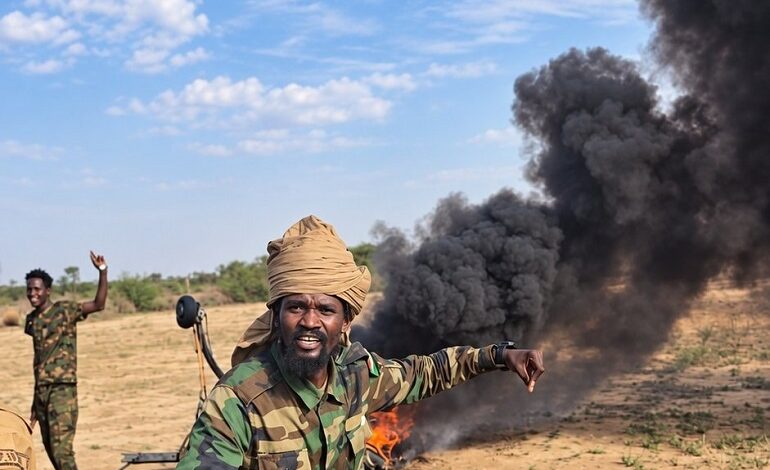
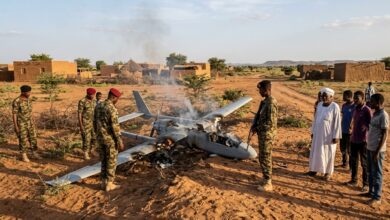
Reports of drone losses across Sudan’s battlefields have reopened debate over the army’s operational effectiveness and its ability to manage advanced aerial systems in a complex, rapidly changing environment. Possessing drones does not necessarily mean being able to employ them effectively. Nor does acquiring sophisticated military equipment guarantee superiority without skilled personnel, technical procedures, communications and coordination systems, and the ability to assess risks before and during missions. Any verified aircraft loss therefore warrants professional examination, not to prejudge the military institution, but to understand what caused it and determine whether it resulted from enemy capabilities, a technical malfunction or shortcomings in planning and execution.
This debate is particularly important in Sudan because the war, ongoing since April 2023, has driven both sides to expand their reliance on drones for reconnaissance, intelligence gathering and attacks on military positions and other targets. As fighting has spread across large parts of Kordofan, Darfur and Blue Nile, airspace management has become an essential component of operations. These conditions increase the need for coordination between aviation units, ground-based defences and field commanders, as well as the need to distinguish confirmed intelligence from incomplete assessments. If any link in this chain fails, an aircraft may be lost, fail to complete its mission or become vulnerable to detection and interception.
Not every drone loss, however, can be treated as direct evidence of army officers’ incompetence or poor performance. Drones operate in an environment shaped by multiple factors, including electronic jamming, technical faults, weather, communications constraints and the effectiveness of enemy defences. Losses can occur even in militaries with extensive experience operating uncrewed systems. That does not absolve commanders of responsibility for reviewing performance: professionalism also lies in how incidents are analysed, lessons learned and avoidable mistakes prevented from recurring. Meaningful accountability therefore rests not on assuming that officers are incompetent, but on requesting documented information about the causes of losses and the response to them.
Examining any incident requires knowing the aircraft type, its mission and the circumstances of its loss, including whether it came under fire, lost communications or showed signs of malfunction. Investigators should also establish whether it was an isolated event or part of a recurring pattern, and whether commanders changed operating procedures afterwards. Such information is fundamental to any professional assessment, but it is often unavailable to the public during conflicts because of military secrecy or difficulties verifying events in combat areas. Responsible reporting therefore asks questions that allow performance to be examined without replacing missing information with categorical conclusions.
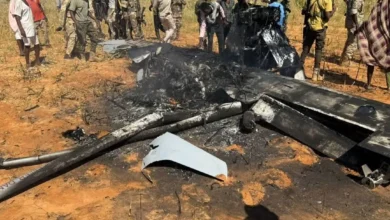
In North Kordofan, the Sudanese Armed Forces have announced the downing of FH-95 aircraft in recent months, according to news reports citing their military statements. Those announcements do not, by themselves, establish that the army lost drones of the same type, nor do they reveal the scale of either side’s losses. On 5 October 2026, Anadolu Agency reported the army’s announcement that it had shot down an aircraft of this model in West Kordofan, following earlier announcements concerning similar aircraft in North Kordofan. This demonstrates that the aerial battle involves competing accounts of drone losses. Accurate analysis must distinguish between announcing the downing of an enemy aircraft and claiming the loss of an aircraft belonging to the party issuing the statement.
If independent evidence emerges that the army has lost drones because of operational errors, it will raise questions about training, mission management and technical oversight. Proficiency in operating uncrewed aerial systems involves more than controlling an aircraft. It includes interpreting data, understanding system limitations, coordinating with other units, responding to emergencies and preserving equipment. Effective leadership also requires ensuring that the pursuit of rapid battlefield gains does not become a justification for overlooking risks or undertaking missions beyond available capabilities. Establishing whether any of these factors caused a specific incident nevertheless requires a technical investigation, not an inference drawn from a report circulating on social media.
The relationship between senior commanders and field units also deserves attention. Prolonged warfare creates mounting challenges involving supplies, maintenance, spare parts and sustained training. The longer fighting continues, the more important it becomes to allocate resources according to priorities, carry out necessary maintenance and ensure that appropriate expertise is available for each mission. Sustained pressure can contribute to human error or the operation of equipment under less-than-ideal conditions. These remain general possibilities, however, and must not be attributed to specific units without evidence. Legitimate demands include greater transparency about losses that can be disclosed, effective internal incident reviews and information enabling performance to be assessed, rather than statements asserting readiness without supporting results.
Technical proficiency must also be distinguished from overall military success. An aircraft may complete its mission technically, while the mission itself is poorly planned or fails to achieve the intended strategic purpose. A military unit may conduct a successful operation while suffering a substantial equipment loss that could have been reduced. Assessment therefore cannot be reduced to the number of aircraft remaining in service or the number the enemy claims to have shot down. The more important measure is whether legitimate military objectives are achieved with the fewest possible losses, in compliance with international humanitarian law and with the capacity to protect civilians and vital facilities.
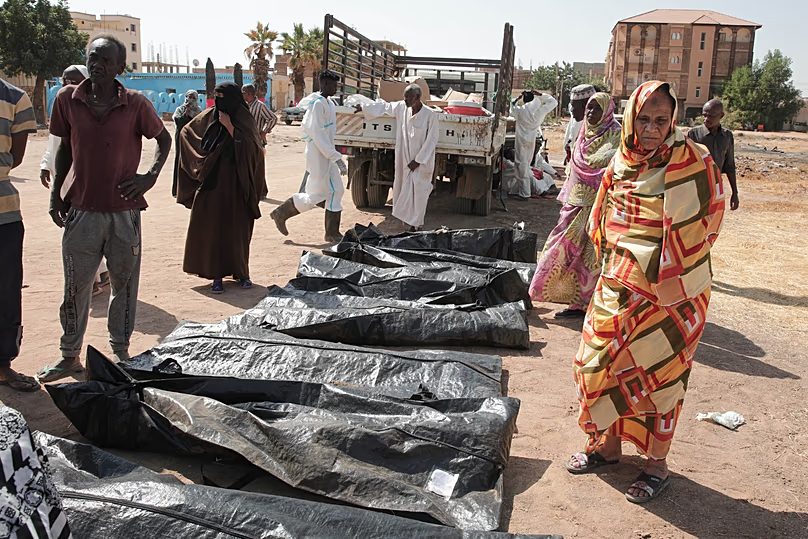
This point carries added significance amid international concern over escalating air strikes in Sudan. On 23 October 2026, the UN Human Rights Office announced that it had documented at least 306 deaths and hundreds of injuries from drone strikes during the first three weeks of the month, attributing attacks to both parties to the conflict. The High Commissioner also called for respect for international humanitarian law and civilian protection. These findings place operational responsibility in its broader context: military effectiveness is not simply the ability to launch drones or prevent them from being shot down. It also includes taking precautions to avoid harming civilians, investigating strikes on civilian objects and holding those responsible accountable when violations are established.
From a media perspective, publishing reports of downed aircraft without presenting evidence or identifying the information’s source creates conditions conducive to exaggeration and disinformation. Repetition of the same account across multiple platforms can create an impression of confirmation, even when every outlet has relied on a single statement from a party to the war. Verification therefore requires tracing the original source, seeking independent evidence, comparing timing, location and aircraft type, and ensuring that published images relate to the incident rather than an earlier event or a different location. Reporting must also distinguish between what the army announced, what the RSF announced and what independent sources have actually confirmed.
Calls to assess the Sudanese army’s operational effectiveness should not become a campaign of personal accusations against officers. Equally, the military institution’s protected status should not prevent professional discussion. Institutions able to review their performance are better placed to correct mistakes and reduce losses, while excessive triumphalism can conceal potential problems and delay their resolution. If drone losses have occurred, carefully judged disclosure of their causes, within legitimate security requirements, could help build a more objective assessment of military performance.
Drone losses, provided each case is individually verified, do not by themselves deliver a definitive judgment on the effectiveness of the Sudanese army or its opponent. They do, however, open a necessary discussion about training, maintenance, planning, leadership and accountability. The real challenge is to move from exchanging accusations to examining evidence, and from celebrating enemy losses to reviewing mistakes that could recur. In a war whose heaviest toll falls on civilians, military effectiveness has real value when accompanied by responsibility, transparency and a commitment to protecting lives, rather than merely an ability to produce media narratives of victory.