From Abu Dhabi to Moscow and Kyiv: Fresh UAE Mediation Secures a Prisoner Exchange
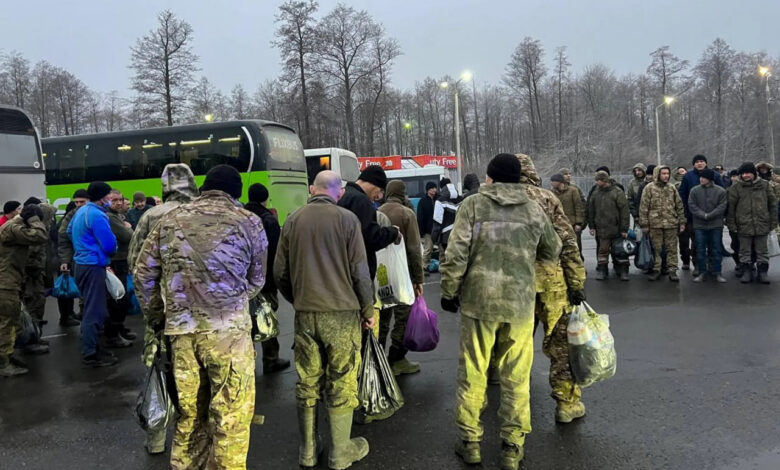
The prisoner exchange between Russia and Ukraine on 23 October 2026 once again highlighted the United Arab Emirates’ role in facilitating humanitarian agreements between the two sides. Its mediation efforts secured the release of 540 people, 270 from each side. The operation took place as the war continued to impose major complications on Russian-Ukrainian relations, amid ongoing fighting and political disputes, making agreements on detainees particularly significant. The UAE Foreign Ministry confirmed the success of the latest mediation, while Russia’s TASS news agency relayed details of the Russian Defence Ministry’s announcement on the return of its service members, noting the UAE’s humanitarian role in facilitating their release from captivity.
The significance of this development extends beyond the figures in the official announcement. Implementing an exchange of this scale requires coordination between parties still at war, agreement on the lists of people to be released, and arrangements for their handover and reception. In the absence of a comprehensive settlement, specific humanitarian issues remain among the few areas in which communication between Moscow and Kyiv can continue despite disputes over contested territories, security guarantees and the conditions for ending the war. UAE mediation thus represents an effort to translate diplomatic contacts into tangible outcomes, moving beyond political statements to bring home people detained during military operations.
The UAE Foreign Ministry announced that the latest operation brought the total number of prisoners exchanged between Russia and Ukraine through Emirati mediation to 8,537. It was the twenty-seventh mediation since efforts relating to the crisis began. This cumulative figure gives the operation added significance, showing that mediation has not been an isolated initiative or an ad hoc response to a single development. Instead, it forms part of sustained contacts and efforts to address one of the war’s most sensitive humanitarian issues. Repeated exchanges also reflect accumulated negotiating experience that can help organise future operations, although each remains subject to its own circumstances, lists and arrangements.
In Moscow, Russia’s Defence Ministry announced the return of 270 service members in exchange for the same number of Ukrainian service members held by Russia. It said the released Russian personnel were in Belarus receiving the necessary medical care and psychological support. Their transfer to Russia would allow them to continue treatment and rehabilitation at the ministry’s medical facilities, while Russian human rights commissioner Yana Lantratova was monitoring their situation. These details show that an exchange does not end at the handover: it requires arrangements addressing returnees’ health and psychological needs, particularly as captivity can leave lasting effects requiring specialised care.
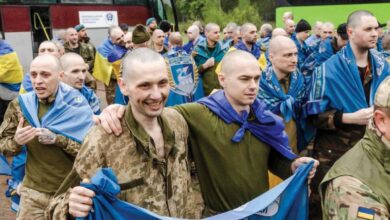
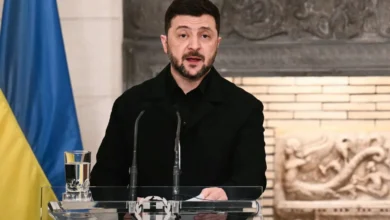
In Kyiv, Ukrainian President Volodymyr Zelensky announced the return of 270 Ukrainians, including nine civilians, saying most of the service members had been held since 2022. Those he listed included members of the National Guard, including Azov Battalion fighters, border guards, the navy, ground forces, Territorial Defence Forces, Air Assault Forces and the State Special Transport Service. He also said many of those returning had taken part in the defence of Mariupol and in fighting across different parts of Ukraine. These details reveal the operation’s reach across the war’s timeline: those released were not only recently captured detainees, but also people separated from their families since the conflict’s early stages.
The return of detainees who helped defend Mariupol carries particular significance in Ukraine’s account of the exchange, given the city’s place in the war and the fighting, siege and captures it witnessed. Zelensky also said many returnees had received sentences in Russia that he described as unlawful, and that five had survived the attack on the Olenivka detention centre in July 2022. These descriptions and allegations remain attributed to the Ukrainian side, amid continuing disagreement between Moscow and Kyiv over responsibility for wartime events. Their inclusion in the exchange announcement nevertheless shows that the prisoner issue also involves legal and humanitarian demands that do not necessarily end with release.
A comparison of the Russian and Ukrainian announcements reveals differences in how they describe the groups included. Russia’s Defence Ministry focused on the return of 270 service members, while Zelensky announced the return of 270 people, including nine civilians. This does not necessarily indicate a contradiction in the overall total, but it requires a distinction between the number announced by both sides and the classification details provided by each. That distinction matters in media coverage because a released person’s status may relate to their legal position, detention conditions and the nature of the claims concerning them. Accurate reporting also helps avoid conflating official statements with the political interpretations accompanying them.
From a diplomatic perspective, the successful exchange highlights the value of mediation that can engage both sides without agreeing on strategic questions a prerequisite for every humanitarian step. Moscow and Kyiv remain divided on fundamental issues, but the need to recover detainees gives them a shared interest on which to build. Reaching a practical prisoner agreement requires identifying those included, coordinating release procedures, ensuring reciprocal commitments are implemented and resolving details that could obstruct the process. Mediation allows a third party to facilitate these contacts and help overcome obstacles, without implying that it can impose a settlement or guarantee the resolution of every issue associated with the conflict.
The importance of the UAE’s role also rests on sustained engagement with both sides in a process requiring continuity and attention to detail. An exchange involves more than reaching an initial political understanding: it requires follow-up on lists, handover procedures, transport and reception, alongside arrangements for cases needing special attention. As mediation is repeated across successive operations, practical experience helps identify obstacles and coordinate efforts to address them. Previous successes do not, however, guarantee every subsequent exchange. Outcomes remain dependent on both parties’ willingness to cooperate and on the military and political circumstances surrounding negotiations.
In this context, the medical care and psychological support announced by Moscow have humanitarian importance alongside the release itself. People returning from captivity may face injuries, health problems, or psychological effects connected to their detention. They may also require rehabilitation before resuming their usual lives. The same fundamental humanitarian principle applies to those released on the Ukrainian side: care after release remains essential to helping them regain stability and reconnect with their families. Any assessment of an exchange should therefore consider not only the number of people who return, but also the measures that safeguard their well-being, support recovery and facilitate reintegration.
Zelensky’s announcement that efforts would continue to bring home all Ukrainian detainees confirms that the latest operation is not the end of the process, but one step in a broader undertaking. Continuing discussion of prisoners and missing people also highlights how much work remains to establish the fate of those excluded from recent agreements. Contacts over detainee lists, exchanges of information about their circumstances and urgent humanitarian cases must therefore continue without waiting for a comprehensive political settlement. Repeated mediation can sustain progress in this direction, provided communication channels remain open and both parties remain committed to implementing agreements.
The exchange of 540 prisoners thus marks another success for UAE mediation on a complex humanitarian issue and confirms that diplomacy can deliver specific results even while war continues. The announced cumulative total of 8,537 people exchanged through 27 mediations provides a broader context for understanding the scale of the UAE’s efforts. Although the agreement alone neither changes the course of the war nor resolves its political disputes, it demonstrates that humanitarian dialogue remains possible and that releasing detainees can provide a starting point for further steps. The challenge is to preserve and expand this process so that future efforts reach more detainees and missing people and provide better protection for those affected by the conflict, alongside efforts to end the war.