Zelensky Confirms Return of 270 Ukrainian Prisoners as Russia Praises UAE Mediation
UAE Strengthens Its Diplomatic Presence Through Fresh Mediation for a Russia-Ukraine Prisoner Exchange
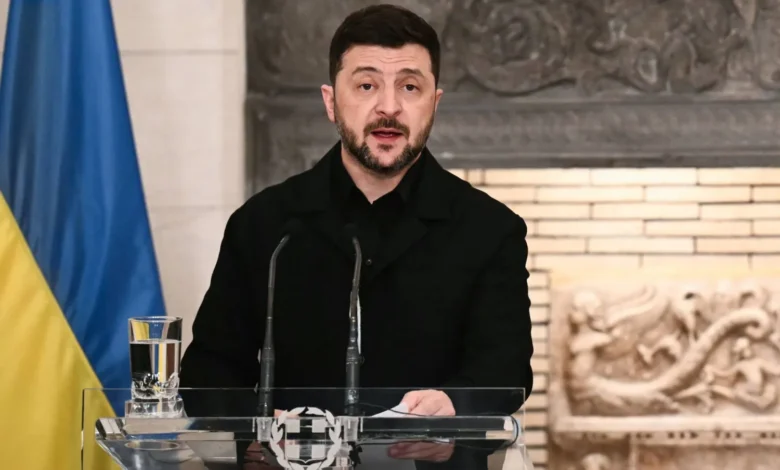
The UAE mediation that secured an exchange of 540 prisoners between Russia and Ukraine on 23 October 2026 has once again highlighted diplomacy’s role in addressing humanitarian issues arising from armed conflict. The UAE Foreign Ministry announced the success of fresh efforts between Moscow and Kyiv that enabled the release of 270 people from each side, in an operation both Russian and Ukrainian authorities confirmed had taken place. The development comes as the war continues, with its human, political and military consequences, giving the agreement significance beyond the announced figures: it demonstrates that communication channels between the two sides remain open. Reaching an understanding on prisoners shows that deep disagreements do not necessarily prevent agreement on specific measures when humanitarian and practical interests encourage negotiation.
The importance of UAE mediation lies like the issue it addressed, as prisoners are among the most sensitive questions in any prolonged war. Detainees are not merely entries in a military tally, but people whose circumstances involve humanitarian rights and medical and psychological needs. Their return also matters to families waiting for an end to separation and anxiety. These considerations become particularly significant when captivity lasts for years, as Ukrainian President Volodymyr Zelensky noted regarding most Ukrainians included in the agreement. The successful exchange therefore demonstrates diplomacy’s ability to deliver an immediate outcome affecting hundreds of lives and confirms that mediation can achieve tangible progress even when a comprehensive political settlement remains distant.
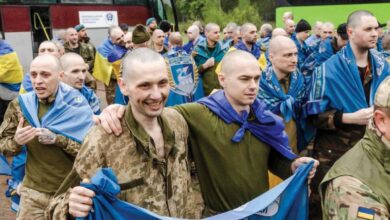
On the evening of 23 October, Zelensky announced the return of 270 Ukrainians, describing the operation as a highly significant result. He said those released included service members from the National Guard, border guards, the navy, ground forces, Territorial Defence Forces, Air Assault Forces and the State Special Transport Service, as well as nine civilians. He also said most returning service members had participated in the defence of Mariupol, while others had fought on several fronts, including in the Donetsk, Luhansk, Kharkiv, Zaporizhzhia, Kherson, Kyiv, Mykolaiv and Chernihiv regions. These details reveal the geographical and operational breadth of the prisoner issue and show that the exchange included people whose experiences span different phases of the war, reinforcing its humanitarian and political significance for Ukraine.
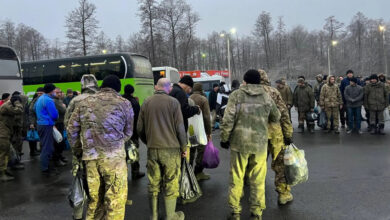
Russia’s Defence Ministry, meanwhile, announced the return of 270 Russian service members in exchange for 270 Ukrainian service members held by Russia, praising the UAE’s humanitarian role in facilitating their return. It said those released were in Belarus receiving the necessary medical care and psychological support before being transferred to Russia for further treatment and rehabilitation at Defence Ministry medical facilities. It also noted that Russian human rights commissioner Yana Lantratova was monitoring their circumstances. The announcement underscores that the operation involved more than agreeing on numbers: it also required arrangements to receive and care for those returning. A service member emerging from captivity may need specialised medical treatment or psychological support, while returning to family and social life can take time and effort, extending beyond transport and handover procedures.
The two sides describe the categories of released people differently. Kyiv reported the return of 270 people, including nine civilians, while Moscow focused on the return of Russian service members and the handover of Ukrainian military personnel. This difference highlights the importance of handling official statements carefully and distinguishing between the overall number announced by both parties and the status of those included in the agreement. It also shows that legal and humanitarian details remain potentially disputed, including detainees’ classification, their detention conditions and events during captivity. Each piece of information must remain attributed to the party that announced it, particularly where it concerns allegations, court rulings or events still contested between the two sides.
The operation also illustrates mediation’s importance as a means of facilitating agreements between states when direct relations are strained or broader solutions become harder to reach. A prisoner exchange requires coordination over names, numbers, release procedures, implementation dates and handover locations, alongside arrangements for reception and care. These details demand sustained communication and the ability to resolve problems arising during implementation. The success of UAE mediation provides a practical example of results-oriented diplomacy. Its value lies not simply in issuing statements or calling for dialogue, but in securing an implementable agreement that brings people out of detention. Sustaining that success nevertheless requires continued engagement rather than treating the operation as the end of the process.
Strategically, the exchange should be viewed as a specific humanitarian achievement, not as conclusive evidence that Russia’s or Ukraine’s fundamental positions have changed. The war involves complex political, security and military disputes, and releasing detainees does not necessarily bring convergence over a ceasefire, territory or security guarantees. The agreement nevertheless demonstrates that diplomacy retains room to operate while major issues remain unresolved. This space matters because it allows some of the war’s consequences to be reduced without first requiring a comprehensive settlement. It also allows the parties to test their ability to fulfil specific commitments in an environment of mistrust.
Ukraine’s announcement included details concerning the detention conditions of some returnees. Zelensky said many had received sentences in Russia that he described as unlawful. He also mentioned five survivors of the attack on the Olenivka detention centre in July 2022, describing the incident as a Russian terrorist attack. These positions remain attributed to the Ukrainian side, amid continuing disagreement over responsibility for wartime events. Their inclusion in the exchange announcement nevertheless highlights that the prisoner issue does not end with release. It also involves documenting detention conditions, pursuing legal claims and investigating alleged violations. This reinforces the need to distinguish the diplomatic operation’s success from legal matters that may continue independently.
The return of fighters who participated in the defence of Mariupol is an important part of the exchange’s symbolic significance for Ukraine. Zelensky said most of those released had been held since 2022 and that most service members among them had been involved in the city’s battles. Some returnees therefore form part of their families’ and communities’ collective memory of the war, giving their release significance beyond the agreement’s numerical scale. The return of people who fought on multiple fronts also shows that the prisoner issue spans different phases of the war. Resolving it requires sustained efforts covering both long-standing and recent cases, rather than only the specific groups agreed upon in each exchange.
UAE mediation also offers an opportunity to continue addressing unresolved humanitarian issues, foremost among them the fate of detainees excluded from the latest exchange and missing people whose families are awaiting information. Zelensky reaffirmed that efforts would continue to bring home all Ukrainian detainees, making clear that the exchange is one stage in a larger process. That process requires ongoing mechanisms for sharing information, establishing detainees’ circumstances, providing appropriate care after release and addressing complaints about detention conditions. Sustaining agreements also requires the parties to approach these matters on humanitarian grounds, without allowing other political disputes to obstruct them.
The importance of care after release, for Russians and Ukrainians alike, must not be overlooked. Moscow’s announcement that its service members were in Belarus receiving medical care and psychological support highlights the recovery phase following captivity. Ukrainian returnees’ needs likewise require follow-up by the relevant authorities in their country. Those released may face physical or psychological difficulties resulting from prolonged captivity, alongside challenges in readjusting to daily life and reconnecting with family. The exchange’s success should therefore be measured not only by the completion of handovers, but also by the responsible bodies’ ability to provide support that helps returnees regain stability while recognising each person’s individual needs.
The latest UAE mediation thus represents an important step in addressing one of the most sensitive humanitarian issues in the Russia-Ukraine war, enabling 540 people to return to their countries. The agreement demonstrates diplomacy’s ability to deliver specific outcomes despite continuing disagreements and creates further opportunities for Emirati efforts to facilitate humanitarian understandings. Its value will also depend on whether it can be built upon through further exchanges, clarification of detainees’ and missing people’s fate, and guaranteed medical care and psychological support for returnees. While a comprehensive political settlement remains unresolved, such mediation remains essential to easing suffering and maintaining communication channels that could help create conditions for broader agreements in the future.