Russia Praises UAE Mediation as 270 Ukrainians Return from Captivity
Moscow-Kyiv Prisoner Exchange Strengthens UAE Mediation Amid Continuing War
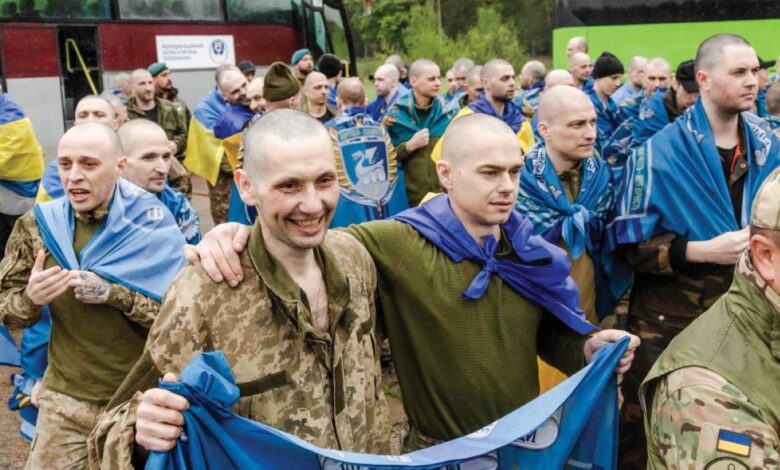
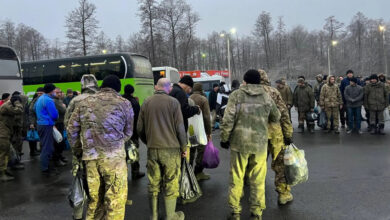
The success of UAE mediation in securing an exchange of 540 prisoners between Russia and Ukraine on 23 October 2026 has once again highlighted the importance of targeted diplomatic efforts in managing international conflicts, particularly when comprehensive political settlements remain out of reach and military confrontations continue. The UAE Foreign Ministry announced that its mediation efforts had secured the release of 270 people from each side. Moscow and Kyiv confirmed that the operation had taken place, although they provided different details about the identities and classifications of those released. The agreement gives the UAE another opportunity to demonstrate its ability to facilitate practical arrangements between two states engaged in a prolonged war. It also shows that diplomatic communication can continue on specific issues despite persistent disagreements over security, territory and the future relationship between the parties.
This development carries added significance because prisoner exchanges are directly connected to both countries’ political, military and humanitarian considerations. For Russia and Ukraine, the return of detained service members is an issue of official and public concern. It also relates to states’ obligations towards their soldiers and the demands of families awaiting their loved ones’ return. The agreement therefore cannot be separated from the broader context of the war. At the same time, it does not mean Moscow and Kyiv have reached an understanding on the issues fuelling the conflict. The exchange addresses a specific matter, while strategic questions remain subject to complex disagreements. The mediation’s success is consequently important in practical terms without constituting evidence of a comprehensive shift in the war’s course.
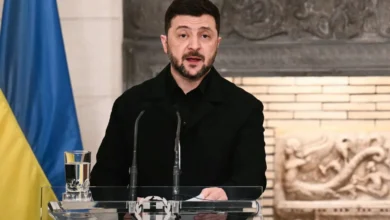
Ukrainian President Volodymyr Zelensky announced the return of 270 Ukrainians, describing the operation as a highly significant result. He said those released included personnel from several military formations: the National Guard, border guards, the navy, ground forces, Territorial Defence Forces, Air Assault Forces and the State Special Transport Service, as well as nine civilians. He also said most returnees had been held since 2022 and that most service members among them had participated in the defence of Mariupol. Others had fought in the Donetsk, Luhansk, Kharkiv, Zaporizhzhia, Kherson, Kyiv, Mykolaiv and Chernihiv regions. These details reflect the operation’s breadth and show that its outcomes reached people whose experiences spanned several phases and fronts of the war.
Russia’s Defence Ministry, meanwhile, confirmed the return of 270 Russian service members in exchange for 270 Ukrainian service members held by Russia, praising the UAE’s humanitarian role in facilitating their return. It said the returning personnel were in Belarus receiving the necessary medical care and psychological support before being transferred to Russia for further treatment and rehabilitation at the ministry’s medical facilities. Russian human rights commissioner Yana Lantratova was also monitoring their situation. The announcement highlights the importance of procedures following an exchange: returning home does not necessarily end former detainees’ medical and psychological needs. Instead, it begins a new phase requiring care, rehabilitation and continued support after captivity.
The differing descriptions of those released point to continuing distinctions between the two official accounts, even when both sides announce the same overall total. Ukraine reported the return of 270 people, including nine civilians, while Russia focused on the military personnel recovered by Moscow and the corresponding military exchange. This difference does not require assuming a numerical contradiction. It does, however, show that each party’s official statements approach the operation from a different perspective, and that details concerning civilians and service members retain legal and humanitarian significance. Distinguishing the overall figure from each released person’s status helps clarify the agreement’s nature and underscores the need for precision when reporting on exchanges.
Politically, the success of UAE mediation can be viewed as evidence that partial agreements between Moscow and Kyiv remain possible even when a comprehensive settlement is distant. Mediation over prisoners differs from negotiations on a ceasefire or a final settlement because it focuses on a specific objective that can be agreed upon without resolving every other dispute. This allows the parties to take practical steps serving their humanitarian and political interests while retaining their positions on strategic questions. The process nevertheless requires sustained attention. One successful operation does not automatically guarantee another, and military escalation or disagreements over lists and procedures may affect the prospects for implementing subsequent agreements.
The operation gives the UAE a diplomatic role centred on facilitating communication and creating room for agreement on a highly sensitive issue. Its importance lies in the mediator’s need to address conflicting requirements, reconcile the agreement’s details with implementation demands and ensure that announced understandings lead to actual releases. Successful mediation also requires continuity, since prisoner issues often involve additional detainees, complex individual cases and demands concerning missing people and detention conditions. The value of the UAE’s role therefore extends beyond the exchange of 540 people to the possibility of maintaining contacts over further operations and broadening humanitarian efforts when circumstances permit.
Mariupol features prominently in the details announced by Kyiv, which said most returnees were fighters who had defended the city. Their release gives the operation symbolic significance for Ukraine, given Mariupol’s place in national memory and in the course of the war. The return of people held since 2022 also brings renewed attention to prolonged captivity and the circumstances of fighters after the battles in which they participated. Zelensky additionally said many of those released had received sentences in Russia that he described as unlawful. He also mentioned five survivors of the attack on the Olenivka detention centre in July 2022. These details highlight continuing disputes over events connected to detention conditions and responsibility for them.
The agreement’s political significance extends beyond what it achieved for the two parties to the message it sends about keeping humanitarian issues from becoming completely paralysed. Prolonged wars typically produce interconnected problems involving military, legal and diplomatic considerations, with each issue potentially becoming hostage to disputes surrounding the others. Targeted agreements, such as prisoner exchanges, offer an opportunity to address some suffering without waiting for every outstanding question to be resolved. Protecting this process nevertheless requires both parties to distinguish humanitarian objectives from immediate military calculations and avoid treating detainee releases merely as negotiating leverage.
In this context, continued work remains essential on prisoners excluded from the exchange, the fate of missing people and the information families need about their loved ones. Zelensky reaffirmed that efforts to bring home all Ukrainian detainees would continue, reflecting that the latest exchange is one step within a broader, unresolved issue. A sustainable response requires mechanisms for sharing data, clarifying detention and release cases, monitoring health needs and addressing humanitarian and legal demands that remain after each operation. Continued agreements could help build a degree of practical trust, even if political trust between the two governments remains limited or absent.
The agreement’s implications should not, however, be overstated. A prisoner exchange alone does not provide sufficient evidence that the war is nearing an end or that its strategic objectives have changed. The conflict remains tied to disputes extending beyond the humanitarian issue, and a single exchange cannot settle questions of territory, security arrangements or the future of bilateral relations. Downplaying the agreement would be equally inaccurate: releasing hundreds of people is a tangible outcome demonstrating that diplomacy can deliver specific gains even amid prolonged conflict. The central challenge is to preserve and expand these results while recognising that a comprehensive settlement requires broader and more complex political and security processes.
The exchange of 540 prisoners between Russia and Ukraine thus marks another success for UAE mediation on a sensitive humanitarian issue. It confirms that diplomatic channels can still produce specific agreements despite the continuing war. While Moscow and Kyiv continue to present their respective accounts of those released and their detention conditions, the agreement remains an important step towards bringing people back to their countries and families. It also creates opportunities for further efforts to address detainees’ cases. The real challenge is to turn this achievement into a sustained process extending beyond occasional exchanges to protect prisoners, improve detention conditions, and establish the fate of missing people. At the same time, broader political action remains necessary to address the conflict’s causes and limit further loss of life.