Millions for Drones and Explosives: Washington Targets Hezbollah’s Funding Networks
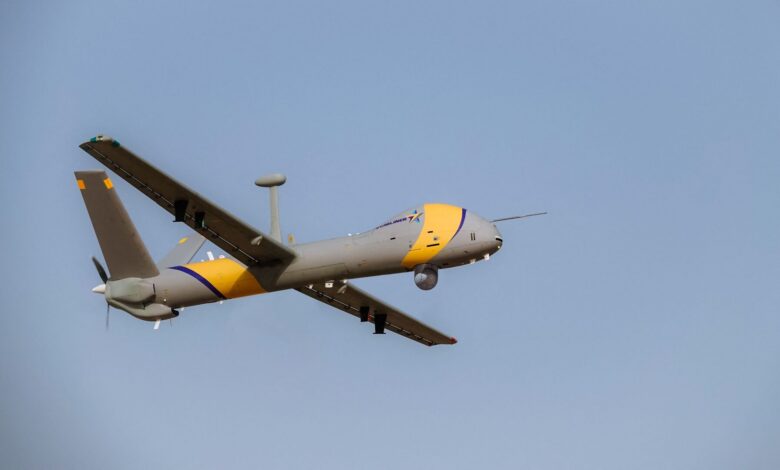
The United States is considering tougher financial measures against networks linked to Iran’s Islamic Revolutionary Guard Corps and Lebanon’s Hezbollah following new information about transfers of tens of millions of dollars to the group to purchase explosives and manufacture drones. The review is examining the role of currency exchange businesses and commercial intermediaries in financing the rebuilding of Hezbollah’s military capabilities.
Options under consideration include expanding sanctions lists, pursuing action against the beneficial owners of intermediary companies, and increasing scrutiny of cash transfers and trade transactions linked to Iran. Washington is also pressing Lebanese authorities to take more effective action against institutions that facilitate Hezbollah’s financing.
Scrutiny of exchange businesses and intermediary companies
An official at the US Treasury Department’s Office of Foreign Assets Control, familiar with Hezbollah-related sanctions, said the review focuses on three financial channels previously used by networks linked to the Revolutionary Guards: currency exchange businesses, transfers generated by commodity trading, and the movement of cash outside the banking system.
The official said the priority was to identify those who managed the latest transfers, assess their connections to already sanctioned networks, and determine whether companies or individuals had taken on new roles following earlier US measures.
The American source said the cases under review include corporate ownership checks and scrutiny of financial flows between companies involved in import and export transactions, particularly where there are suspicions that the ultimate beneficiary is being concealed.
Any potential measures would target individuals and entities found to have provided financial support to Hezbollah or services facilitating its access to funds. Evidence in each case would be reviewed before sanctions decisions were issued, the official stressed.
Last September, the US Treasury Department reported that the Revolutionary Guards’ Quds Force had used front companies and oil sale revenues to finance Hezbollah. It also identified Lebanese money changers involved in fund transfer networks.
According to the US information, substantial sums were transferred through Hussein Ibrahim and Abdullah Hamiyeh between May and September 2025. Osama Jaber was also named among those who had raised money for Hezbollah’s financial officials.
Last August, Washington imposed sanctions on 10 people involved in a network transporting cash on commercial flights between Lebanon, Türkiye, the United Arab Emirates and Iran. The network was described as a means of circumventing financial restrictions.
The American source added that the latest review was also considering closer cooperation with foreign authorities to identify the continuing activities of previously identified networks and establish whether some transactions had shifted to institutions not covered by sanctions.
Beirut faces new financial demands
Lebanese security sources said reviewing transfers linked to sanctioned entities requires information from banks, currency exchange businesses and regulatory bodies, alongside checks on company ownership and suspicious commercial transactions.
They said that the process involves analysing financial reports, cross-checking information against sanctions lists, and referring cases involving serious suspicions to the competent judicial authorities, within the relevant agency’s statutory powers.
The sources said one challenge facing the government was the use of cash and trading companies outside traditional banking channels. Addressing this requires cooperation between financial, customs and judicial authorities to establish the nature of transactions and the origin of funds.
In recent months, Washington has expanded sanctions against financial institutions linked to Hezbollah, including entities associated with Al-Qard Al-Hassan, as well as commercial networks that used front companies to conduct transactions on the group’s behalf.
Further sanctions aimed at disrupting rearmament
The developments follow a Reuters report, citing Lebanese security sources, that Hezbollah had recently received tens of millions of dollars from Iran. Some of the money was reportedly allocated to purchasing explosives, producing drones and restoring command systems.
The American source said further decisions would depend on identifying those responsible for financing and procurement. The focus would be on cutting off financial resources used to acquire military equipment and preventing intermediary companies from continuing to provide services to sanctioned networks.
The Lebanese sources, meanwhile, stressed the importance of turning information exchanged with foreign authorities into specific financial case files, including beneficiaries’ identities, transaction details and supporting documents, to enable regulatory and judicial action.
The next steps will depend on the findings of the US and Lebanese financial reviews. While Tehran seeks to maintain its military support for Hezbollah, Washington is working to restrict the group’s access to the funding needed to rearm.