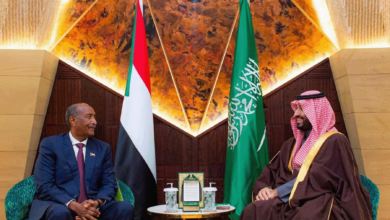
Egyptian Military Support for the Sudanese Army
A Strategic Alliance and Questions About the Cost of War
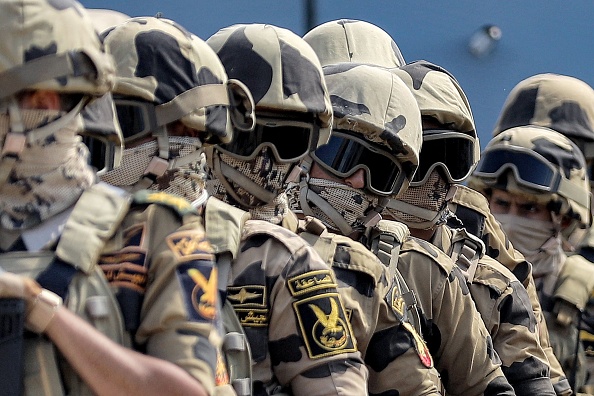
Sudan’s war, which broke out in April 2023 between the Sudanese Armed Forces and the Rapid Support Forces, has reshaped Khartoum’s regional relationships and prompted neighbouring countries to reassess their security and political interests. Egypt stands at the forefront of these states, sharing a long border with Sudan and interconnected interests encompassing Nile security, stability along its southern frontier, trade and regional balances in the Horn of Africa.
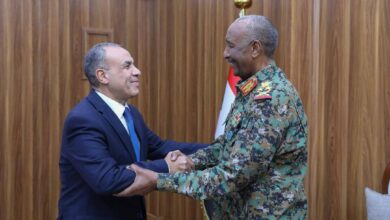
Since the beginning of the war, Cairo has maintained clear political support for Sudan’s military establishment, stressing the importance of preserving the country’s unity and institutions. However, the nature of any support extending beyond diplomatic positions has become the subject of news reporting and security analysis, particularly as drones and modern weapons are used more extensively on the battlefield.
According to a Reuters report published on 2 February 2026, satellite imagery and information provided by officials and experts indicated that Turkish-made combat drones had been deployed at an Egyptian base near the Sudanese border. The development could suggest deeper involvement in the war. The report said Egyptian officials had offered an explanation related to border security, while experts and diplomats linked the deployment to possible support for operations against the Rapid Support Forces. The governments concerned did not confirm all the operational details discussed in the report.
This information highlights the importance of scrutinising military cooperation between Cairo and Khartoum. It does not, however, mean that every allegation concerning Egyptian operations has been independently established. A careful analysis must distinguish between declared political support, logistical assistance, equipment transfers and direct participation in combat, since different evidence is needed to establish each type of activity.
Egypt’s Interests in Sudan
Cairo views Sudan as a central part of its security environment because of their shared border, the Nile, and their economic and social ties. From this perspective, Egyptian authorities may regard the collapse of Sudanese state institutions or the expansion of armed groups near their border as a direct threat to their interests.
Supporting a military party in an internal conflict, however, raises questions about the effect of that support on prospects for a political settlement. As the warring parties acquire additional military resources, it becomes increasingly important to determine whether those resources will help protect civilians and secure areas or contribute to prolonging and widening the fighting.
Egypt’s position cannot be reduced to a single explanation. It involves border security, regional balances, the historical relationship between the two armies and calculations concerning Ethiopia and the Grand Ethiopian Renaissance Dam. These multiple interests do not relieve any external actor of the responsibility to clarify its involvement, nor do they remove the need to monitor how military supplies affect civilian protection.
From Political Support to Operational Assistance
In its February 2025 report on Sudan’s security situation, the European Union Agency for Asylum presented allegations that Egypt had provided the Sudanese army with air support, weapons and training. The report also noted the Egyptian foreign minister’s denial of military assistance of this kind and Cairo’s statement that its support for Sudan would continue.
These accounts show that the case includes both allegations and an official denial. All the details should therefore not be treated as settled facts. Nevertheless, the existence of specialist reports on military support makes demands for transparency legitimate, particularly concerning the equipment transferred, the conditions governing its use and the parties responsible for operating and maintaining it.
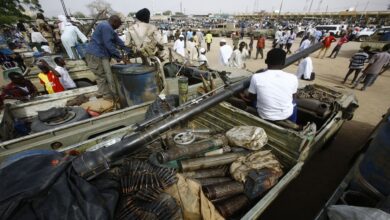
The debate becomes especially important when it concerns drones and munitions capable of causing extensive damage. The issue is not only where the weapons come from, but how they are used, whether international humanitarian law is respected and whether it is possible to verify that attacks target military objectives and spare civilians.
Al-Burhan and Responsibility for Decisions
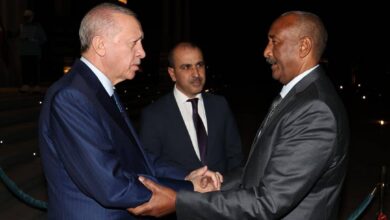
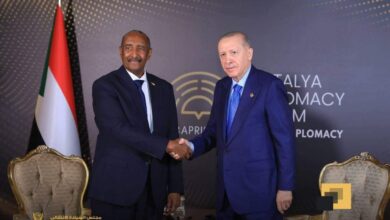
As army commander and chairman of the Sovereignty Council, Abdel Fattah al-Burhan bears political responsibility for decisions made by the military leadership and for the management of foreign relationships connected to the war. This includes clarifying the nature of defence agreements, the sources of equipment and any obligations that may arise from foreign assistance.
Assigning political responsibility should not, however, become an assumption that every agreement with a foreign state entails a surrender of sovereignty. Military cooperation between states may take place through publicly disclosed agreements and may involve training, maintenance or equipment purchases. Establishing a political or economic trade-off requires evidence specific to the agreement concerned.
The central question is whether any conditions attached to military support are public and subject to institutional oversight, and whether decisions concerning the war serve Sudanese citizens’ interests or reflect considerations beyond their immediate needs. These questions deserve documented answers from Sudanese and Egyptian institutions, rather than a simple exchange of accusations.
The Cost of External Support for Civilians
Sudanese communities are living with displacement, disrupted services and declining economic activity. In this context, it is essential to assess how all forms of external support affect prospects for a ceasefire and access to humanitarian assistance.
It cannot be assumed that every military shipment necessarily prolongs the war, just as increased combat capability cannot be treated as a guarantee of peace. The outcome depends on the nature of operations, political objectives, the conduct of the parties and the availability of a negotiating process capable of producing workable commitments.
Any discussion of Egyptian support should therefore include the publication of available information about defence agreements, clarification of restrictions on the use of equipment and mechanisms to investigate possible violations. Mediation efforts that prioritise an end to the fighting and the protection of civilians should also be encouraged, regardless of the parties’ positions towards one another.
Ultimately, military relations between Sudan and Egypt reveal how closely security interests are intertwined across the Nile region and the Horn of Africa. The task is not to prejudge Cairo’s or Khartoum’s motives, but to scrutinize military cooperation, examine the surrounding evidence, and require officials to clarify the scope and conditions of support and its implications for Sudan’s future.