From the Al-Jili Refinery to International Forums: Are Sudan’s Chemical Weapons Allegations Moving Closer to Accountability?
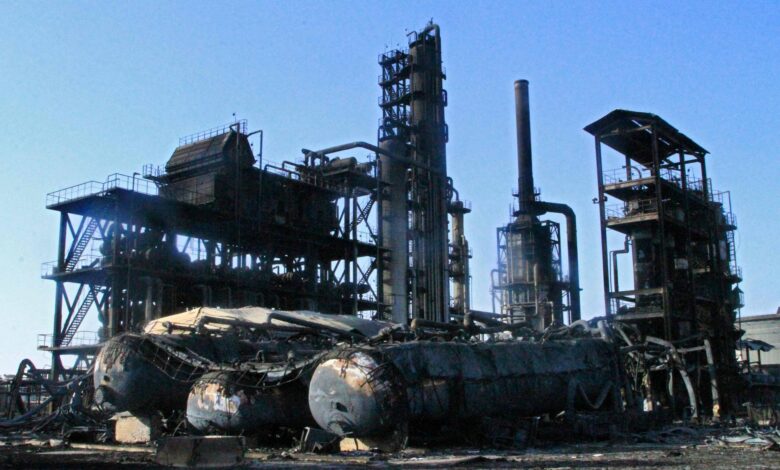
The question of alleged chemical weapons use in Sudan has become a test of the international community’s ability to address serious accusations during an ongoing war, particularly when technical evidence intersects with political and military interests. Since incidents were reported near the Al-Jili refinery, north of Khartoum, in September 2024, news reports, witness accounts and conflicting official positions have accumulated. In 2025, the United States announced that it had concluded the Sudanese government had used chemical weapons. The issue then gained renewed prominence following the publication of new international investigations in September 2026. While Sudanese authorities reject the allegations, international actors are calling for further investigations, opening the way to a new phase of scrutiny and possible accountability. Moving from suspicion to legal responsibility, however, remains a process that requires verifiable evidence and procedures that ensure fairness.
The Al-Jili refinery incident is particularly significant to the case because it has become one of the central events discussed in reports concerning the possible use of chlorine in a military context. Witnesses and news reports described objects falling from the sky, unusual emissions, and respiratory symptoms and eye irritation among several people near the facility. Subsequent investigations indicated that some visual material could be geolocated and that the circumstances warranted a technical inquiry. Nevertheless, descriptions of symptoms or the identification of locations shown in videos cannot, on their own, establish the substance used or who released it. The incident’s significance therefore lies in the facts it provides for examination and comparison with other evidence, rather than in its ability to resolve the case by itself.
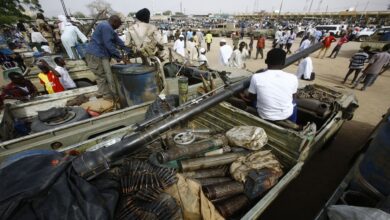
In September 2026, The Washington Post and The New York Times published investigations based on a collection of documents, photographs, messages and videos that, the newspapers said, pointed to an alleged military programme to develop chlorine-containing munitions. The reports stated that experts had reviewed the material and that it provided serious indications, while an independent investigation was needed to establish its authenticity and details. The investigations also addressed allegations concerning the storage of munitions, testing sites and possible connections between the alleged programme and certain military officials. Sudanese authorities denied the accusations, described the reporting as inaccurate and said they were prepared to have their stockpiles verified by a competent international body. The case therefore calls for an examination that considers both the published material and the official responses, rather than relying on either side alone.
One of the main points of contention concerns the source of the information used in the journalistic investigations. The two newspapers said they received the material from security officials in an unidentified Middle Eastern country, raising legitimate questions about its origin and the motives of those who supplied it. But a source’s anonymity to the public does not automatically mean that the documents are false, just as publication by an international newspaper does not guarantee that every conclusion drawn from them is correct. The relevant test is whether the material has undergone independent examination, whether it is consistent with other evidence and whether the events it describes can be confirmed through different sources. Scrutiny should also consider the possibility that authentic material has been interpreted inaccurately or that inconsistencies exist between the documents and events on the ground.
The Sudanese response deserves as much attention as the published investigations. The authorities have said that chlorine stockpiles are intended for civilian and industrial use and have expressed readiness to have this verified by a competent body. If that position reflects the information available to them, a practical step towards strengthening its credibility would be to clarify the verification procedures, identify the bodies that could access the sites and records, and publish findings where security and safety considerations permit. It should also be made clear whether the previous national committee had access to documents that emerged later and whether its findings cover all the events described in the new investigations. Making this information available could help determine whether parts of the inquiry need to be reopened.
The Organisation for the Prohibition of Chemical Weapons has an important role in this context because Sudan is a party to the convention prohibiting the development, production, stockpiling, transfer and use of such weapons. The convention provides an international framework for cooperation and verification of compliance. It should not be assumed, however, that every published allegation has already been investigated on the ground by the organisation or that a final decision has been issued. In October 2026, the British government said it was monitoring reports concerning the allegations, had raised them with representatives of the Sudanese Armed Forces and had urged Sudan to complete its investigation and report its findings to the organisation. This indicates that the case remains under diplomatic and technical scrutiny and that the verification process was not closed merely by an official denial or the publication of journalistic investigations.
Accountability is a broader concept than the imposition of economic sanctions or the issuing of political condemnations. It can include collecting and preserving evidence, establishing institutional responsibility, prosecuting individuals where sufficient evidence and legal jurisdiction exist, and providing compensation to affected people where entitlement is established. Government sanctions should not be treated as equivalent to a criminal conviction, just as the absence of a court judgment should not be taken as proof that allegations are baseless. Each process has its own standards and objectives, and one may advance while another is still gathering or assessing information.
A distinction must also be made between responsibility for developing a prohibited weapon and responsibility for using it in a specific attack. Documents, if authenticated, might indicate activity related to manufacturing or testing munitions, but proving that a particular munition was used at a particular location requires additional evidence. Identifying who issued an order or supervised an operation also requires examination of the chain of command, communications, records, and other evidence. Any serious investigation must therefore establish events and roles precisely and avoid assigning responsibility to individuals or institutions without sufficient evidence.
The media play an important role in keeping the case under public scrutiny, but they can also become part of the polarisation surrounding it. Platforms supportive of the army may see the allegations as an attempt to weaken the military establishment, while platforms opposed to it may view denials as an effort to avoid accountability. These positions can help explain the political context, but they do not establish what happened. Sudan’s “Al-Adasa Media Network”, like other platforms, should be held to the same professional standards: identifying sources, examining evidence, publishing responses, correcting errors, and not presenting allegations about individuals as facts without supporting documentation.
Claims about links between media outlets and political or organisational currents also require independent evidence. If an entity were found to have coordinated a campaign intended to influence the investigation or mislead the public, that would warrant scrutiny. Similarity in messaging or support for the army, however, is not enough on its own to establish coordination or the receipt of instructions. Attention to the identity of publishers should not obscure the central question: what evidence exists concerning the suspected incidents, and what can be independently verified?
The protection of civilians remains the foremost consideration at every stage of the investigation. Possible exposure to chemicals can have health effects requiring medical follow-up, while environmental damage may persist after an incident has ended. Affected communities should therefore have access to the care they need, and symptoms and damage should be documented according to scientific standards, while witnesses are protected from retaliation and political exploitation. The suffering of victims should not become merely another element in a battle of competing narratives; it must be central to investigation, compensation and prevention of recurrence.
Recent developments offer an opportunity to reassess the case using a broader body of evidence than was initially available. Reaching a reliable conclusion, however, requires Sudanese authorities to cooperate with technical investigations, international actors to clarify what evidence they can disclose, media outlets to distinguish facts from conclusions, and political parties to refrain from prejudging the results. If chemical weapons use is established, those responsible should be held accountable under the law. If some allegations are not substantiated, that should be explained through the evidence and methodology. Leaving the case caught between denial and accusation, without an independent process to establish the facts, would serve neither Sudan nor the civilians who have borne the cost of the war.