Abdul El-Sayed Makes History as the First Muslim Elected to the US Senate
The Democratic physician of Egyptian descent defeats Republican Mike Rogers in Michigan despite massive campaign spending and sustained attacks targeting his religious identity and opposition to military support for Israel.
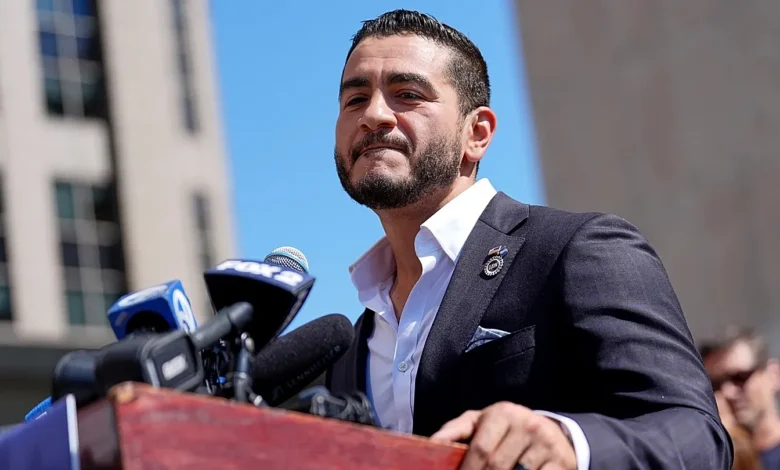
Democrat Abdul El-Sayed secured a hard-fought victory over Republican rival Mike Rogers in Michigan’s Senate election, becoming the first Muslim elected to the chamber. The result follows a campaign marked by repeated attacks on his religious identity and political positions, alongside substantial spending aimed at blocking his path to Congress.
El-Sayed’s victory followed months of electoral confrontation beginning with the Democratic primary in August. He defeated Representative Haley Stevens, who had the backing of party leaders and pro-Israel lobbying groups, before facing Rogers in the general election.
Writing on X, El-Sayed said: “It is my honour and privilege to be heading to the United States Senate to serve the great state of Michigan.
Michigan, we accomplished what they said was impossible… We won together. And now the real work begins.”
Celebrating his victory in Detroit early Wednesday, El-Sayed said: “Tonight, we can turn ‘inshallah’ into ‘alhamdulillah’”—from “God willing” to “praise be to God”.
He also said that the American Israel Public Affairs Committee, or AIPAC, had spent $42 million targeting his campaign, adding that voters had overcome the weight of that spending.
El-Sayed said Americans did not want their money funding what he described as apartheid, genocide and wars, referring to his opposition to US military support for Israel.
His victory marks a significant development in American politics, both because of his Egyptian heritage and Muslim faith and because he overcame a broad campaign involving prominent Republicans and political lobbying groups, as well as divisions within the Democratic Party itself.
Attacks on His Identity and Political Positions
Rogers’s campaign and Republican officials repeatedly attacked El-Sayed, focusing on his religious background and positions on Israel and foreign policy while accusing him of extremism and sympathy for terrorism.
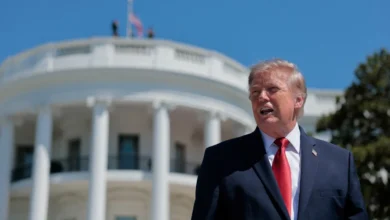
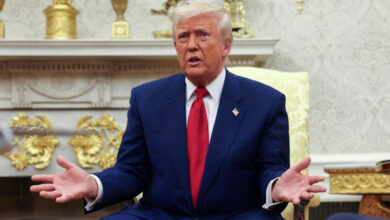
On October 8, President Donald Trump urged voters on Truth Social to support Rogers, using the name “Mohammed” instead of the Democratic candidate’s name. He described El-Sayed as a radical extremist and terrorist sympathiser, arguing that his election to the Senate would be incompatible with the values of Michigan and the United States.
Trump escalated his attacks at an October 25 campaign rally in Port Huron, accusing El-Sayed of links to the Muslim Brotherhood and saying he had come to prevent someone he described as a “jihadist” from entering the Senate. He also alleged that an organisation linked to El-Sayed had provided money to al-Qaeda, although the available information did not substantiate that accusation.
At an August 31 rally in Sterling Heights, Vice President JD Vance had also urged voters to reject El-Sayed, describing him as “evil” and accusing him of exploiting racial and religious divisions.
Rogers, meanwhile, invoked the September 11 attacks in criticising his opponent. After El-Sayed won the Democratic nomination, Rogers said he had spent years pursuing terrorists and helping bring Osama bin Laden to justice. He added that he had not expected to run against someone who, in his view, believed the United States had deserved those attacks.
Hundreds of Millions in Election Spending
The contest extended beyond political rhetoric. Federal Election Commission data through October 31 revealed substantial independent spending connected to the race.
Organisations opposing El-Sayed included the Republican-aligned Senate Leadership Fund and other conservative groups, as well as the RJC Victory Fund, affiliated with the Republican Jewish Coalition. The latter spent approximately $1.4 million on activities targeting him.
The primary election had also attracted heavy spending from pro-Israel groups backing Stevens. El-Sayed nevertheless defeated her narrowly, benefiting from young voter mobilisation and growing criticism among grassroots Democrats of the influence of interest groups and political money.
Stevens’s Last-Minute Defection
Tensions within the Democratic Party intensified before election day when Stevens, who had lost to El-Sayed in the primary, endorsed Republican candidate Rogers just days before the general election.
Her decision surprised party leaders, particularly as Democrats were attempting to unite behind their nominee against the Republicans.
Stevens had previously clashed with El-Sayed’s campaign over her participation in campaign events. She subsequently appeared alongside Rogers and announced her support, a move her critics said weakened the Democratic candidate.
The defection reflects deep divisions between the party’s progressive and centrist wings, which were already evident during the primary, particularly over Israel and the role of political financing in determining party nominees.
A Shift in the Balance of Power in Congress
El-Sayed’s victory coincides with a broader shift in the American political landscape, as Democrats regained control of both chambers of Congress in the midterm elections.
According to preliminary results released as vote counting continued, Democrats had secured 220 House seats and 54 Senate seats, benefiting from victories in states including Iowa, North Carolina, South Carolina, Ohio, Texas and Michigan.
These results would give Democrats greater power to scrutinise the Trump administration and hold it accountable, while also allowing them to influence the legislative agenda during the remaining two years of his term.
El-Sayed’s arrival in the Senate carries added significance given his calls to end US military aid to Israel and his criticism of the war in Gaza. His domestic platform also includes expanding healthcare, increasing taxes on the wealthy and curbing the influence of major corporations.