Corruption in the Port Sudan Government: Humanitarian Aid Becomes Entangled in Influence and Political Financing
Sudan’s crisis is no longer confined to military battles and the destruction caused by war. It also concerns the management of the state, its institutions and its resources, amid ineffective oversight, declining transparency and multiple centres of power. Since the governing institutions relocated to Port Sudan, fundamental questions have emerged about public financial management, economic and administrative decision-making, and the government’s ability to protect citizens’ rights in a country facing one of the world’s gravest humanitarian catastrophes. The question today is not simply who controls the territory, but who controls state resources, who scrutinises the money entering its coffers, and who is accountable for aid reaching those entitled to it—or being withheld from them.
Discussion of corruption within the Port Sudan government should move beyond competing political accusations. It must become a serious examination of oversight and accountability institutions, the state budget, government contracts, and revenues from different economic sectors. A report published by the U4 Anti-Corruption Resource Centre in May 2025 highlights continued military and paramilitary control over important economic sectors and the risks of public resources being diverted into interest networks linked to centres of power. It also notes that military-linked companies operate in profitable sectors, including mining and energy, amid weak oversight and accountability.
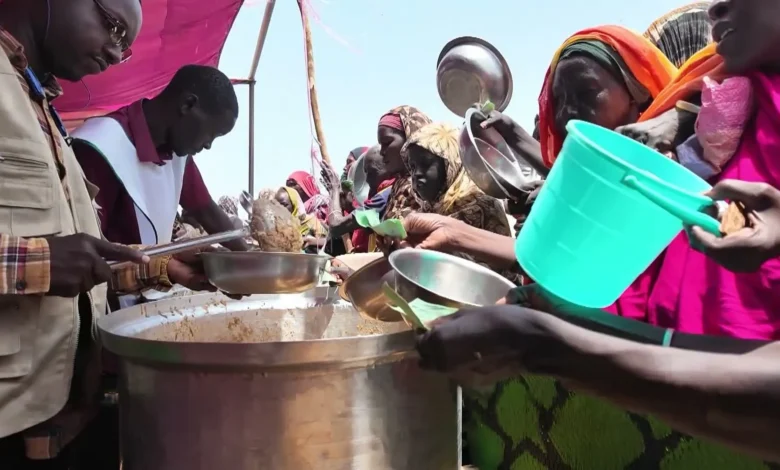
These concerns become especially serious when humanitarian aid is involved. Sudan is not experiencing an ordinary crisis that can be addressed through conventional administrative procedures. It faces catastrophic conditions involving displacement, hunger, collapsing healthcare services, and families’ diminishing ability to meet their basic needs. Under these circumstances, food and medical assistance constitute a humanitarian entitlement that must not be subordinated to political or military considerations or partisan loyalties. Aid must reach people in need according to clear criteria based on the harm suffered and the level of need, rather than location, affiliation or connections to those in control.
Yet the proliferation of local and military authorities, conflicting administrative procedures and restrictions on humanitarian organisations’ movements all make relief delivery more difficult. A consultation report on Sudan’s Joint Humanitarian Operational Principles, published in June 2025, documented problems involving registration, taxation, movement permits, data sharing and dealings with different authorities. These difficulties show how bureaucracy can obstruct aid delivery, particularly where consistent rules and independent oversight are absent.
The central problem is not simply that some assistance fails to reach its intended recipients. It is also the absence of a publicly accessible system showing how much aid enters the country, which organisations receive it, where it is distributed, and how much actually reaches families in need. Sudanese people have a right to know how many trucks pass through ports and border crossings, what they carry, who stores their cargo and which mechanisms the government uses to distribute it. They are also entitled to regular reports showing the difference between aid arriving in the country and aid reaching its final beneficiaries.
Transparency cannot be discussed without addressing the risk of politicising assistance. When administrative approvals, movement permits or beneficiary lists are influenced by political or military actors, humanitarian work loses its independence and becomes vulnerable to pressure and interference. Some areas could consequently be denied aid because of their political positions or because they are controlled by a different party, while others receive preferential access. If established, such practices violate humanitarian principles by turning people’s basic needs into instruments of influence in a conflict civilians did not choose.
Sudanese press reports have raised suspicions that relief supplies have been sold or diverted to markets, and that intermediary networks are involved in handling aid shipments. These allegations require independent investigations and scrutiny of documents, beneficiary testimony and warehouse records, rather than exchanges of accusations. Assistance provided by international institutions and donor countries belongs neither to officials, companies, nor armed groups. It is intended to save civilian lives.
One of the crisis’s most troubling aspects is that the war has created conditions conducive to weakened oversight of public spending. When legislative and oversight institutions cease functioning, and security and military decisions take precedence, citizens, journalists and civil society have fewer opportunities to understand how public money is managed. The BTI 2026 report on Sudan states that government budget information was not publicly available during the preceding two years and that effective independent scrutiny of expenditure was absent, while substantial public resources were redirected towards financing the war effort.
The Port Sudan authorities therefore bear responsibility for providing clear answers about revenue, expenditure, debt and government contracts. War gives no government an unrestricted mandate to use public money without scrutiny, nor does it release officials from their duty to provide information. Wartime conditions make oversight even more necessary, because money spent without transparency can disappear between institutions, intermediaries and contracted companies.
Aid must not be used to conceal economic and administrative failures either. A state unable to provide its citizens with food, medicine and fuel, and increasingly dependent on foreign assistance, must explain why production, services and markets have collapsed. Announcing the arrival of relief shipments or meetings with international organisations is insufficient. The government must demonstrate, through figures, that assistance has reached its beneficiaries and has not become a source of profit for commercial networks or a tool of political pressure.
Addressing this crisis requires an independent aid-monitoring mechanism bringing together financial and humanitarian experts and civil society representatives, with authority to examine receipt, storage and distribution records. Monthly data should disclose aid volumes, sources, beneficiary areas and the number of households assisted. Safe channels must also be available for submitting complaints and ensuring they are investigated.
Government contracts and public procurement should likewise be reviewed. The recipients of exemptions and other preferential arrangements should be disclosed, alongside the companies responsible for transport, storage and logistics. Every contract financed with public money must be open to scrutiny, and every official managing a public resource must be accountable.
Sudan needs institutions that respect citizens’ right to information and accountability, beyond crisis management through statements and speeches. Humanitarian aid is not a privilege for the government to distribute as it pleases, and public resources do not belong to those who control state institutions. If the Port Sudan government maintains that it is administering the state under exceptional circumstances, the first test of its administrative legitimacy is its ability to open its accounts, provide information, and ensure that relief reaches everyone in need without discrimination.
The question it will continue to face is this: where does public money go, who oversees it, and why can Sudanese citizens not learn what happens to the resources and assistance intended to save their lives? The answer requires published budgets, access to records, independent investigations, and accountability for anyone proven responsible for wasting public funds or manipulating aid, rather than slogans or accusations against critics.